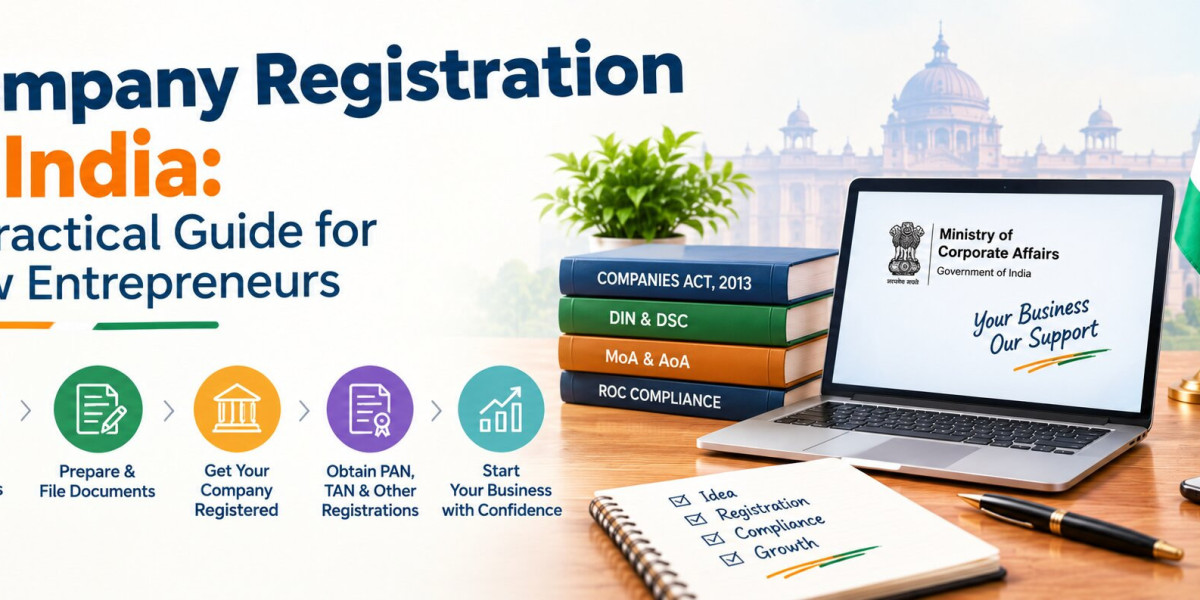

Starting a business is an exciting step, but turning an idea into a legally structured business requires careful planning.
One of the first decisions entrepreneurs need to make is choosing the appropriate business structure and understanding the applicable registration and compliance requirements.
For many founders, the phrase company registration in India immediately brings up questions about documents, eligibility, costs, government filings, directors, taxation, and ongoing compliance.
The process can appear complicated at first, but understanding the major steps can make it easier to plan.
Why Business Structure Matters
Before beginning the registration process, entrepreneurs should understand the different business structures available in India.
Depending on the circumstances, an entrepreneur may consider:
Sole proprietorship
Partnership
Limited Liability Partnership
One Person Company
Private limited company
Each structure has different characteristics relating to ownership, liability, taxation, management, compliance, and future expansion.
For example, a small individual business may have different requirements from a startup planning to raise investment from outside investors.
There is no single structure that is automatically suitable for every business.
What Is a Private Limited Company?
A private limited company is a commonly considered structure for startups and growing businesses.
It can provide a formal corporate structure with shareholders and directors and may be suitable for businesses planning to expand or seek external investment.
However, it also comes with ongoing compliance responsibilities.
Before choosing this structure, entrepreneurs should consider:
Number of founders
Investment requirements
Ownership arrangements
Future fundraising
Administrative responsibilities
Accounting and compliance requirements
A qualified professional can help evaluate whether this structure is appropriate for a particular business.
1. Decide on the Nature of Your Business
Before registration, clearly define what the business will do.
For example:
Software development
Consulting
E-commerce
Manufacturing
Digital marketing
Education
Healthcare
Professional services
Trading
A clear description of the business activity helps with registration, tax planning, licensing, and future compliance.
It also helps founders identify whether the business operates in an industry requiring additional approvals.
2. Choose a Suitable Business Name
Choosing a business name requires more consideration than simply finding something that sounds attractive.
Before finalizing a name, entrepreneurs should consider:
Existing company names
Existing trademarks
Similar brands
Domain availability
Social media availability
Future expansion plans
A name that appears available through a normal internet search may still conflict with an existing trademark.
It is therefore useful to conduct appropriate searches before investing heavily in branding.
3. Understand the Difference Between Company Registration and Trademark Registration
These two concepts are often confused.
Company registration establishes the legal identity of the business entity.
Trademark registration is concerned with protecting a mark used to distinguish goods or services.
Registering a company name does not automatically mean that every aspect of the brand is protected as a trademark.
Similarly, owning a domain name does not automatically provide comprehensive trademark protection.
Entrepreneurs planning to build a long-term brand should consider these areas separately.
4. Prepare the Required Documents
The documents required can vary depending on the business structure and circumstances.
For company incorporation, information and documents may relate to:
Proposed company name
Directors
Shareholders
Identity proof
Address proof
Registered office
Business activities
Constitutional documents
Digital signatures where applicable
It is important to ensure that the information submitted is accurate and consistent.
Incorrect information can lead to delays or the need for corrections.
5. Registered Office Requirements
A company needs an appropriate registered office address according to the applicable requirements.
Depending on the circumstances, supporting documents may be required to establish the company's registered office.
Entrepreneurs should understand the documentation requirements before submitting the application.
If the business later changes its registered office, the company should determine whether an appropriate regulatory update or filing is required.
6. Understand the Role of Directors and Shareholders
Directors and shareholders have different roles within a company.
Shareholders generally have ownership interests in the company, while directors are responsible for managing the company's affairs subject to applicable law and the company's governing documents.
Founders should clearly understand:
Who owns the company
Who manages the company
Shareholding percentages
Director responsibilities
Decision-making arrangements
These matters become particularly important when there are multiple founders.
7. Think About Ownership Before Incorporation
Founders should discuss ownership arrangements before finalizing the structure.
Questions may include:
How much will each founder own?
Who will contribute capital?
Who will manage operations?
What happens if a founder leaves?
How will future investment affect ownership?
How will important decisions be made?
These questions may seem unnecessary when a company is small, but addressing them early can reduce misunderstandings later.
A suitable founders' or shareholders' agreement may be appropriate depending on the circumstances.
8. Consider Tax Registrations
Company incorporation and tax registration are related but separate matters.
Depending on the business activities and circumstances, a company may need to consider requirements relating to:
Income tax
GST
Tax deducted at source
Other applicable registrations
Not every company will have identical tax obligations.
The requirements can depend on factors such as business activity, turnover, transactions, employees, location, and other circumstances.
9. Understand GST Requirements
A newly established business should determine whether GST registration applies to its activities.
The requirement can depend on factors including:
Turnover
Nature of supply
Location
Interstate transactions
Business activity
Applicable exemptions
Businesses should verify the current rules rather than relying on assumptions.
Once registered, the business may also have continuing responsibilities involving invoices, records, returns, tax payments, and input tax credit where applicable.
10. Maintain Proper Accounting Records
A new company should establish good financial record-keeping from the beginning.
Maintain records of:
Sales
Purchases
Expenses
Bank transactions
Loans
Investments
Employee payments
Tax payments
Assets and liabilities
Keeping accurate records makes financial reporting and tax compliance easier.
It also gives founders a clearer understanding of the company's financial position.
11. Don't Forget Ongoing Company Compliance
Company registration is not the end of the process.
Once incorporated, a company may have continuing obligations relating to:
Accounting
Financial statements
Corporate filings
Meetings
Statutory records
Tax compliance
GST
Licenses
Changes in company information
The exact requirements depend on the company's structure and circumstances.
A compliance calendar can help founders keep track of important dates.
12. Protect Intellectual Property Early
A startup may begin with a simple idea but eventually develop valuable intellectual property.
This could include:
Brand names
Logos
Software
Designs
Original content
Product names
Proprietary processes
Entrepreneurs should identify important intellectual property and understand the appropriate forms of protection.
Waiting until a brand becomes successful can create additional risks if another party has already established rights over a similar mark.
13. Use Written Business Agreements
Businesses frequently work with customers, suppliers, employees, freelancers, consultants, and technology providers.
Important commercial relationships should generally be documented through appropriate agreements.
Depending on the situation, contracts may address:
Scope of work
Payment
Deliverables
Confidentiality
Intellectual property
Liability
Termination
Dispute resolution
A written agreement can provide greater clarity than relying solely on verbal discussions.
For significant commercial arrangements, professional legal review may be appropriate.
Common Mistakes New Entrepreneurs Make
Choosing a structure without considering future plans
The easiest structure at the beginning may not necessarily suit the business after significant growth.
Selecting a name without checking existing rights
Brand conflicts can become expensive to resolve after significant investment.
Treating incorporation as the end of compliance
Companies can have continuing filing and record-keeping responsibilities.
Mixing business and personal finances
This makes accounting and financial management more difficult.
Ignoring contracts
Verbal agreements can create misunderstandings about responsibilities and payments.
Waiting to protect intellectual property
Important brands and assets should be considered early.
Relying on outdated online information
Registration procedures and compliance requirements can change.
A Basic Company Registration Checklist
Entrepreneurs can use the following checklist when planning a new business:
Define the business activity.
Choose an appropriate structure.
Shortlist potential names.
Search for similar company and trademark names.
Determine ownership arrangements.
Identify directors and shareholders.
Prepare identity and address documents.
Establish the registered office arrangement.
Complete the applicable registration process.
Determine tax registration requirements.
Set up accounting records.
Prepare important business agreements.
Identify intellectual property assets.
Create a compliance calendar.
Maintain all registration documents and acknowledgements.
This is a general checklist and does not replace professional advice.
What Should You Do After Registration?
Once the company has been registered, founders should focus on building a proper administrative system.
Create separate folders for:
Company Registration
Certificates, incorporation documents, and corporate records.
Tax
Tax registrations, returns, payment records, and related documents.
Contracts
Customer, supplier, employee, consultant, and other agreements.
Intellectual Property
Trademark applications, registrations, brand assets, and related documents.
Compliance
Filings, meeting records, notices, licenses, and renewal dates.
A well-organized system can save significant time as the business grows.
Final Thoughts
Starting a company involves more than completing a registration application.
Entrepreneurs should think about the business structure, ownership, branding, taxation, contracts, intellectual property, accounting, and ongoing compliance from the beginning.
Good planning can help prevent many avoidable problems later.
If you are researching company registration in India, use current government information and consider professional guidance where the legal, tax, or financial implications are significant.
For entrepreneurs researching legal, business, finance, tax, and compliance topics, InsightsPrecise can also be used as an educational starting point for understanding complex subjects in simpler language.
The key is to treat registration as the beginning of building a properly organized business, not the final step.
This article is intended for general informational purposes only and does not constitute legal, tax, accounting, or professional advice. Registration procedures, fees, forms, tax requirements, and compliance obligations may change. Verify the current requirements applicable to your business before taking action.