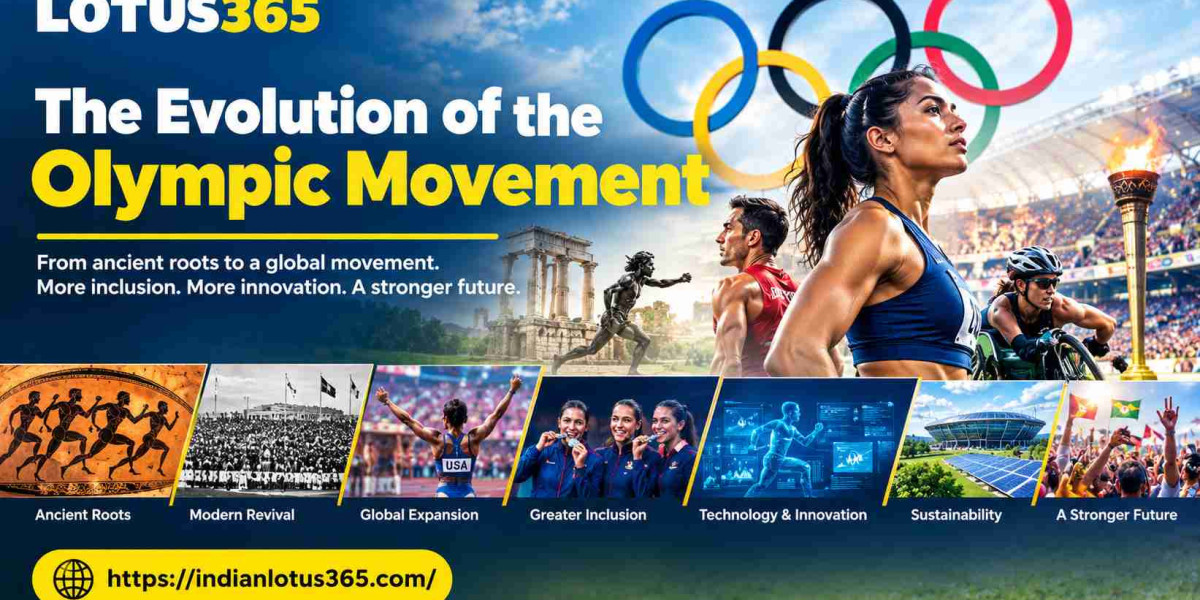

The Olympic Movement is one of the most recognized developments in the history of international sport. What began with the revival of the Olympic Games in the modern era has developed into a global movement involving athletes, sports federations, national organizations, volunteers, officials, and millions of fans.
Its development has not been limited to changes in sporting events. The Olympic Movement has also evolved in areas such as participation, technology, sustainability, gender representation, youth development, and global communication. Its ability to adapt while maintaining core sporting values has helped it remain relevant across generations.
Ancient Origins of the Olympic Tradition
The history of the Olympics goes back to ancient Greece, where athletic competitions were held at Olympia. These ancient Games were closely connected with Greek culture and religious traditions and featured physical contests that celebrated athletic ability.
The ancient Olympic tradition eventually came to an end, but the idea of bringing athletes together for major international competition remained influential. Centuries later, interest in reviving the Olympic concept began to grow.
The modern Olympic Movement would eventually transform this historical tradition into an international sporting system.
The Birth of the Modern Olympic Movement
A major turning point came in 1894, when Pierre de Coubertin helped establish the International Olympic Committee in Paris. The first modern Olympic Games were then held in Athens in 1896.
The modern Olympic idea focused on using sport as a way to promote education, international understanding, discipline, and cooperation. Over time, the Olympic Movement expanded beyond the Games themselves.
Today, it includes international sports federations, National Olympic Committees, organizing committees, athletes, coaches, officials, and other organizations connected with Olympic sport.
Expansion Across the World
In its early modern form, the Olympic Games were much smaller than the global event audiences know today. Over the decades, participation expanded as more countries and athletes became involved.
The Olympic Movement gradually became a platform where athletes from different cultures could compete under common sporting principles. This international character helped make the Games one of the world's most recognizable sporting events.
The Olympic concept also expanded through the creation and development of the Winter Olympic Games, Youth Olympic Games, and other connected programs.
The Growth of Women's Participation
One of the most important changes in the Olympic Movement has been the increasing participation of women.
Women were gradually admitted to more Olympic events over the history of the modern Games, and their representation has continued to increase. This development reflects wider changes in international sport and society.
Gender equality has become an important part of the modern Olympic conversation. Paris 2024 was described by the Olympic Movement as the first Olympic Games with gender parity in athlete participation.
The movement toward greater representation has also extended into leadership and governance. In 2023, the IOC reported that women represented 41.1 percent of its membership following a new round of member elections.
Technology Changes the Olympic Experience
Technology has transformed almost every part of modern Olympic sport. Improvements in timing systems, broadcasting, photography, data analysis, athlete tracking, and digital communication have changed how competitions are conducted and experienced.
Fans can now follow events through smartphones, streaming platforms, social media, live statistics, and digital content. Athletes and coaches can also use sophisticated performance information to understand training and competition more effectively.
This technological evolution has made the Olympics more accessible to global audiences while creating new expectations for speed, accuracy, and engagement.
For modern sports audiences, platforms such as Lotus365 reflect the broader shift toward digital sports experiences, where fans can remain connected to sporting content through online channels.
Inclusion and Wider Participation
The Olympic Movement has increasingly focused on making sport accessible to a broader range of people. This includes efforts related to gender representation, youth participation, athlete development, and inclusion.
The Paralympic Movement has also played an important role in expanding the visibility of elite athletes with disabilities. Together, major international sporting movements have helped demonstrate that high-level competition can take many forms.
Youth development has become another important area. The Youth Olympic Games provide younger athletes with opportunities to compete internationally while combining sport with educational and cultural activities.
Sustainability Becomes More Important
Environmental sustainability is another major area of change. Organizing a large international sporting event requires significant planning, transportation, infrastructure, energy, accommodation, and resource management.
Modern Olympic planning increasingly considers how venues and infrastructure can be used efficiently and how environmental impact can be reduced. The approach connected with Olympic Agenda 2020 placed greater emphasis on sustainability, inclusion, and modernization.
This reflects a broader expectation that major sporting events should create lasting value without placing unnecessary pressure on host communities or the environment.
Digital Fan Engagement
The relationship between the Olympics and fans has changed dramatically. In earlier decades, audiences depended mainly on newspapers, radio, and television. Today, fans can follow multiple events through websites, social media, mobile devices, live updates, and streaming services.
A simple Lotus365 login illustrates the wider importance of convenient digital access in modern sports culture. Fans increasingly expect information to be available quickly and across multiple devices.
Social media has also created a more interactive Olympic experience. Supporters can comment on performances, share highlights, celebrate athletes, and communicate with other fans around the world.
The Olympic Movement and the Next Generation
The future of the Olympic Movement depends heavily on younger audiences. Sports preferences continue to change, and younger fans often discover competitions through digital platforms, short-form video, gaming, and social media.
The inclusion of newer sports and innovative formats is one way the Olympic program can remain connected with changing interests. The addition of breaking at Paris 2024, for example, reflected efforts to connect the Games with younger sporting cultures.
A Lotus365 app fits within the wider trend toward mobile-first sports consumption, where younger audiences can follow sporting content through connected devices.
A New Chapter for the Olympic Movement
The Olympic Movement continues to adapt to a changing world. In 2026, the IOC adopted a strategic direction called “Fit for the Future,” intended to guide the movement through 2032 and strengthen its relevance and impact.
The Dakar 2026 Youth Olympic Games also represent a significant milestone, becoming the first Olympic sporting event to take place in Africa.
These developments show that the Olympic Movement is not simply a historical institution. It continues to change according to new sporting, social, technological, and environmental realities.
Conclusion
The evolution of the Olympic Movement is a story of adaptation. From ancient athletic traditions to the modern international Games, it has changed alongside society while continuing to emphasize sporting achievement and international participation.
Greater inclusion, technological innovation, sustainability, digital communication, and youth engagement are shaping its next phase. The future will bring new challenges, but the movement's continued ability to evolve can help ensure that the Olympic ideal remains meaningful to athletes and sports fans around the world.
Ubicación del Autor
India