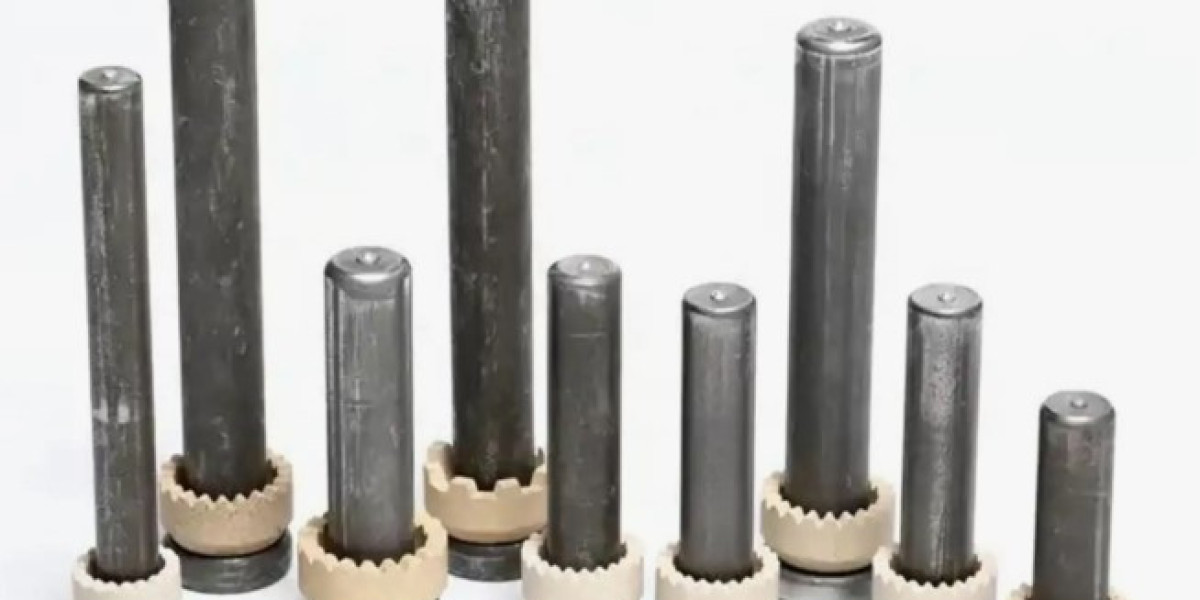

In the realm of structural design and machinery, one of the most understated yet essential components is the stud shear connector. Though it doesn’t rotate like a motor or generate power like a turbine, its function is nothing short of mechanical genius. It holds together the very bones of bridges, high-rises, and machine platforms—transforming independent materials into unified, load-bearing machines.
At first glance, a stud shear connector looks like a small metal peg welded to a beam. But in engineering terms, it is a precision device designed to transmit force, resist motion, and enhance performance—the very definition of a mechanical element.
The Purpose of Stud Shear Connectors
A stud shear connector is a cylindrical steel stud, typically with a domed or headed top, welded onto steel beams. These studs are then embedded into concrete slabs. The goal is to ensure that the concrete and steel behave as a single unit when the structure is under load.
Why does this matter? Because when materials like steel and concrete act independently, their differences in stiffness, thermal expansion, and elasticity can cause cracks, separation, or catastrophic failure. But when connected correctly, they form a composite system—stronger and more efficient than the sum of its parts.
In engineering terms, the connector enables composite action, resisting horizontal (shear) forces and increasing flexural rigidity. In other words, it turns a simple steel beam and concrete slab into a powerful, cohesive machine.
How They Work: A Mechanical Perspective
Stud shear connectors perform the role of force transmission devices. As a structure bends under load (such as a bridge deck under vehicles), the interface between concrete and steel experiences shear stress. Without connectors, these materials would slide past each other, undermining the system.
When a stud is welded to the beam and surrounded by concrete, it anchors the slab in place. Each stud resists a share of the shear force. The process involves three crucial steps:
Welding – The stud is welded with a ceramic ferrule to create a strong metallurgical bond.
Placement – Concrete is poured to embed the studs at exact positions.
Load Transfer – As the structure bears weight, the shear is transmitted from concrete to steel via the studs.
It’s not much different from how gears transmit torque or how pistons transfer pressure—mechanics in action, just without moving parts.
Stud Shear Connectors in Modern Machines and Structures
These connectors have wide applications beyond traditional construction:
Machine Foundations: Industrial machines, like lathes, pumps, and compressors, often rest on concrete-filled steel platforms. Shear connectors prevent vibrations from causing fatigue cracks or misalignment.
Precast Panels and Modular Buildings: With modern prefabrication, shear studs are used to connect steel frames to concrete floor panels for rapid, secure assembly.
Offshore Rigs and Marine Structures: In environments where corrosion and wave loads are severe, shear connectors maintain integrity between steel decks and concrete supports.
Transport Infrastructure: Bridges, highways, and rail viaducts heavily rely on these connectors to extend life span and reduce maintenance.
Materials and Manufacturing Techniques
Stud shear connectors are typically made from low-carbon steel with high ductility, ensuring they deform without cracking under stress. In specialized projects, alloy steels or stainless steels may be used to resist corrosion or enhance strength.
Modern manufacturing relies on automated stud welding machines, which:
Apply controlled heat and pressure
Weld in milliseconds
Ensure uniformity in large-scale projects
The connectors are often produced in bulk by specialized manufacturers who conform to global standards like EN ISO 13918 and AWS D1.1.
Testing and Performance Standards
Stud connectors are only as good as their quality control. They undergo:
Pull-out tests
Weld integrity checks
Bend tests
Ultrasonic inspections
Performance is influenced by:
Stud diameter and length
Concrete compressive strength
Stud spacing
Position relative to bending zones
These variables are calculated precisely using structural design software and guidelines provided in standards like Eurocode 4 and AISC Steel Manual.
Evolution of Stud Shear Connector Design
The use of shear connectors began gaining traction in the 1950s with the rise of steel-concrete composite construction. Since then, the field has evolved with:
Improved materials (e.g., corrosion-resistant alloys)
Advanced welding techniques
Modular installation systems
Integration with Building Information Modeling (BIM)
Future trends include:
Smart connectors: Embedded sensors for real-time monitoring of stress, temperature, and fatigue.
Green construction: Use of recyclable materials and eco-friendly manufacturing.
Robotics in installation: Automated placement and welding in precast factories and on-site setups.
Challenges and Engineering Considerations
Though stud shear connectors are reliable, several challenges must be addressed in design:
Concrete cracking near stud heads under repeated loads
Thermal expansion mismatch between materials
Corrosion in marine or industrial environments
Fatigue under vibration in machine platforms
Engineers use finite element analysis (FEA) and lab-based fatigue testing to predict and mitigate such issues, ensuring that these components perform like precise mechanical devices, not just passive pieces of steel.
Conclusion: Machines Without Motion
Stud shear connectors may not whir or spin like motors, but their role in construction and mechanical systems is profound. They represent a perfect example of static machines—devices designed to manage force, motion, and integrity without moving an inch.
In the increasingly complex landscape of engineering and machine design, these hidden connectors quietly ensure that structures behave as they should. Whether holding up a skyscraper, supporting a robotic arm, or anchoring a railway bridge, stud shear connectors remind us that not all machines need to move to make things happen.