
Let’s understand why this technology is quietly revolutionizing how industries deal with corrosion and why it might just be the smartest decision for any serious fabricator, restorer, or manufacturer.
Rust: The Unwanted Enemy of Progress
Before diving deep into the functionality of a laser rust remover, we need to understand rust as a problem. Rust is iron oxide, a result of iron reacting with oxygen in the presence of moisture. This slow corrosion doesn't just make metal unsightly — it structurally weakens it, affects machinery tolerance, and can destroy expensive components if left unchecked.
Traditional methods like wire brushing, sandblasting, and acid treatments have been the go-to solutions. However, they’re time-consuming, imprecise, and often damaging to the base material. Worse, they often leave residue or cause secondary contamination. That’s where laser rust removal technology has started making waves.
What Exactly Is a Laser Rust Remover?
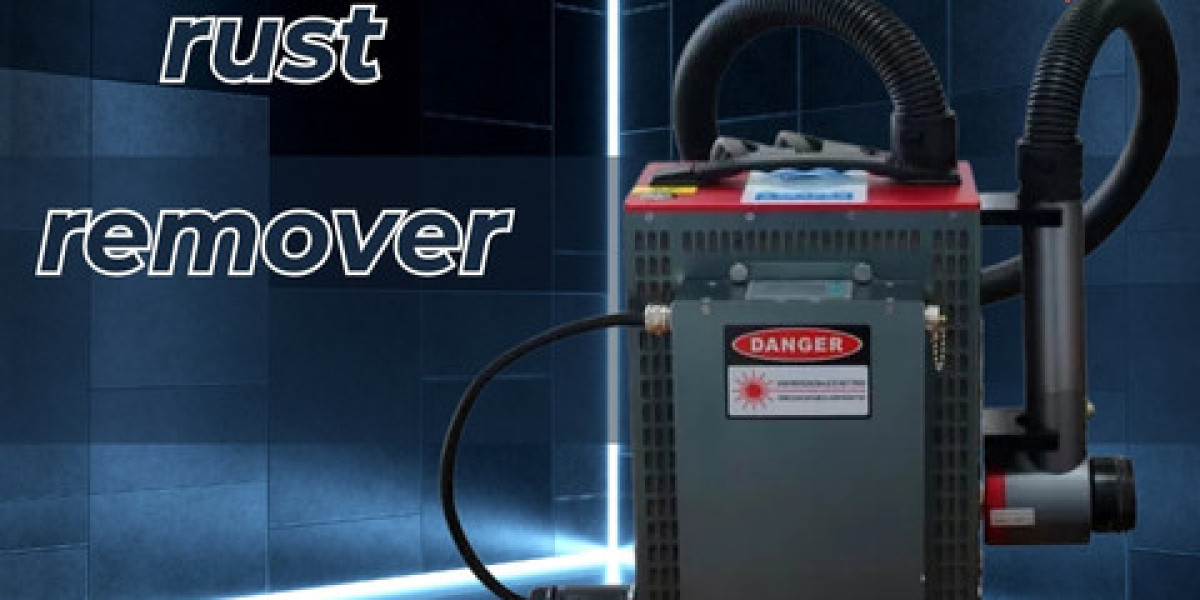
A laser rust remover is a high-intensity beam device designed to target and remove only the corrosion layer from the surface of metals. It doesn't grind away the underlying structure or involve chemical baths. The laser is tuned to a wavelength that heats and vaporizes rust without transferring dangerous levels of heat to the surrounding area. The result is a clean surface — no touch, no contact, no mess.
From automotive frame restoration to ship hull cleaning, and even aerospace part recovery, industries are now incorporating laser systems to manage corrosion with efficiency, control, and safety.
How the Process Works: Simplified Precision
Let’s say you’re restoring a 1960s vintage motorcycle frame with surface rust that’s flaking across multiple welded joints. Traditional methods may take hours — using abrasives to reach tight spots, followed by a neutralizing chemical to halt oxidation. In contrast, a laser rust remover can be set to clean specific areas with micrometer accuracy. The beam interacts with the rust layer, causes it to evaporate or break apart, and leaves the base metal untouched.
Because the device works contactlessly, there’s no mechanical strain, heat deformation, or abrasion of the original structure. And once you're done, there's nothing left but light dust and a clean surface ready for welding, painting, or coating.
Why Professionals Are Quietly Making the Switch
Manufacturers, military contractors, and infrastructure maintenance teams have been early adopters of this method. The key reasons aren't always advertised on packaging or brochures — they’re rooted in operational logic:
Reduced manpower: One operator with a hand-held laser rust remover can clean areas that would require a team using manual methods.
Consistent results: Whether you're working on Day 1 or Day 100, the cleaning quality doesn't degrade.
No prep, no cleanup: No masking, no taping, no media blasting, and no secondary waste disposal — just aim and clean.
Material integrity: Critical parts such as turbine blades, aircraft components, or delicate engraved surfaces can be cleaned without the risk of warping or abrasion.
But the most telling proof? Companies are cutting down maintenance turnaround times by up to 70% just by switching to laser systems.
The Industries Using Laser Rust Removers the Most
Laser rust removers are now found in sectors ranging from precision tool manufacturing to large-scale infrastructure maintenance. Here’s where their use is accelerating:
Automotive Restoration: Frame cleaning, engine parts revival, and removal of paint and grime on vintage vehicles.
Shipbuilding and Marine Services: Rust removal from anchors, steel hulls, and port equipment exposed to saltwater environments.
Aerospace Maintenance: Delicate surface preparation where safety tolerances are strict and every gram matters.
Manufacturing Lines: Continuous rust removal in automated environments where downtime is expensive.
Power Plants and Pipelines: Removing corrosion on-site without dismantling massive steel components or causing environmental exposure.
These aren’t theoretical use cases — they’re happening now, with measurable cost savings and process efficiency increases.
Safety and Compliance: A Hidden Strength
Laser rust removal may sound aggressive, but it's surprisingly safe when operated correctly. Operators can work without exposure to toxic dust or chemicals. With modern safety gear and sealed cleaning chambers for larger setups, this method supports compliance with international environmental and occupational safety standards.
Industries dealing with hazardous materials or environmentally sensitive locations are particularly drawn to this method. For example, in nuclear decommissioning projects, laser cleaning is often the only acceptable form of decontamination due to its controlled, residue-free nature.
What to Look for When Choosing One
If you're considering adopting this technology, know that all laser rust removers are not the same. Factors like power level (usually measured in watts), beam control, pulse frequency, and cooling systems all determine how the tool performs in real-world applications.
For small workshops, a 100W to 200W handheld laser rust remover may be sufficient. But for industrial-grade cleaning, 500W or 1000W fiber lasers are often preferred due to faster throughput and deeper penetration of rusted layers.
Importantly, reputable suppliers offer demo runs, safety certifications, and after-sale service — crucial for operators just entering this space.
The Future: Smart Cleaning and Automation
Automation is already integrating with laser rust removal systems. Robotic arms in automotive assembly lines now include laser heads for spot cleaning before welding. Drone-mounted laser cleaners for large-scale steel bridges are in the experimental stage. With advancements in beam-shaping optics and AI-driven targeting systems, the future of rust removal looks clean, fast, and highly programmable.
For businesses trying to cut costs, improve quality, and remain environmentally compliant, this isn't just another tool — it's a transformation in how we treat and preserve metal.
Final Thoughts
A laser rust remover isn't just about cleaning — it's about control, precision, and restoring value without compromise. In an age where every second, gram, and dollar counts, using lasers to fight corrosion is not only smart — it's essential. Whether you’re managing a small metal workshop or leading a large-scale production facility, integrating this solution can reshape how you treat old parts, extend their life, and reduce your operational burden. The rust problem may be ancient, but the answer is truly modern — and it's written in light.