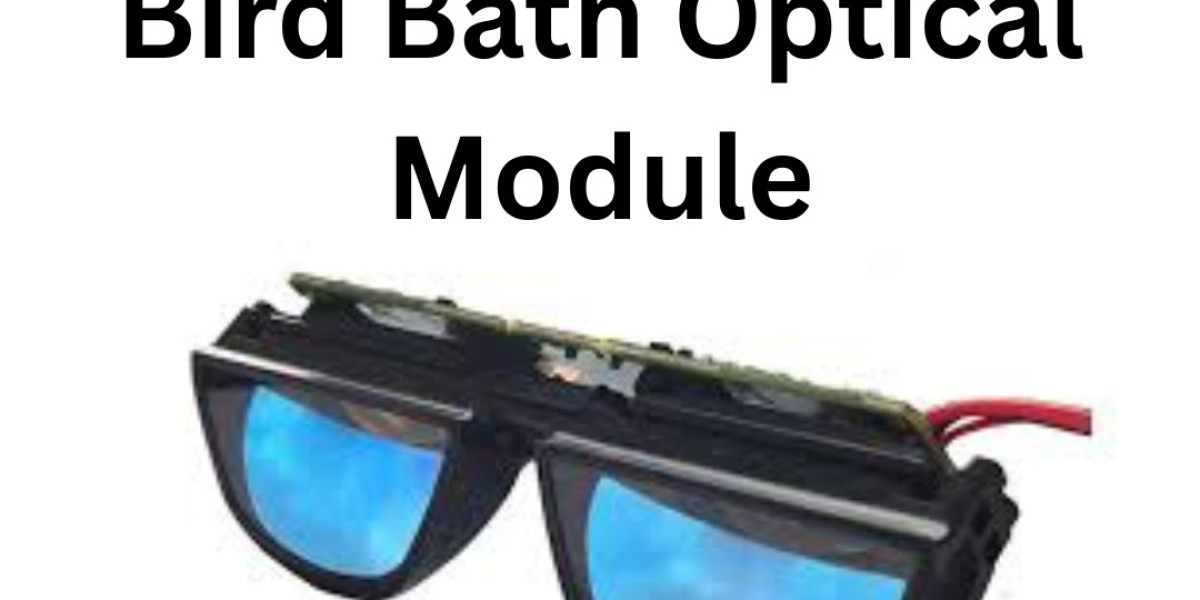

Augmented Reality (AR) is transforming how we interact with the digital world, making experiences more immersive and realistic. One critical technology driving this revolution is the Bird bath optical module. Known for its compact design and high optical efficiency, this module plays a vital role in enhancing image clarity and display performance in AR devices. It combines a beam splitter and spherical mirror system to direct and reflect light accurately, ensuring users get a clear, distortion-free visual output.
In this article, we’ll explore what a bird bath optical module is, how it works, its core advantages, and its role in shaping the future of AR smart glasses and headsets. Whether you're a product developer or tech enthusiast, understanding this component is essential.
What Is a Bird Bath Optical Module?
A bird bath optical module is a compact optical assembly commonly used in AR glasses to project images from a micro display into the user’s eye. The design resembles a birdbath, hence the name. It consists of a semi-reflective beam splitter and a spherical mirror, forming a closed-loop light path that reflects light from the micro display onto the user's retina.
Unlike waveguides, this setup is easier to manufacture and integrate while offering lower light loss and high-resolution image reproduction. It's particularly favored in lightweight consumer-grade AR products.
How It Works: The Science Behind the Module
The working principle involves reflecting light emitted from a micro display using a spherical mirror. The beam splitter allows part of the light to reach the user’s eye while also managing environmental lighting to avoid ghosting or double images.
This dual-purpose structure makes the Bird bath optical module suitable for both indoor and outdoor AR environments. It delivers sharp images with minimal chromatic aberration, critical for prolonged usage without eye strain.
Key Applications in AR Devices
AR Smart Glasses – Widely used in compact consumer smart glasses due to their small size and visual clarity.
Head-Mounted Displays (HMDs) – Suitable for enterprise-grade AR where consistent visual performance is key.
Prototyping and Testing – Used in R&D setups where ease of alignment and optical consistency are required.
These modules strike a balance between performance, cost, and integration flexibility.
Advantages of Bird Bath Optical Modules
Compact Design: Ideal for slim and lightweight AR glasses.
High Optical Efficiency: Minimal light loss compared to waveguides.
Cost-Effective Manufacturing: Easier to produce at scale.
Better Brightness & Contrast: Delivers rich and vibrant visuals.
Simplified Optical Path: Reduces image distortion and latency.
With advancements in micro OLED displays and low-power optics, the Bird bath optical module is now even more efficient and energy-friendly.
Why Developers and Brands Prefer Bird Bath Modules
AR manufacturers and optics developers prefer bird bath modules for their practical benefits and ease of integration. Their open architecture allows easy calibration, better heat management, and excellent compatibility with modern micro displays. Additionally, these modules align well with thermal and structural requirements of next-gen wearables.
Conclusion
As the demand for immersive and portable AR experiences continues to grow, optical innovations like the bird bath optical module are at the forefront. Their efficient light reflection system, minimal image distortion, and small form factor make them ideal for both consumer and enterprise applications. Whether you're designing next-gen smart glasses or building custom AR solutions, this module offers a proven balance between performance and simplicity.
By integrating the Bird bath optical module into modern AR systems, developers can achieve high visual clarity, energy efficiency, and scalable production—paving the way for the widespread adoption of augmented reality across industries.