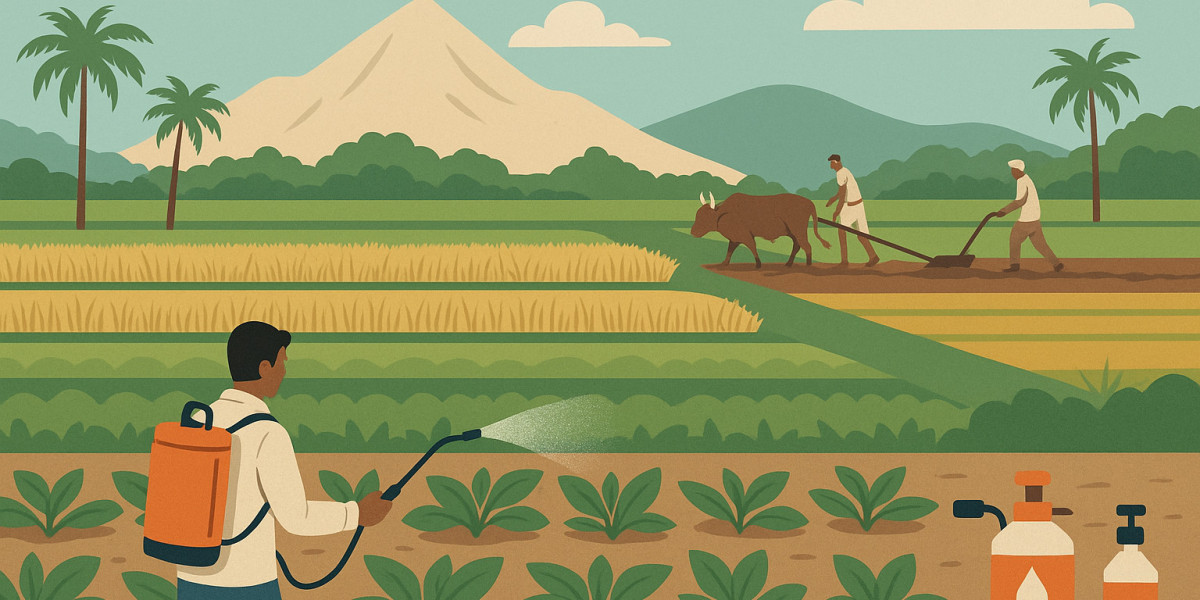

Crop stress management is one of the most pressing challenges in modern agriculture. Whether it’s heatwaves, water shortages, salinity, or pest pressure, plants face a continuous battle for survival. Historically, synthetic chemical solutions were the go-to answer. But over time, growers, researchers, and sustainability advocates have seen the limitations—and long-term costs—of heavy chemical use.
Natural solutions now offer a more resilient, soil-friendly, and scalable way to address crop stress. These approaches work with the plant’s biology, not against it. They support root health, activate stress-response genes, and often leave no harmful residues. In the age of climate instability and consumer scrutiny, natural is proving more than just an ethical choice. It’s a practical, profitable strategy.
What Is Crop Stress, and Why Should It Matter?
Crop stress refers to any environmental or biological factor that disrupts normal plant function. Stress affects photosynthesis, reduces root development, slows flowering, and ultimately cuts yield.
There are two main types:
Abiotic stress: Drought, heat, cold, salinity, UV radiation
Biotic stress: Insect pests, fungi, bacteria, viruses
Plants under stress produce reactive oxygen species (ROS), which damage cells if not neutralized. Natural biostimulants and growth regulators help manage ROS levels and trigger protective metabolic pathways.
The Limitations of Chemical Stress Relievers
Synthetic chemicals like growth retardants, pesticides, or osmoprotectants have been used to mitigate stress responses. But they come with downsides:
Narrow mode of action
Risk of resistance or phytotoxicity
Harm to beneficial soil microbes
Chemical residue concerns and export limitations
Over-application of chemicals has also led to rising regulatory scrutiny. For instance, glyphosate residue thresholds are being tightened in several global markets. Growers are now seeking residue-free alternatives that don’t compromise yield.
Natural Stress Solutions That Work With the Plant
Hormone analogues and natural biostimulants don't compel reactions. They function by strengthening the plant's defences against stress.
Brassinosteroids, a class of plant hormones that increase a plant's resistance to temperature, salinity, and drought, are one effective strategy. Without overstimulating growth, brassinosteroids enhance water-use efficiency and control gene expression.
In order to put this into practice, farmers frequently purchase Double homobrassinolide 0.04% online, a bioactive derivative of brassinosteroid that promotes cell elongation, chlorophyll retention, and abiotic stress recovery. Under stressful conditions, it has demonstrated yield improvements of 12–18% in crops such as rice, tomatoes, and soybeans.
Additional natural strategies include:
Seaweed extracts rich in auxins and cytokinins
Amino acid complexes for osmotic balance and cell membrane protection
These inputs are easy to integrate into foliar or fertigation schedules and compatible with most organic programs.
Natural vs. Chemical: The Comparative Performance
Scientific field trials have consistently shown that natural products can match or exceed chemical treatments—especially under moderate to severe stress.
Parameter | Natural Solutions | Chemical Inputs |
ROS Neutralization | High (via antioxidant activation) | Moderate (via passive inhibition) |
Soil Microbial Impact | Positive (stimulates biology) | Often negative |
Long-Term Crop Health | Supports root mass and longevity | Can induce tissue burnout |
Compatibility with IPM | High | Variable |
Environmental Risk | Minimal | High in case of runoff |
A 2023 study published in the journal Plant Physiology found that under heat stress, brassinosteroid-treated wheat retained 92% of its photosynthetic activity, while untreated controls only maintained 65% and chemically treated plots only 74%.
"Plants don’t need rescue—they need support. Natural inputs allow crops to express their resilience without distorting the system they grow in."
Root-Zone Resilience: Where Stress Management Begins
When under nutrition, salinity, or drought stress, roots are the first to react. Natural substances sustain microbial symbiosis, enhance nutrient uptake efficiency, and encourage the growth of root hair.
Biostimulants like fulvic acid, humic substances, and rhizobacteria:
Improve cation exchange and root zone hydration
Stimulate hormone production from within the plant
Reduce transplant shock and root senescence
These effects are cumulative. Healthier roots mean greater stress tolerance and more stable yields, even in erratic weather cycles.
Emerging Natural Molecules and Pathways
Several new classes of natural compounds are being explored for their anti-stress properties:
Trehalose analogs: Protect cellular structures under desiccation
Polyamines: Involved in drought signal transduction
Betaine compounds: Act as osmoprotectants in saline environments
A 2022 meta-analysis from FAO highlighted that biostimulants improved water-use efficiency in tomatoes by 19.3% on average, with no negative impact on fruit quality.
As climate variability continues, these natural molecules will form the backbone of climate-smart farming.
Integrating Natural Inputs into Commercial Practice
Transitioning to natural stress mitigation doesn’t mean abandoning your crop plan. It means upgrading it.
Steps to integrate natural solutions:
Audit current chemical load
Identify products that can be replaced by biostimulants or hormone analogs.Build a preventive strategy
Apply natural inputs during early crop stages or just before forecasted stress periods.Monitor root and canopy response
Use NDVI imaging, chlorophyll meters, and soil EC sensors to measure real effects.Train staff on mixing and timing
Natural products may require different tank mixes or application windows for best results.
Using field-level feedback ensures that the natural strategy adapts over time without compromising returns.
FAQs
Are natural stress products slower than chemicals?
Not always. Brassinosteroids and seaweed extracts often show effects within 48–72 hours, especially on leaf recovery and turgor pressure.Can I mix natural and chemical products?
Yes, but jar testing is essential. Some natural compounds may degrade or precipitate when mixed with acidic or copper-heavy formulations.Will natural stress solutions affect pest resistance programs?
No. Most biostimulants do not interfere with pest cycles or resistance. Some even improve secondary metabolite production for better plant defense.Are natural inputs more expensive?
According to the application, they can be similar or even cheaper when used preventively. Their long-term value stems from improved soil health and reduced re-applications.
Regenerative Synergy: Stress Management and Soil Health
The ideas of regenerative farming are well aligned with natural stress remedies. They improve carbon sequestration, promote biological cycles, and lessen reliance on outside inputs.
For example:
Biochar-amended soils hold water better, reducing drought effects
Mycorrhizal fungi improve nutrient uptake and drought resilience
Cover crops reduce heat stress by shading and cooling the root zone
Additionally, these systems lessen the need for synthetic NPK, which, when used excessively, frequently increases stress sensitivity.
Passive does not equate to natural. Strategic is what it means. Growers build more robust agroecosystems by switching from reactive chemical use to proactive biological management.
External Resources for Deeper Insights
Biostimulants World Congress – A hub for the latest global research
Organic Farming Research Foundation – Tools and data for soil-friendly practices
These platforms offer case studies, whitepapers, and peer-reviewed data on natural solutions in stress management.
Not Just an Input—A Whole-System Strategy
The way that natural stress reduction is integrated throughout the crop's life cycle is where its true strength rests. Natural substances cooperate with plant biology at every stage, from seed care to blossoming, from drought to recovery.
It takes time to replace all of the chemicals. It all comes down to selecting treatments that promote life rather than numb symptoms.
The following section delves into the ways that microbial inoculants and natural stress inputs combine to create a dual-layer defence mechanism that increases resilience and guarantees sustainable productivity over crop cycles.