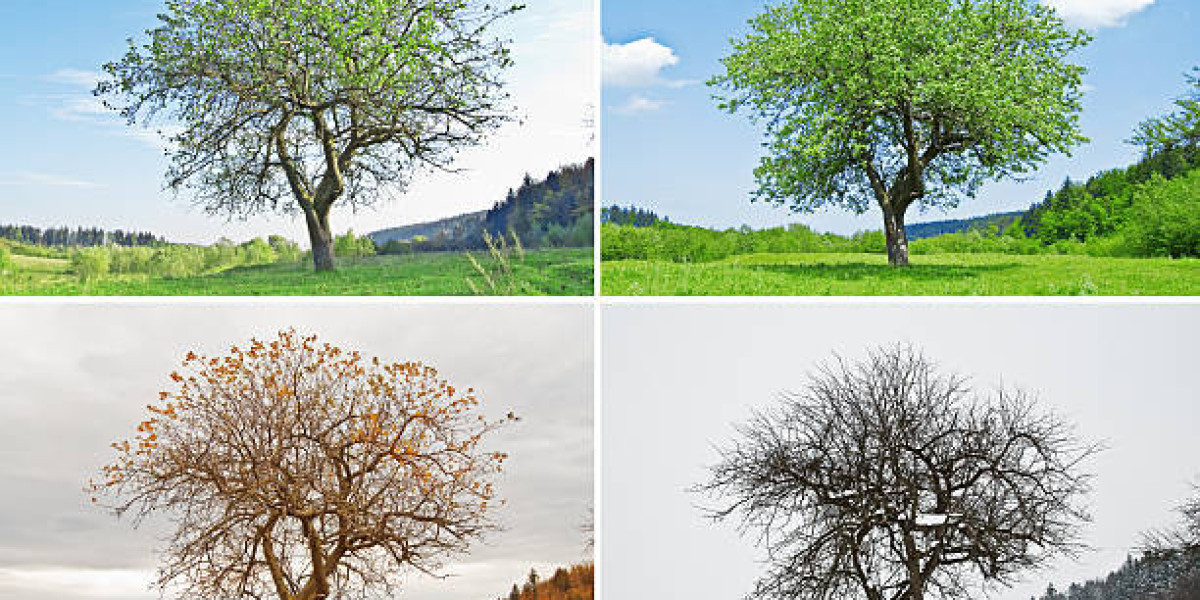

I used to think of seasons as something that happened outside my window — a rotation of colors, temperatures, and daylight hours. Winter would roll in with its frosty hands, spring would spill over with new green, summer would roar and burn, and autumn would slow everything down into gold. It wasn’t until I got older that I realized seasons live inside us too. They move through our hearts, rearrange the furniture of our thoughts, and quietly change the way we see ourselves.
It’s strange how you can carry the summer of your twenties well into your forties, only to wake up one day and find that autumn has settled in your bones. And it doesn’t come with warning bells. There’s no announcement. Just a quiet noticing — the way you look at an old photograph and realize you’re not longing for the person you were, but rather understanding them from a distance you didn’t think you’d ever have.
The First Time I Felt a Season Turn Inside Me
I remember a particular morning when I was younger, waking up in a tiny apartment, coffee brewing in a dented French press, sunlight spilling over the counter. Back then, I thought happiness was loud — a thing that came with neon signs and applause. But that morning, something shifted. I realized it might be in the quiet too. That was my first personal spring — a season not marked on a calendar, but etched into memory.
Years later, I’d meet my first personal winter. It wasn’t the weather that made it cold — it was the sense that parts of my life had frozen over. Friendships that once felt warm had grown still. Ambitions that burned hot now flickered faintly. It was uncomfortable, almost unbearable, until I understood that winter has its work too — it asks you to rest, to conserve, to let certain things die so new ones can grow.
Time as the Unseen Weather
The way time shapes us isn’t all that different from how weather shapes a landscape. A steady drizzle of days can soften even the sharpest edges of who we thought we were. A storm — sudden and fierce — can uproot us, leaving us to plant ourselves somewhere else entirely.
We talk about "finding ourselves" as if we’ve been lost in the woods, but maybe it’s more like growing into ourselves, the way a tree grows into the shape the seasons allow. Time doesn’t just pass — it patinas us. It leaves marks, softens lines, deepens colors, changes the grain.
Sometimes, I think about all the people I’ve been — the summer self who said yes to everything, the autumn self who started saying no, the winter self who waited quietly, the spring self who bloomed again. And then I realize I carry all of them still, layered like rings inside a tree trunk.
The Seasons We Don’t Expect
No one warns you about the half-seasons — those strange transitional times that don’t fit into any neat category. They’re like late March, when the sun feels warm but the wind still cuts like January. These are the moments in life when you think you’re ready for a change, but some part of you still clings to what’s ending.
I carried one of these half-seasons when I moved to a new city. I was full of possibility, but also anchored by the weight of what I’d left behind. I learned that identity is like weather — it shifts with where you are, but traces of the old climate remain in your bones.
Why We See Ourselves Differently Over Time
Part of the shift comes from memory. When you’re younger, you live in the now almost entirely. As you age, you live in a blend of past, present, and imagined future. This changes how you measure yourself. You stop asking, “Am I enough right now?” and start asking, “Am I living in a way I’ll be glad I remember?”
Time also rewrites the meaning of moments. A conversation you thought was casual may echo in your mind years later as the turning point in a relationship. A disappointment that crushed you might now look like the door that needed to close.
And maybe that’s why I’m drawn to places like Archaic Press Magazine — where stories are less about reporting events and more about holding them up to the light of time, letting them change meaning as we change ourselves.
Learning to Carry the Right Things
We can’t carry everything. That’s the first truth time teaches. But we do carry certain seasons whether we want to or not. The laughter of a particular summer. The stillness of a particular winter. The growth of a particular spring. They live in us like secret gardens — or sometimes like locked attics we don’t visit often.
The trick is learning which ones to tend to and which ones to let rest. Some seasons serve as anchors, grounding us in who we are. Others serve as sails, pushing us toward who we might become.
It’s tempting to chase perpetual summer — to avoid the harder, colder seasons — but without them, our inner landscapes would be flat, unshaped. Time needs contrast to do its work.
The Quiet Work of Acceptance
There’s a kind of peace in realizing that change is not betrayal. Outgrowing a version of yourself doesn’t mean you’ve failed them. It means you’ve honored them enough to keep going.
We often think of identity as something to find, but maybe it’s something to tend, like a perennial garden — pruning, planting, letting certain parts go dormant so they can return stronger later.
And when you’ve lived enough years to see the same season return — outside your window and inside your life — you realize that time is not a straight road, but a cycle. You’ll meet parts of yourself again. They may wear different clothes, speak with different certainty, carry different hopes — but they’ll still be you.
FAQ: The Seasons We Carry
1. What does “the seasons we carry” mean?
It’s a way of describing how our life stages — full of change, growth, and pause — live within us like recurring seasons.
2. Can a single life season come back?
Yes. Life is cyclical. We often revisit the same themes, relationships, and feelings, but from a new perspective.
3. Why do some seasons feel harder than others?
Just like in nature, some personal seasons are about rest or loss, which can feel heavy but are necessary for growth.
4. How does time change self-perception?
Time adds distance and context, allowing you to see past choices and events with greater understanding.
5. Can we control what seasons we carry?
We can’t always choose the seasons, but we can choose how we hold them — with gratitude, resistance, or acceptance.
6. Why are transitional periods important?
They prepare us for change, teaching resilience and adaptability before a major life shift.
7. How can I appreciate the season I’m in?
Practice noticing small details, honoring your pace, and letting go of comparison to other people’s timelines.
8. Do external seasons affect our inner seasons?
Yes — changes in weather, daylight, and activity often mirror or influence our internal mood and rhythm.
9. Is it possible to live in more than one season at once?
Absolutely. You might be in a “spring” of personal growth while experiencing a “winter” in another area of life.