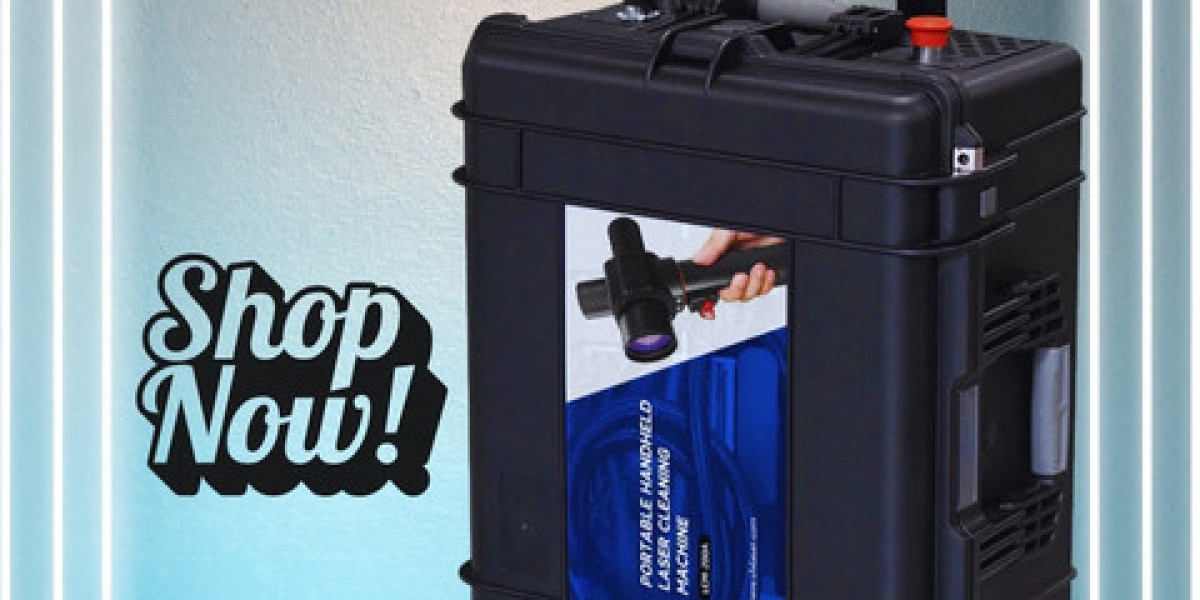

The demand for this technology has grown in manufacturing, aerospace, automotive, shipbuilding, and electronics industries. Companies adopt it to meet higher production standards, comply with environmental regulations, and reduce maintenance downtime. Unlike conventional techniques, the laser cleaner machine combines speed with accuracy, making it suitable for large-scale industrial tasks and delicate restoration projects alike.
This article explores the laser cleaner machine in detail, focusing on its role in modern industries, working principles, applications, and long-term relevance.
Understanding the Concept of Laser Cleaning
A laser cleaner machine operates on the principle of laser ablation. This process directs a focused beam of light onto a surface, where contaminants absorb the energy and vaporize or detach. The substrate beneath remains untouched if the laser parameters are set correctly.
This precise separation between unwanted layers and the core material is what makes laser cleaning unique. For industries dealing with sensitive components or valuable metals, the ability to clean without damaging the base is vital.
The machine can be configured for different power ranges, from low to high wattage, depending on the cleaning requirement. For example, removing thin oxide films may require a low-powered system, while heavy rust on thick steel plates may demand higher power.
How a Laser Cleaner Machine Works
The operation involves several carefully coordinated steps:
Emission of Laser Beam – The machine generates a laser beam through a fiber or solid-state laser source.
Focusing Mechanism – Optical lenses or mirrors direct the beam to a precise point on the surface.
Absorption by Contaminants – Rust, paint, or dirt absorbs the laser energy, while the metal substrate reflects most of it.
Vaporization and Removal – The contaminants heat up rapidly, break down, and vaporize, leaving the surface clean.
Controlled Movement – The laser head moves across the material in a defined pattern to ensure uniform cleaning.
This contactless process reduces wear on tools and minimizes the risk of secondary waste materials.
Industrial Applications of Laser Cleaner Machine
The laser cleaner machine is not restricted to a single sector. Its adaptability makes it relevant in multiple fields:
Automotive Industry – Removing rust from car frames, preparing surfaces for welding, and cleaning engine components.
Aerospace Industry – Maintaining turbine blades, treating aluminum surfaces, and cleaning delicate parts without abrasion.
Electronics Industry – Eliminating oxides and residues on circuit boards or micro-components.
Shipbuilding and Marine – Treating corroded metal surfaces on ships, tanks, and offshore structures.
Cultural Heritage Preservation – Cleaning statues, monuments, and artworks without damaging stone or metal bases.
Manufacturing Plants – Preparing surfaces for coatings, removing oils and lubricants, and maintaining equipment.
Each application showcases the versatility of the laser cleaner machine across both heavy-duty and fine-detail tasks.
Environmental Relevance
One of the driving forces behind the popularity of the laser cleaner machine is compliance with environmental standards. Industries are under pressure to reduce chemical waste, hazardous solvents, and abrasive blasting materials. Laser cleaning produces minimal residue, often limited to the vaporized particles of contaminants, which can be captured with extraction systems.
This shift aligns with global initiatives toward sustainable manufacturing. By adopting laser cleaning, businesses can reduce chemical handling, water usage, and airborne dust, ensuring safer workplaces and reduced ecological impact.
Efficiency and Operational Impact
For industries focused on production output, downtime is costly. A laser cleaner machine accelerates surface preparation, allowing quick transitions to welding, coating, or assembly processes. The precision of the technology ensures that only unwanted layers are removed, preserving material quality and extending the lifespan of equipment.
Moreover, the machine reduces the need for consumables such as sand, chemicals, or cleaning pads. This contributes to lower recurring costs, a factor that appeals to large-scale operations managing thousands of components daily.
Integration into Modern Production Lines
Modern factories are moving toward automation and digitization. A laser cleaner machine fits well within this trend. These machines can be integrated into robotic arms, conveyor systems, and CNC machines for fully automated cleaning processes.
Robotic integration allows continuous operation in hazardous environments, where human labor may be at risk due to fumes, dust, or high temperatures. With programmable settings, the system can handle complex geometries and varying contamination levels.
Such integration strengthens industrial efficiency while maintaining high-quality standards.
Longevity of Equipment and Materials
Another critical benefit of using a laser cleaner machine is the preservation of core materials. Traditional abrasive cleaning methods may erode or weaken surfaces over time. In contrast, laser cleaning maintains the structural integrity of metals and delicate components.
This preservation plays an essential role in sectors where safety is crucial, such as aerospace and defense. By ensuring parts remain strong after repeated maintenance cycles, companies achieve both reliability and compliance with strict safety standards.
The Growing Role in Industrial Transformation
The adoption of the laser cleaner machine reflects a broader industrial transformation. As industries prioritize efficiency, sustainability, and precision, laser technology becomes central to achieving these goals. Businesses that incorporate such solutions not only streamline their operations but also future-proof themselves against evolving regulations and market demands.
The machine is more than just a tool for cleaning; it is a symbol of the shift toward modern manufacturing practices. Companies that recognize its potential position themselves ahead of competitors still relying on older methods.
Final Thoughts
The laser cleaner machine is redefining industrial cleaning practices across multiple sectors. Its contactless operation, ability to target specific contaminants, and compatibility with automation make it a key part of modern production strategies. Beyond immediate cleaning tasks, it supports long-term sustainability goals and improves operational efficiency.
Industries that adopt this technology are not only improving their present operations but are also preparing for a future where precision, safety, and environmental responsibility are central to growth.