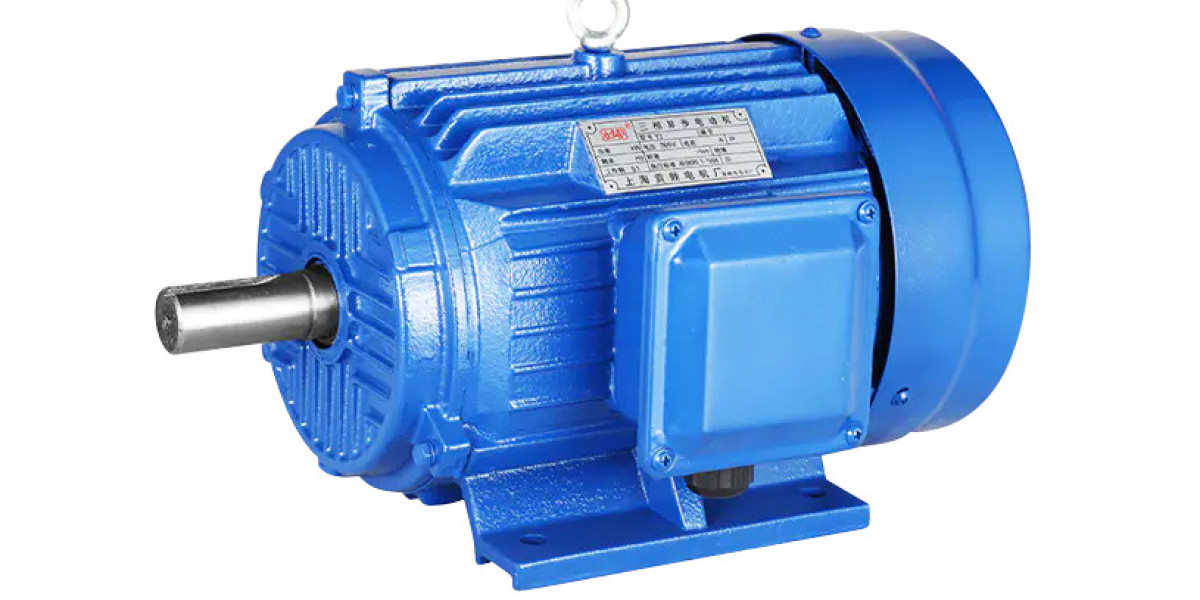

The Three-Phase Asynchronous Motor has earned a significant place in industrial environments due to its balance of performance and dependability. As an induction motor, it relies on the principle of electromagnetic induction to generate rotation in the rotor. The slight difference between synchronous speed and rotor speed, known as slip, is what drives the operation of this machine.
Industries favor this motor for its versatility. It can be used in small equipment as well as large industrial machinery. For example, it powers fans, elevators, textile machines, crushers, and packaging systems. Its ability to deliver continuous mechanical energy without complex starting equipment makes it practical in both small workshops and large-scale plants.
The Three-Phase Asynchronous Motor is also recognized for its durability under varying working conditions. Its sturdy construction allows it to withstand mechanical stress, dust, and temperature changes. With proper installation and periodic maintenance, it can function effectively for long durations.
Another advantage lies in its stable performance. Once energized, the motor runs smoothly with consistent torque output. This reliability reduces downtime in industrial processes, which is crucial for maintaining productivity.
Different types, such as the squirrel cage motor and the wound rotor motor, cater to different industrial needs. The squirrel cage motor is compact and commonly used, while the wound rotor motor offers adjustable speed features through external resistance, making it useful in applications requiring controlled acceleration.
Moreover, the Three-Phase Asynchronous Motor is energy-conscious. Its efficiency helps in reducing unnecessary power consumption, making it suitable for modern industries that aim to balance productivity with energy management.
The Three-Phase Asynchronous Motor continues to serve as a vital element in industrial operations. Its adaptability, steady output, and robust design ensure that it remains an essential machine for powering equipment across diverse sectors.
Ubicación del Autor
London, Reino Unido