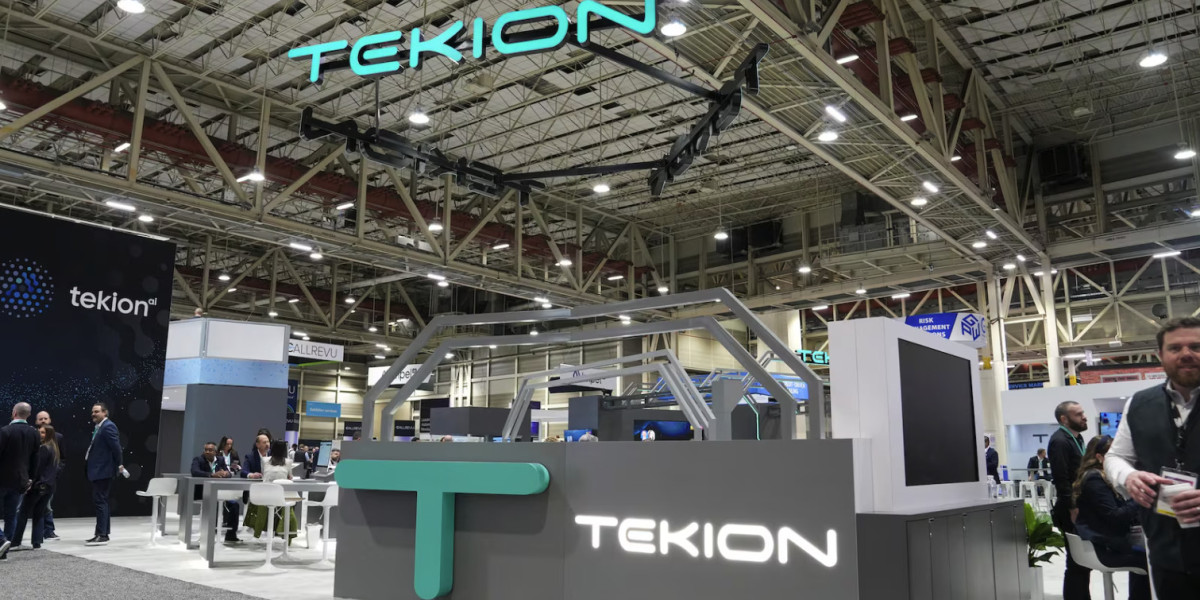

In an era when consumers expect frictionless, digital-first experiences, dealerships and OEMs are pressed to evolve quickly. Enter Tekion: a next-generation platform built to modernize, unify, and automate automotive retail. With a cloud-native architecture and deeply integrated intelligence, Tekion seeks to replace legacy systems and deliver a true end-to-end retail experience— from brand websites to service bays.
What Tekion Is: A Unified Cloud Platform for Automotive Retail
Tekion positions itself as the platform that connects your entire business—an AI-powered system that weaves together dealership operations, digital retail, CRM, service, parts, analytics, and OEM alignment. According to its homepage, Tekion enables “an AI‑powered retail experience from brand to store.”
The backbone of this ambition is Tekion’s Automotive Retail Cloud (ARC), a modern, cloud-first system designed from the ground up for scalability, modularity, and unified logic. Where many dealers rely on multiple disconnected systems (CRM, DMS, service, parts), Tekion offers a single environment, eliminating silos and redundant work.
To bridge the gap between OEM branding and dealer execution, Tekion launched its Automotive Enterprise Cloud (AEC). With AEC, brand websites can offer real-time configurators, secure checkout, e-signatures, and scheduled delivery— seamlessly tied to local dealership workflows.
Supporting integration and extensibility, Tekion provides Automotive Partner Cloud (APC)—a suite of APIs and integration tools so that third-party providers (insurance, parts suppliers, marketing tools, etc.) can plug into the Tekion ecosystem without awkward workarounds.
Key Features & Capabilities
Digital Retail that Feels Native
Tekion’s Digital Retail is not an add-on—it is a direct extension of ARC. This means that every deal, document, and transaction happening online is inherently connected to the dealership’s core systems.
Some standout features:
Transparent Payment Calculator: customers see total costs inclusive of taxes and fees
Live Online Sessions: dealers and buyers can negotiate, configure, and complete deals in real time
Sales & Checkout Concierge: a centralized hub for managing deals, documents, delivery, and payment
The promise is continuity: whether a customer begins their journey online or in-store, Tekion keeps the data, context, and process intact.
Generative AI & Smart Communication
Tekion’s AI capabilities are not superficial—they are deeply baked in. In September 2023, Tekion rolled out its generative AI feature, Smart Communication, powered by GPT.
Smart Communication analyzes ongoing conversations between sales agents and prospects—summarizing key points, generating response suggestions, and even drafting emails. In early use, dealers reported saving 30–45 minutes per salesperson per day using this tool.
This marks a shift: Tekion is not only about giving insights—it is about helping users act faster and more consistently.
Zero-Contact Sales & Service
Recognizing shifts in consumer behavior—especially post-pandemic—Tekion introduced Zero-Contact Digital Sales & Service.
With this, customers can:
Complete purchases fully online (document e-signing, deposit, payment)
Have cars delivered to their doors
Use contactless service options such as key drop and remote diagnostics
In service operations, Tekion offers options like “Premium Concierge” (fully remote) and “Secure Key Lounge” (self-check-in/checkout) workflows, maintaining transparency and communication throughout.
Data from early adopters suggested that zero-contact deals had higher gross revenue compared to traditional ones in variable operations, and better ROI in fixed ops as well.
OEM Alignment Through AEC
Tekion’s AEC enables deeper alignment between manufacturers and their dealer networks. Through AEC, brand sites and dealer sites share digital continuity:
Interactive vehicle configurators tied to real dealer inventory
Fully online checkout: e-sign, payment, delivery scheduling
Real-time analytics and visibility into online-to-offline funnels
By collapsing the boundary between brand and retail, Tekion empowers manufacturers to retain brand consistency and customer experience control while giving dealers the tools to fulfill locally.
Strategic Adoption: Hyundai & Beyond
In 2023, Tekion secured a significant win: Hyundai Auto Canada granted its dealers the option to adopt Tekion’s ARC as their DMS platform.
This partnership highlights how Tekion is being recognized not just as a challenger, but as a viable alternative for major OEMs and their dealer networks. By partnering with Hyundai, Tekion demonstrates confidence in its platform’s capabilities in real-world, high-stakes environments.
Tekion has also broadened its infrastructure by integrating with Microsoft Azure, expanding its hosting options and enterprise-level scalability.
Strengths & Real-World Impact
Unified Data & Operational Fluidity
Because Tekion’s modules share a common architecture and data model, cross-functional workflows remain synchronized. Sales, service, parts, and customer data are all accessible and actionable in one system. This reduces friction in handoffs and accelerates operations.
Efficiency Gains & Automation
By embedding AI, automation, and real-time insight, Tekion reduces manual tasks. Features like Smart Communication, zero-contact workflows, and unified digital retail free up staff to focus on high-value work. Dealer partners cite operational efficiencies, time savings, and cost reductions.
Richer Consumer Experience
Consumers benefit from a seamless journey: configure, buy, and schedule all digitally if desired, or transition smoothly in-person. Transparency, live negotiation, and integrated checkout foster trust and faster decision-making.
Competitive Position & Scalability
Tekion’s cloud-native design enables it to scale across rooftops and geographies without heavy hardware or legacy system overhead. As dealerships grow or consolidate, Tekion’s architecture is built to accommodate change.
Its adoption by Hyundai dealers and Azure collaboration demonstrate that Tekion is not a fringe player—but one increasingly trusted at enterprise scale.
Challenges, Critiques & User Voices
Even the most promising platforms face real-world friction. User feedback and reviews paint a nuanced picture of Tekion’s strengths and growing pains.
Reliability & Performance
From Reddit threads:
“Crashed for 2 hours 4 times already. Appts don’t transfer through.”
Some users attribute issues to infrastructure or network weaknesses but report serious disruption when module components fail or lag.
Parts & Wholesale Module Complaints
Parts counters have flagged limitations:
“Issues with parts and wholesale… frustrations for the more tried and true systems.”
“Parts logic is very complicated… special order parts do not carry over to repair orders.”
Some workflows—especially for aftermarket or non-OEM parts—appear underdeveloped compared to mature legacy systems.
Onboarding & Support
Transition to Tekion is rarely frictionless:
“Training is horrible … it will be a rocky transition … updates rolled out monthly.”
“Support tickets never solved … lack of follow-through … slow response.”
Dealerships emphasize the need to plan for change management, training, and internal support strategies.
Update Instability & Regression Risk
Frequent updates, while a strength of modern platforms, sometimes introduce regressions or break workflows. Users report being affected by module changes that temporarily disrupt operations.
Mixed User Experience
While some users appreciate the modern UI and integration, others—especially technicians—find the system less intuitive. Complaints include slow inspection pros, excessive clicks, and role-blurring prompts (e.g. tasks showing to roles that shouldn’t see them).
Strategic Risks & Competitive Landscape
Tekion’s rise invites pushback from incumbents. A notable example is a 2024 lawsuit Tekion filed against CDK Global—alleging CDK was impeding dealer platform migration by restricting access to essential operational data.
Shortly after, CDK countered with claims of Tekion engaging in illicit data‑scraping practices—a reflection of how fiercely the competitive dynamics are playing out.
As Tekion enters deeper OEM partnerships and scaled deployment, it must maintain agility in legal, compliance, and data access strategies while safeguarding trust with dealers.
Planning a Tekion Deployment: Best Practices
For organizations considering Tekion, the following strategic guidelines increase the odds of success:
Data cleanup & migration readiness: Legacy systems often harbor anomalies or duplicates; clean data from Day 0.
Infrastructure investment: Ensure reliable connectivity, robust hardware, and network bandwidth. Some performance complaints stem from weak infrastructure.
Phased implementation: Rollout gradually (e.g., service first, then sales) to ease adaptation and gain early wins.
Change management & training: Engage users early, run pilot programs, and staff internal champions.
Support & feedback loops: Set clear SLAs, escalation paths, and internal help desks to manage teething issues.
Iterate based on feedback: Tekion updates often respond to user suggestions—be prepared to adapt workflows post-launch.
Future Trajectory & Growth Vision
Tekion’s roadmap hints at continued evolution:
Expand AI Agents beyond service—to roles in sales, parts, accounting, and maintenance.
Deepen generative AI across modules: auto-generating documents, workflows, contract drafts, and system prompts.
Integrate connected vehicle data and IoT for predictive maintenance, live vehicle insights, and proactive customer engagement.
Expand geographic reach with localization (tax, regulatory, compliance) for global markets.
Enhance support maturity, stability, and usability to address user pain points and reduce adoption friction.
If Tekion can continue listening to users and iterating thoughtfully, it stands a chance to lead the next wave of automotive retail platforms.
Tekion isn’t just another DMS or retail software vendor—it’s a reimagining of how automotive retail could and should work in the digital era. By combining unified architecture, AI-driven automation, digital-first retail, and OEM alignment, Tekion offers a platform built for future growth and competitive resilience.
Yet technology alone isn’t enough. Success depends on intentional deployment, infrastructure readiness, user buy-in, and continuous feedback. For dealerships and OEMs willing to invest in transformation, Tekion presents an opportunity not just to modernize—but to leap ahead. If it delivers on its promise, Tekion could become the foundational platform that defines automotive retail for the next generation.