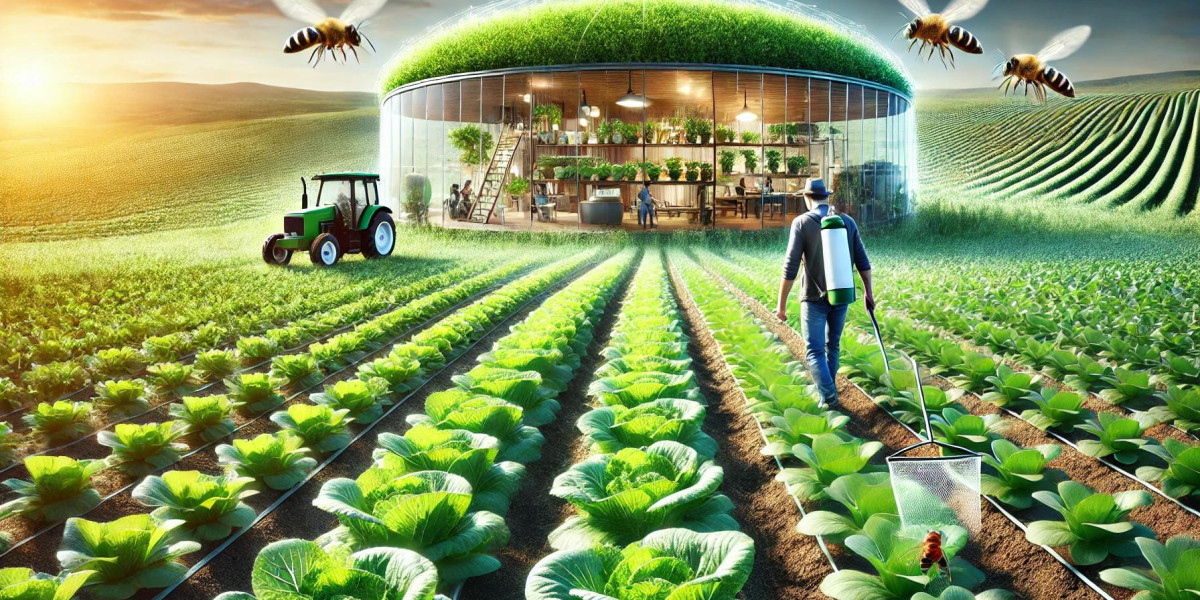

Organic agriculture has long been rooted in tradition—composting, crop rotation, natural pest control. But as climate challenges grow, market demands shift, and farm labor shortages rise, organic farmers are turning to an unlikely ally: artificial intelligence. The integration of AI and smart farming tools in organic systems marks a new frontier where nature meets data, and intuition blends with intelligent automation.
This is not about replacing the farmer. It's about empowering them. AI and precision technology offer new layers of insight, control, and efficiency that help organic growers maintain sustainability while boosting productivity. And contrary to the belief that technology belongs solely to industrial agriculture, these tools are becoming indispensable for regenerative practices too.
In this blog, we explore how AI and smart tools are being adapted to fit the organic model—enhancing soil health, reducing waste, conserving resources, and making ecological farming scalable and profitable.
The Role of Artificial Intelligence in Sustainable Farming
In agriculture, artificial intelligence (AI) refers to the application of machine learning, computer vision, and data analytics to improve yield forecasts, planting, irrigating, and pest control decisions. Making accurate decisions is even more important in biological systems, where synthetic inputs are limited.
AI improves organic values rather than diminishes them. AI makes it possible to take tailored interventions based on crop stress indicators, weather patterns, and soil conditions rather than applying treatments all at once. In organic farming, where inputs are frequently biological and require the right timing and context to be successful, this is especially helpful.
Precision is key. Whether applying compost or rotating cover crops, the ability to know where, when, and how much has become just as important as what is applied. Organic farmers who buy Organic Farming Products often find greater returns when paired with AI tools that optimize usage and application.
Smart Sensors: Listening to the Land in Real Time
Among the most significant technological advancements for organic farmers are smart sensors. These compact yet effective instruments assess temperature, nutrient content, pH, moisture content, and even microbial activity. Their instantaneous feedback revolutionises decision-making.
By employing in-field sensors, a farmer can determine whether the soil moisture content is too low for microbial life to flourish or whether the nitrogen levels in compost have sufficiently improved. This improves plant response and decreases input waste by substituting grounded data for conjecture.
IoT (Internet of Things) networks in conjunction with remote sensors provide field-wide monitoring without the need for in-person inspections. This guarantees that no zone is overlooked and saves time in large or hilly fields.
According to a report by AgFunder, farms using sensor-integrated systems saw up to 25% improvement in input efficiency and 30% reduction in water usage—without compromising crop quality.
Computer Vision and Drones: Seeing Beyond the Surface
Artificial intelligence (AI) systems can use computer vision to examine photos taken by drones or field cameras and identify minute indications of crop stress, pest infestation, or nutrient shortage—often before the human eye can notice them. In organic agriculture, where early intervention prevents escalation without the use of pharmaceutical therapies, these discoveries are crucial.
Vegetation indicators, such as the Normalised Difference Vegetation Index (NDVI), which measures plant health, can be mapped by drones with multispectral imagery. This saves resources and labour by assisting farmers in determining where to apply compost tea or boost mulching.
It's not about embracing cutting-edge technology. The goal is to use technology to take a closer look at the land, even from above. The management of organic systems is altered by this new viewpoint, which permits small adjustments rather than large, sometimes inefficient ones.
“Technology doesn’t replace the farmer. It gives the soil a voice and the plants a way to whisper what they need.”
AI for Pest and Disease Forecasting
Managing pests is a delicate subject in organic farming. Biological alternatives need to be used at the right time, and synthetic pesticides are out of the question. In order to forecast epidemics, AI excels at evaluating past patterns, plant health, soil moisture, and weather data.
These days, platforms that combine machine learning algorithms, satellite weather data, and past insect behaviour can alert farmers days before an infestation peaks. Organic farmers can use this early warning system to plant companion plants, release predatory insects, or use neem oil when it's time.
Cameras can identify bug species and distinguish between friends and foes thanks to certain systems that even include distinctive entomological IDs. This is particularly helpful in controlling invasive threats and preserving pollinators.
For organic growers, where prevention is the first line of defense, AI acts like a digital scout, constantly watching, learning, and predicting.
Robotics for Manual Tasks in Organic Systems
Organic agricultural automation doesn't resemble production lines. It appears to be autonomous tractors trained on GPS routes that prevent soil compaction, solar-powered weeding robots, or compost spreaders equipped with variable-rate control.
In particular, robotic weed eaters have become a breakthrough. Weeding is expensive and time-consuming, particularly on organic farms where using herbicides is forbidden. AI-powered devices now employ machine vision to separate weeds from crops and eliminate them mechanically, eliminating the need for hazardous shortcuts or manual labor.
Autonomous harvesters for fragile crops like lettuce or strawberries are another use case; they provide careful handling while lowering the need for seasonal labour.
A startup in the Netherlands recently demonstrated a robotic cover crop roller that can terminate cover crops without tillage, preserving soil structure. This is a promising shift for no-till organic systems seeking mechanised support without sacrificing soil health.
Soil Health Analytics: AI Meets Biology
Artificial intelligence looks beyond the surface. It delves deeply into the soil's biological complexity. These days, sophisticated models can analyze soil test data and correlate microbial diversity with disease resistance or yield trends.
Farmers may monitor how seasonal changes impact the resilience of the soil or how different compost recipes impact the ratios of fungi to bacteria by using AI-driven systems. They may precisely adjust their practices thanks to this feedback loop, which replaces trial and error with fine-tuning.
With a 17% increase in soil organic carbon in just three seasons, a 2022 study published in Nature Food demonstrated how AI-enhanced soil analysis assisted in determining the best crop rotation sequences for optimizing microbial regeneration.
Climate Monitoring and Adaptive Farming
Although organic farming frequently follows climate-smart practices, climate volatility still affects it. By modelling crop performance under varied conditions and recommending optimal planting times, irrigation schedules, and even variety selection, AI-powered technologies assist farmers in adapting.
Instead of responding to unfavourable circumstances after the fact, these adaptive models assist farmers in making proactive decisions by combining farm data and local weather trends. This is particularly crucial in areas with high rainfall or drought, where timing is crucial.
Digital twins, virtual models of farms, are emerging as a novel solution. They allow farmers to experiment with strategies in a simulated environment before implementing them in the field. This reduces risk and builds confidence in decision-making.
Explore more topic: 7 Ways Manual Farming Tools Save Time and Energy in the Field
Integrating Organic Values with High-Tech Tools
The most common misconception regarding smart farming technologies is that they are only used in traditional, chemical-intensive farming methods. However, AI only processes data; it doesn't promote chemistry. The farmer must use that information to guide sustainable, ecological practices.
The philosophy underlying a tool determines its quality. That philosophy is based on long-term stewardship, care, and observation in the context of organic farming. These values are simply scaled across more complex operations or larger landscapes with the aid of AI and smart tools.
Using AI in conjunction with biodynamic planting calendar or computer vision to assess the health of polyculture systems, for instance, demonstrates that innovation and tradition are collaborators rather than mutually exclusive.
A well-managed organic farm using smart tools can become a model of future-ready resilience, where every square meter of land is used wisely, respectfully, and regeneratively.
FAQs
Can AI really be useful for small organic farms?
Yes, many tools are now affordable and scalable. Mobile-based platforms and low-cost sensors make it easy for smallholders to access precision insights without large investments.Are AI tools difficult to use without technical knowledge?
Most modern platforms are designed with user-friendly dashboards and automation features. Some even offer voice-based support in multiple languages for rural adoption.How does AI help reduce input waste?
AI helps determine the right timing, quantity, and location for applying organic inputs. This precision ensures nothing is wasted and every application delivers maximum benefit.Does technology contradict organic principles?
Not at all. When used responsibly, technology enhances organic practices by supporting ecological balance, reducing waste, and enabling better observation and action.What's the most impactful AI tool for organic farmers today?
Soil sensors paired with AI analytics are currently among the most transformative, as they improve fertility management, water use, and crop rotation decisions.
Where Nature Meets Neural Networks
Tradition and technology are not mutually exclusive in the future of organic farming. The goal is to achieve harmony. The virtues of organic agriculture are not diminished by AI or smart farming technologies; rather, they are strengthened, enabling farmers to more efficiently and wisely farm in harmony with the environment.
Digital intelligence and ecological knowledge are coming together in a unique way. With the help of sensors, data, and artificial intelligence, it develops a farming system that is not only sustainable but also insightful, giving the crops, bacteria, soil, and weather a voice.
Organic farmers are embracing this combination without sacrificing who they are. They are evolving into a new breed of innovators, ones who recognize that it might now need not only our hands but also our brains, algorithms, and microchips to cure the planet.