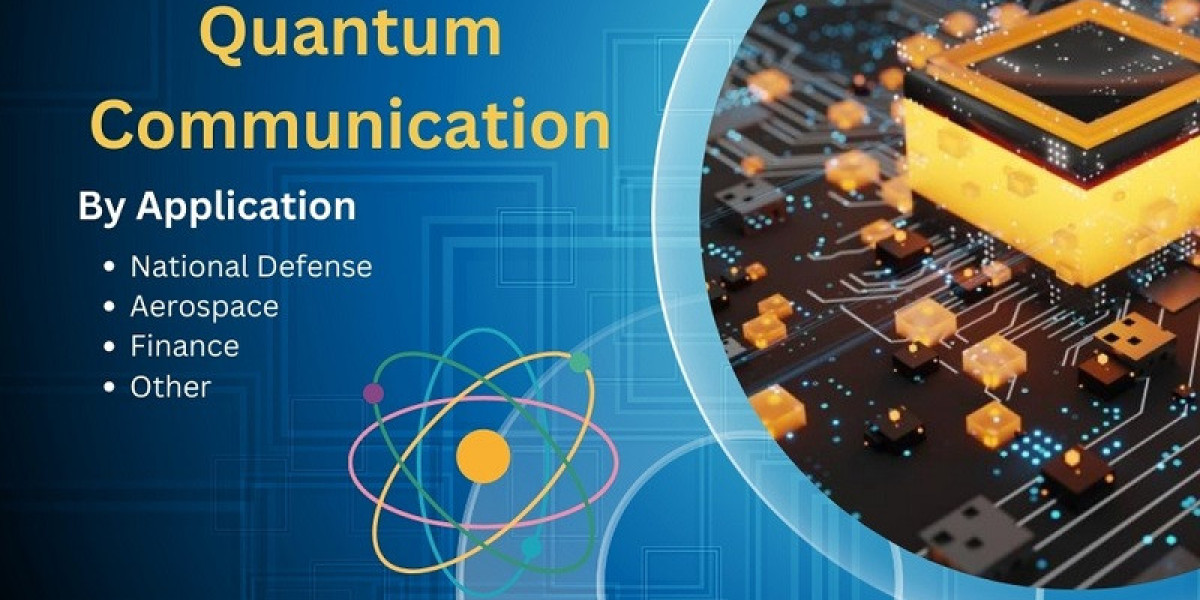

In an era defined by digital espionage and the ever-present threat of data breaches, the search for truly secure communication has led scientists and engineers to the strange and wonderful world of quantum mechanics. This has given rise to the field of Quantum Communication, a revolutionary new paradigm for transmitting information. Unlike classical communication, which relies on bits (0s and 1s), quantum communication uses the fundamental properties of quantum physics, such as entanglement and superposition, to encode and transmit information. Its most famous application is Quantum Key Distribution (QKD), a method for sharing a cryptographic key between two parties with a guarantee of security that is backed by the laws of physics. Any attempt to eavesdrop on the quantum channel would disturb the quantum state, instantly alerting the legitimate users, making it a theoretically "unhackable" communication channel.
This promise of a new era of absolute security is the driving force behind a nascent but incredibly high-potential global market. The industry is on the verge of an explosive growth trajectory, with its market size expected to reach a valuation of USD 17.94 billion by the year 2035. This monumental expansion will be powered by an extraordinary compound annual growth rate (CAGR) of 29.32% during the 2025-2035 forecast period. This powerful financial momentum is a direct reflection of the immense strategic importance of secure communication in the 21st century. As governments, military organizations, and critical infrastructure sectors face the growing threat of sophisticated cyberattacks, the investment in quantum-secure communication networks has become a top national security and economic priority, fueling this robust and long-term market expansion.
The primary benefit of quantum communication, particularly QKD, is its ability to provide "forward security." This means that even if a powerful quantum computer is developed in the future that can break today's standard encryption algorithms, any communication that was secured using QKD will remain secure. This is a critical concern for organizations that need to protect data with a long shelf life, such as government secrets, intellectual property, and financial records. By providing a communication channel whose security is not dependent on the computational difficulty of a mathematical problem but on the fundamental laws of nature, quantum communication offers a future-proof solution to the challenge of long-term data confidentiality, a value proposition that is unmatched by any classical technology.
Looking ahead, the future of quantum communication extends beyond just QKD. Researchers are working on the development of a full-fledged "Quantum Internet," a network that can transmit not just classical information securely, but also quantum information (qubits) between quantum computers. This would unlock a host of revolutionary new applications, from distributed quantum computing to ultra-precise sensor networks. While the full realization of the Quantum Internet is still decades away, the development of its foundational components, such as quantum repeaters and memories, is a major area of research. As these technologies mature, quantum communication will evolve from a specialized security tool into a general-purpose platform for a new generation of quantum technologies.
Explore Our Latest Trending Reports:
North America Web3 in Entertainment Media Market