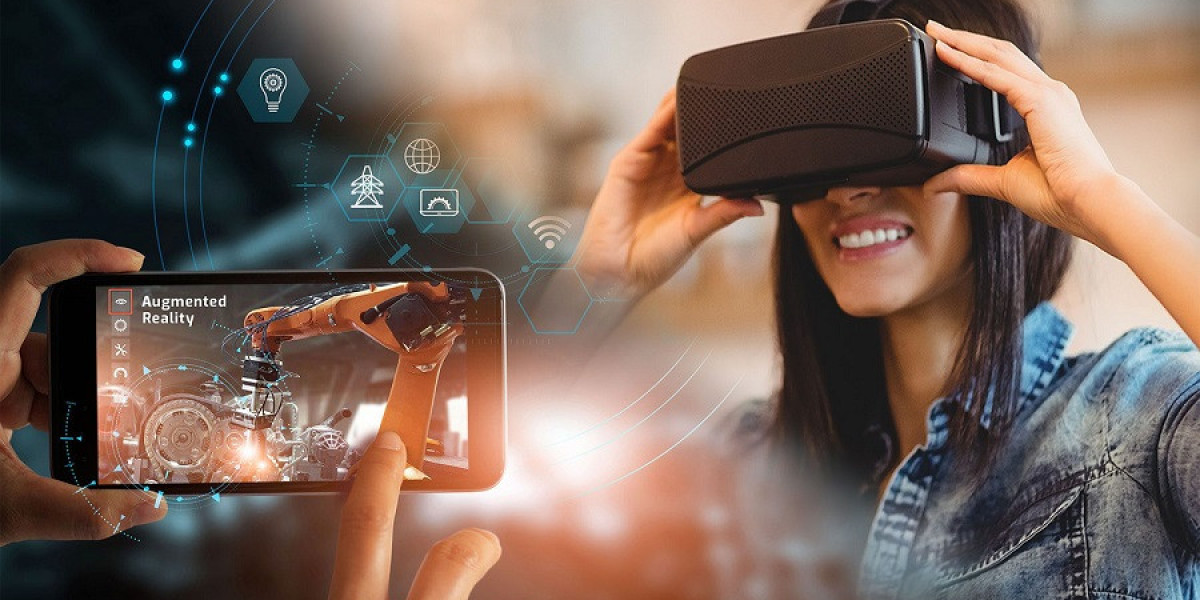

In the 21st century, our interaction with the digital world is undergoing a profound transformation, moving from flat, 2D screens to immersive, three-dimensional experiences. This shift is being driven by the powerful technologies of Augmented Reality and Virtual Reality (AR/VR). Virtual Reality (VR) immerses a user in a completely computer-generated, simulated environment, shutting out the physical world, typically through a headset. Augmented Reality (AR), in contrast, overlays digital information—such as images, text, and 3D models—onto the user's real-world view, typically through a smartphone or smart glasses. Together, these technologies, often referred to under the umbrella term of "Extended Reality" (XR), are creating a new computing platform that is more spatial, intuitive, and interactive, and are set to redefine how we work, play, learn, and connect with each other in the coming years.
This technological revolution in human-computer interaction is the foundation of a market of immense scale and explosive potential. The combined AR/VR industry is on a clear and powerful growth trajectory, with its market size expected to expand from a substantial USD 44.68 billion in 2024 to an incredible USD 300 billion by the year 2035. This monumental growth is a direct reflection of the massive and ongoing investment from the world's largest technology companies and the growing adoption of these technologies across a wide range of consumer and enterprise applications. This powerful financial momentum signals that AR and VR are successfully transitioning from niche technologies to a mainstream platform that will be a major part of the future digital economy.
The benefits of AR and VR are vast and are already having a major impact across a variety of sectors. In the enterprise, VR is being used to create highly realistic and safe training simulations for complex tasks, from surgical procedures to aircraft maintenance. AR is a game-changer for front-line workers, providing them with hands-free, heads-up access to digital instructions and remote expert assistance. In the consumer world, VR is creating a new and incredibly immersive medium for gaming and entertainment, while AR is transforming retail with "virtual try-on" experiences and is enhancing our daily lives with interactive navigation and information overlays. These diverse and high-value applications demonstrate the technology's broad and transformative potential.
Looking ahead, the future of AR and VR is inextricably linked to the development of the "metaverse"—a persistent, interconnected set of immersive virtual spaces. AR and VR will be the primary hardware gateways that allow us to access and interact with this new 3D internet. The convergence of AR/VR with other powerful technologies like 5G and artificial intelligence will be a major catalyst, enabling more realistic, real-time, and intelligent immersive experiences. While challenges in hardware form factor, content creation, and user adoption remain, the relentless pace of innovation in this space ensures that AR and VR are on a firm path to becoming the next major computing platform after the smartphone.
Explore Our Latest Trending Reports:
North America Data Center Rfid Market