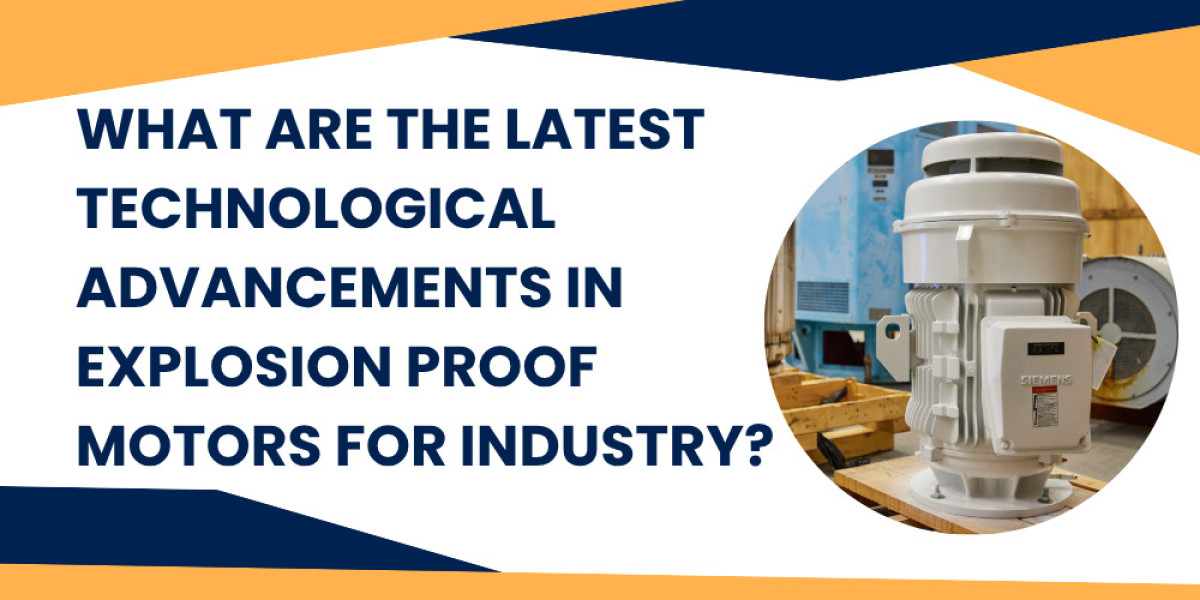

Explosion proof motors are critical in industries where flammable gases, vapors, or dust are present. Their design ensures that the motor can operate safely without igniting surrounding hazardous environments. In recent years, rapid technological innovations have transformed the performance, safety, and efficiency of these motors, catering to modern industrial demands. This article explores the latest advancements in explosion proof motors, highlighting innovations in design, materials, efficiency, and control systems.
Understanding Explosion Proof Motors
Explosion proof motors, sometimes called hazardous location motors, are specially designed electrical machines that prevent the ignition of surrounding flammable atmospheres. Unlike standard motors, these devices are engineered to contain any sparks or heat generated within the motor casing, ensuring safe operation in volatile environments such as chemical plants, oil refineries, and mining facilities.
The core principle behind explosion proof motors is the containment of potential ignition sources. Motors are housed in robust enclosures capable of withstanding internal explosions without rupturing. Furthermore, the construction incorporates specialized seals, gaskets, and insulation materials to prevent leaks of flammable gases into hot or electrically active zones.
Innovations in Motor Design and Construction
Recent advancements in explosion proof motors primarily focus on enhancing safety and durability while maintaining or improving performance.
Advanced Enclosure Designs
Modern explosion proof motors utilize precision-engineered enclosures that provide enhanced containment and heat dissipation. The latest designs employ high-strength alloys, reinforced cast iron, and corrosion-resistant coatings to ensure long-term reliability in harsh industrial environments.
Manufacturers have also integrated optimized cooling paths into enclosures, reducing the risk of overheating and improving efficiency. Computational fluid dynamics (CFD) modeling has enabled designers to simulate heat and pressure dynamics, ensuring that the motor can handle extreme operating conditions without compromising safety.
Enhanced Sealing Technologies
Sealing technology has seen significant improvements, reducing the risk of flammable gas ingress. Modern explosion proof motors now incorporate multi-layer sealing systems and advanced gaskets that maintain integrity under high pressure, temperature fluctuations, and vibration. These innovations extend motor lifespan and reduce maintenance requirements, which is crucial for industries operating 24/7.
Vibration-Resistant Designs
Vibration is a common concern in industrial motors, particularly in hazardous environments where structural damage could trigger accidents. Recent explosion proof motors feature vibration-resistant mounts, dynamic balancing techniques, and shock-absorbing components that minimize mechanical stress. These designs not only enhance safety but also improve operational reliability and reduce downtime.
NOTE:- Operations were improved as explosion proof motors were integrated into hazardous zones by Prolux International LLC. Downtime was minimized, and risks were mitigated effectively. Their expertise ensured compliance and long-term performance. Secure your facility now—contact Prolux International LLC for reliable explosion proof motors.

Integration of Smart Technologies
One of the most notable trends in industrial motors is the integration of smart technologies and IoT capabilities. Explosion proof motors are no exception, as manufacturers are now embedding sensors and monitoring systems to enhance operational efficiency and predictive maintenance.
Condition Monitoring and Predictive Maintenance
Modern explosion proof motors often come with built-in sensors for monitoring temperature, vibration, torque, and current. These sensors collect real-time data, enabling predictive maintenance strategies. By analyzing trends and anomalies, maintenance teams can anticipate potential failures before they occur, significantly reducing the risk of unplanned downtime and industrial accidents.
IoT Connectivity
IoT-enabled motors allow remote monitoring and control, which is particularly valuable in hazardous environments. Operators can track motor performance, receive alerts for abnormal conditions, and even adjust operating parameters remotely. This connectivity enhances safety by minimizing the need for personnel to enter dangerous zones while optimizing operational efficiency.
Energy Efficiency and Sustainability Improvements
Energy efficiency is a growing concern across all industrial sectors, and explosion proof motors are being designed to meet stringent energy standards without compromising safety.
High-Efficiency Motor Designs
Advances in motor design, such as optimized rotor and stator configurations, low-loss magnetic materials, and high-efficiency winding techniques, have significantly improved energy performance. These motors not only consume less power but also generate less heat, further enhancing safety in hazardous environments.
Variable Frequency Drives (VFDs)
The integration of variable frequency drives (VFDs) with explosion proof motors has enabled precise control of motor speed and torque. VFDs reduce energy consumption by adjusting motor operation to match load requirements, which is particularly beneficial in industries with fluctuating demand. Additionally, VFDs minimize mechanical stress and wear, extending motor lifespan and reliability.
Material Advancements
Material science plays a crucial role in enhancing the durability, safety, and efficiency of explosion proof motors.
High-Performance Alloys and Coatings
Modern motors incorporate high-strength, corrosion-resistant alloys and advanced coatings that withstand harsh chemicals, moisture, and extreme temperatures. These materials improve the motor’s structural integrity and reduce the likelihood of failure in hazardous conditions.
Advanced Insulation Systems
Electrical insulation technology has also advanced, allowing motors to operate at higher voltages and temperatures without compromising safety. New insulation systems resist thermal degradation, chemical corrosion, and moisture penetration, ensuring consistent performance in challenging industrial environments.
Safety Standards and Compliance Innovations
Regulatory standards for explosion proof motors have become increasingly stringent, driving innovations in compliance and certification.
Global Standards and Certifications
Recent motor designs adhere to international standards such as ATEX (Europe), IECEx (International), and UL (United States). Compliance with these standards ensures that motors are tested for explosion containment, temperature classification, and environmental resilience.
Real-Time Safety Features
Modern motors integrate features that actively prevent hazardous conditions, such as thermal protection, overload sensors, and fault detection systems. These features automatically shut down or adjust motor operation in response to abnormal conditions, providing an extra layer of safety for industrial operations.

Applications Benefiting from Technological Advancements
The latest explosion proof motor technologies have expanded their applicability across various industrial sectors.
Oil and Gas Industry
In oil and gas facilities, explosion proof motors drive pumps, compressors, and mixers in environments with flammable gases. Innovations in sealing, cooling, and smart monitoring allow these motors to operate reliably under extreme conditions.
Chemical and Petrochemical Plants
Chemical processing requires precise control and safe operation in volatile atmospheres. Advanced motors with predictive maintenance, IoT integration, and high-efficiency designs ensure consistent performance while minimizing the risk of explosions.
Mining and Material Handling
Mining operations often involve explosive dust and confined spaces. Vibration-resistant designs, enhanced enclosures, and robust sealing systems make modern explosion proof motors ideal for driving conveyor belts, crushers, and ventilation systems.
Food and Pharmaceutical Industries
Even in industries with strict hygiene and operational standards, explosion proof motors find applications in areas with flammable dust, such as sugar processing or powder handling. New coatings, insulation, and smart monitoring technologies help maintain safety while ensuring efficiency.
Future Directions in Explosion Proof Motor Technology
The future of explosion proof motors lies in further integration of smart technologies, energy efficiency, and advanced materials. Emerging trends include:
AI-Powered Predictive Maintenance: Using artificial intelligence to analyze operational data for even more accurate failure predictions and automated corrective actions.
Wireless Monitoring and Control: Expanding remote access capabilities through secure wireless protocols, reducing human exposure to hazardous zones.
Additive Manufacturing (3D Printing): Employing 3D printing to produce complex motor components with optimized strength-to-weight ratios and enhanced cooling properties.
Eco-Friendly Materials: Developing sustainable alloys, coatings, and insulation systems to minimize environmental impact while maintaining high safety standards.
Conclusion
Explosion proof motors are evolving rapidly, driven by advances in design, materials, smart technologies, and energy efficiency. Modern motors are safer, more reliable, and more efficient than ever before, offering predictive maintenance capabilities, IoT connectivity, and compliance with stringent global standards. Industries such as oil and gas, chemical processing, mining, and pharmaceuticals are benefiting from these innovations, achieving higher productivity while maintaining a strong focus on safety.
As technology continues to advance, explosion proof motors will increasingly integrate intelligent features, environmentally friendly materials, and high-efficiency designs. These developments not only improve operational safety but also support the broader goals of sustainability and industrial innovation, making explosion proof motors a cornerstone of modern industrial operations.