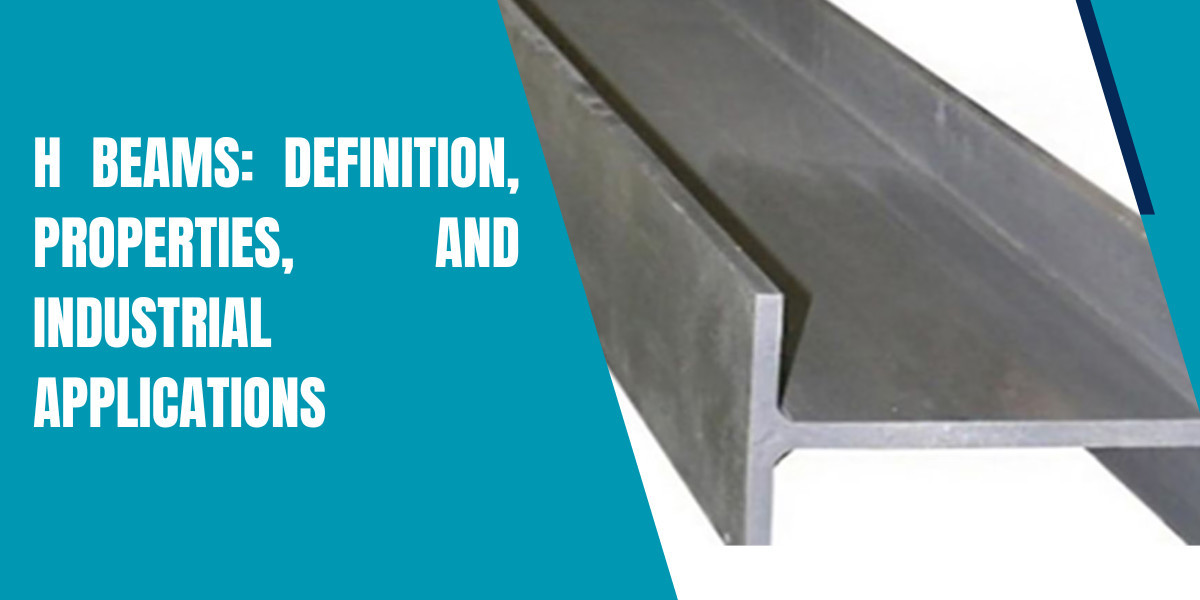

H Beams are a fundamental structural component in modern construction and engineering, known for their strength, versatility, and load-bearing capabilities. They are widely used in commercial buildings, bridges, industrial frameworks, and residential projects, providing a reliable solution for supporting heavy loads while allowing flexible architectural designs.
What are H beams?
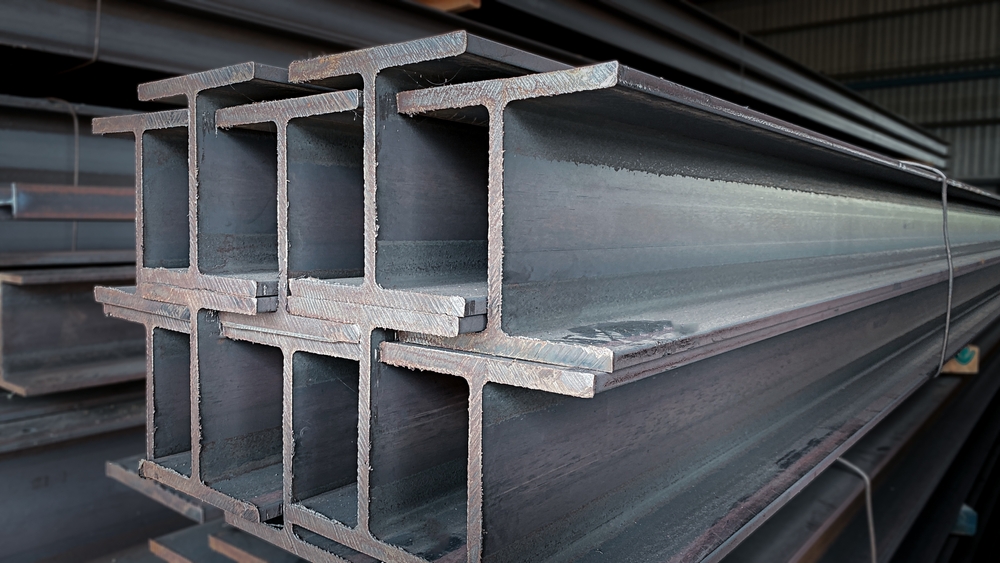
H Beams, also known as wide flange beams or universal beams, are structural steel beams characterized by their “H” shaped cross-section. The design consists of two horizontal flanges connected by a vertical web, creating a high moment of inertia that provides excellent strength and stability. Unlike I Beams, H Beams typically have wider flanges and thicker sections, enabling them to support heavier loads and span longer distances without bending or deformation.
NOTE: H Beams , also known as Wide Flange Beams, are strong structural steel components with an H-shaped cross-section. Renowned for their high load-bearing capacity, durability, and versatility, they are widely used in construction, bridges, industrial structures, and marine applications. H Beams offer stability, ease of installation, and cost-effective solutions for modern infrastructure projects.
Key features of H Beams include:
Wide flanges for increased load distribution
High bending and shear resistance
Uniform thickness in web and flanges
Versatility in fabrication and assembly
Manufacturing Process of H Beams
The production of H Beams involves several steps to ensure structural integrity, precision, and compliance with engineering standards:

Raw Material Selection
High-quality steel billets or plates are selected based on desired strength, durability, and application requirements. Common steel grades include ASTM A36, SS400, and Q235.Hot Rolling
The steel billets are heated to high temperatures and passed through rollers to achieve the desired H-shaped cross-section. This process ensures uniform thickness, accurate dimensions, and enhanced mechanical properties.Cutting and Sizing
The beams are cut to specific lengths according to project requirements. CNC machines or flame cutting are often used for precision.Drilling and Fabrication
If required, H Beams can be drilled, welded, or fabricated into assemblies for bridges, buildings, or other structural projects.Surface Treatment
Depending on environmental conditions, H Beams may undergo galvanization, painting, or coating to prevent corrosion, enhance durability, and improve aesthetic appeal.
Types of H Beams
H Beams are classified based on size, weight, and application:
Standard H Beams : Commonly used in general construction with standard flange widths and web thicknesses.
Wide Flange H Beams : Designed for heavy load-bearing structures, providing extra support over long spans.
Custom H Beams : Fabricated to meet specific project requirements in terms of length, thickness, and steel grade.
Galvanized H Beams : Treated with zinc coating for corrosion resistance, suitable for outdoor or marine environments.
Advantages of H Beams
H Beams offer several advantages that make them a preferred choice in construction and industrial applications:
High Load-Bearing Capacity
The wide flanges and thick web make H Beams capable of supporting substantial vertical and horizontal loads without bending or warping.Versatility in Construction
H Beams can be used in buildings, bridges, towers, warehouses, and industrial frameworks. Their adaptability allows for a variety of structural configurations.Ease of Fabrication and Assembly
The uniform cross-section and flat surfaces make welding, drilling, and bolting simple, reducing labor costs and construction time.Durability
Made from high-quality steel, H Beams are resistant to fatigue, bending, and impact. Protective coatings extend their service life, even in harsh environmental conditions.Cost-Effective Structural Solution
The ability to span long distances without additional support reduces material usage, labor, and foundation costs, making H Beams an economical option for large-scale projects.
Applications of H Beams
H Beams are widely used in various industries due to their strength and versatility:
Construction Industry : Skyscrapers, commercial buildings, residential complexes, and industrial warehouses.
Bridges and Infrastructure : Support frameworks for bridges, flyovers, and overpasses.
Industrial Structures : Factories, power plants, and warehouses requiring high load-bearing capacity.
Shipbuilding and Offshore Platforms : Structural frameworks for marine and offshore facilities.
Heavy Machinery Support : Bases and frames for cranes, hoists, and industrial equipment.
Factors to Consider When Choosing H Beams
Selecting the right H Beam for a project requires careful consideration of several factors:
Load requirements : Ensure the beam can handle the anticipated vertical and lateral loads.
Span length : Longer spans may require wider flanges or thicker webs.
Steel grade : Determines strength, ductility, and suitability for environmental conditions.
Corrosion resistance : Galvanized or coated beams are preferable for outdoor or humid environments.
Compliance with standards : Verify that the beams meet ASTM, EN, or other local structural steel standards.
Conclusion
H Beams are a cornerstone of modern structural engineering, offering unmatched strength, versatility, and durability. Their wide flanges, thick webs, and adaptable design make them ideal for large-scale construction, industrial projects, and infrastructure development. By selecting the appropriate steel grade, size, and treatment, engineers and builders can ensure safe, efficient, and cost-effective structures that stand the test of time.