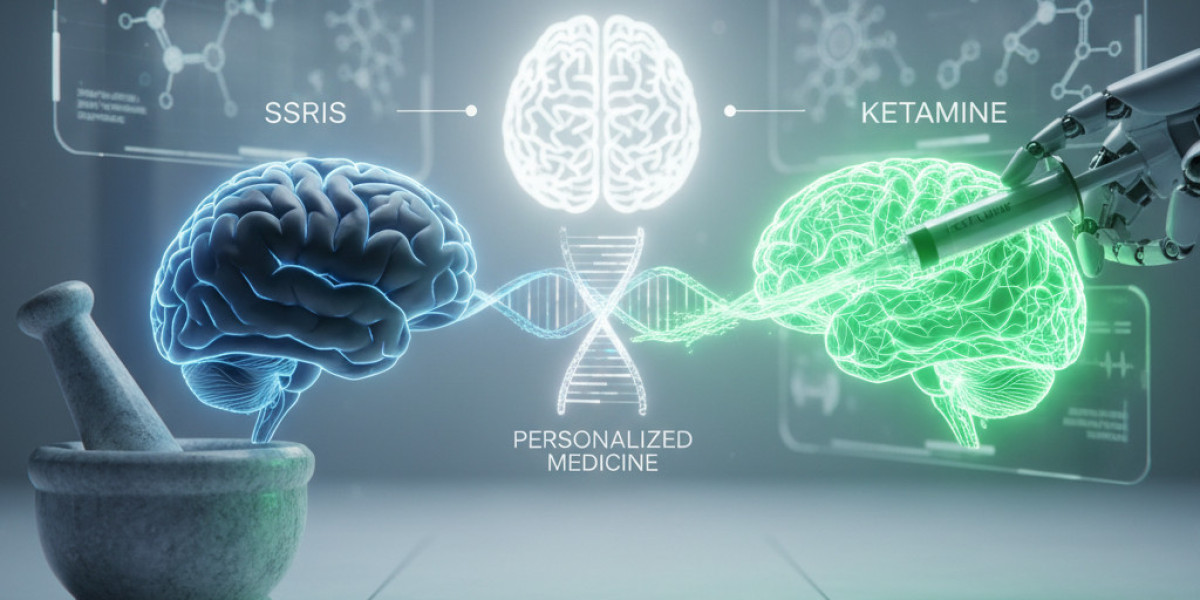

The conversation around Ketamine vs SSRI treatments has picked up speed over the last few years, and for good reason. Mental health care is finally evolving in a way that matches the complexity of how depression shows up in real people. For decades, SSRIs were the default option. Today, fast-acting treatments like ketamine are changing expectations, conversations, and outcomes.
If you’re trying to understand why these two treatments keep appearing side by side, this guide breaks down the data, the differences, and what all of it means for the future of depression care.
SSRIs: the long-standing foundation psychologists relied on
SSRIs earned their place in mental health treatment by offering something safer and steadier than the medications that came before them. They’re familiar, they’re widely studied, and for many people, they work.
But their biggest drawback has always been the waiting period. Someone starting an SSRI often needs weeks before noticing any relief and sometimes the improvement is subtle rather than transformative.
what new data shows about SSRI effectiveness
Recent studies highlight a few important realities:
SSRIs are most effective for moderate to severe depression
They work best in combination with therapy
A significant portion of patients get partial or minimal relief
Side effects remain manageable for most people
This doesn’t diminish their value. Instead, it explains why clinicians began searching for faster or more reliable options.
ketamine: the unexpected contender changing the timeline of relief
Ketamine wasn’t designed for depression, yet it has become one of the most talked-about breakthroughs in mental health treatment. Unlike SSRIs, ketamine works on glutamate pathways, which influence how the brain forms new connections. This mechanism allows some patients to experience improvements within hours something traditional medications have never offered.
what new data reveals about ketamine
Recent findings show:
It may reduce depressive symptoms far more quickly than SSRIs
It can help people who have tried multiple medications without relief
It appears to strengthen neural pathways connected to mood regulation
It may significantly decrease suicidal thoughts in the short term
This speed doesn’t make ketamine a replacement for everything else, but it does make it a powerful tool for patients who feel stuck or overwhelmed by long waits.
Ketamine vs SSRI: what the latest research says about using them separately or together
The comparison between ketamine and SSRIs isn’t just about which one is “better.” Instead, the real question researchers are studying is when each treatment works best and how they might support one another.
what sets them apart
New data highlights clear contrasts:
SSRIs adjust serotonin, while ketamine acts on glutamate
SSRIs build effect over weeks, ketamine may work within hours
SSRIs are designed for long-term use, while ketamine is delivered in controlled sessions
Ketamine may help treatment-resistant depression, where SSRIs alone fall short
Are they better together?
Growing research suggests that some patients respond well to a combined approach under medical supervision. In some cases, ketamine provides the rapid shift needed to break through an intense episode, while SSRIs help stabilize mood over time.
This dual-path approach reflects the broader shift toward personalized care rather than one-size-fits-all treatment.
how this new wave of research is shaping the future of depression treatment
The evolution of depression treatment isn’t about choosing sides in the Ketamine vs SSRI debate. It’s about recognizing that people benefit from different tools at different moments in their lives. The new data is pushing clinicians to think more flexibly and more compassionately about how they match patients with treatment.
what patients should take from this shift
If you’re exploring options, here are a few takeaways from the latest research:
A “slow” treatment isn’t a bad one, it just serves a different purpose
Rapid relief can be life-changing for someone in crisis
Long-term stability still matters
There are more choices now than ever before
Treatment plans can evolve over time based on how you feel
What’s emerging is a more adaptive, personalized approach to care one that honors each person’s unique history, biology, and goals.
conclusion
The debate around ketamine and SSRIs isn’t about finding a winner. It’s about understanding how far depression treatment has come and how much more flexible it’s becoming. Some people respond beautifully to SSRIs. Others find new hope with ketamine. And many benefit from a careful, clinician-guided combination of both.
The future isn’t about replacing old treatments with new ones but expanding the toolbox so more people can finally access the relief they’ve been waiting for. Modern mental health care is moving toward one clear goal: giving every patient a path that genuinely fits their needs.















