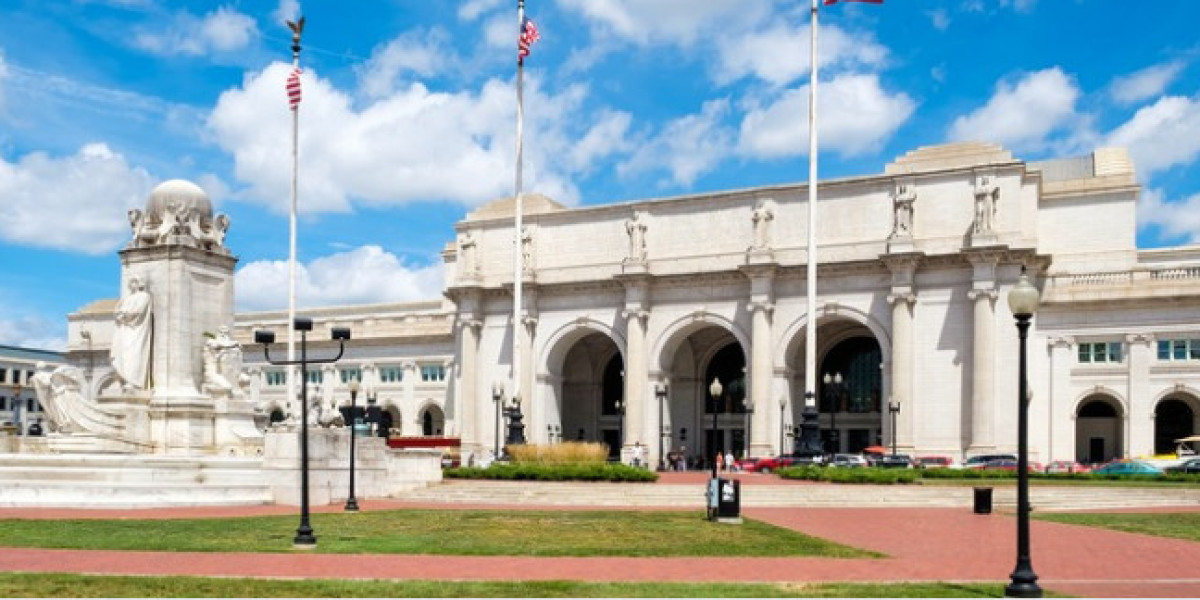

Located along the southern edge of the Greater Boston region, this rail station plays a uniquely functional role in New England travel. It was not built to compete with the architectural magnetism of downtown terminals, but rather to solve a very modern travel problem—how to board a train quickly without battling metropolitan congestion. Positioned beside a major highway loop and supported by reliable rail service, the station has matured into a pressure-release valve for both suburban commuters and long-distance travelers passing through the Northeast.
A Smarter Boarding Point for Suburban Travelers
Many passengers choose this station precisely because it allows them to bypass urban complications. Highway adjacency means that rides to the station are faster, drop-offs are cleaner, and the first mile of travel feels less like negotiation and more like execution. Instead of navigating crowded city streets or threading through a web of traffic sensors, travelers experience a straightforward transition from car seat to train seat.
Because commuter behavior was baked into its geography from day one, the station feels almost tailor-made for park-and-ride passengers. The convenience factor becomes most evident during early-morning departures when time is tight, coffee is essential, and patience for traffic is thin.
A Dual-Purpose Rail Stop with Northeast Reach
This station carries dual identities. It supports regional commuters heading into metro job corridors and also welcomes intercity rail passengers boarding trains that link major destinations along the Northeast corridor. Unlike small town depots that serve only local rail, this station plugs directly into a larger network, giving it outsized logistical importance relative to its physical scale.
It doesn't need multiple concourses or endless passageways because its primary objective is movement in the cleanest straight line possible: enter → wait → board → depart.
Parking Designed for Reality, Not Chance
One of the most traveler-endorsed advantages is its parking infrastructure. There is little guesswork or last-minute scavenger hunting for spots. The station assumes most passengers will arrive by car, and it provides the spatial breathing room to support that assumption without resentment.
Parking here does not feel like a gamble—you win by default simply by arriving.
A Less Chaotic Rhythm, Even at Busy Hours
Peak traffic moments happen at every station, but here, the experience feels noticeably different. There is less platform crowd swirl, fewer bottleneck choke points, and a quieter circulation pattern. Instead of mass human turbulence, passenger movement feels like controlled current. People find their cars, locate their entrances, identify their platforms, and wait without feeling like part of a commuter stampede.
This is the psychology of good transit planning—design the space so passengers never feel like they’re fighting it.
Accessibility Without Complexity
Mobility-first planning is another silent strength of the station. It does not tuck ramps into awkward corners or bury accessible paths in secondary corridors. The station assumes that passengers with or without mobility aides should experience equally efficient platform access. Families balancing strollers, seniors managing luggage, and travelers with mobility limitations all benefit from the station’s open, predictable layout.
The station’s accessibility philosophy is refreshingly simple:
It should work for everyone, without apology, without showmanship.
A Highway Station with Time-Reducing Logic
By sitting along a highway rail intercept route rather than within a downtown core, the station enables fast travel chaining:
Car → Train without wasted steps
Suburban → Urban rail access without metro street wrestling
Intercity connections without downtown detours
Park → Ride patterns that reflect real commuter psychology
Who Chooses This Station and Why?
Its passenger demographic spans a wide spectrum:
Daily suburban commuters
Families traveling regionally on weekends
Intercity rail riders avoiding downtown rush zones
Students returning to campus towns
Visitors coordinating cleaner pick-ups and drop-offs
Business travelers wanting faster boarding logistics
They all share one preference:
The beginning of a journey should not be the hardest part.
A Station That Launches Journeys, Not Attention
This hub doesn’t need decorative ambition because the journeys it supports carry their own excitement. Once passengers board their train, unpredictability becomes delightful—window-seat views emerge, conversations begin, playlists take over headphones, and motion replaces waiting.
But before motion can thrill, waiting must work.
And that is the station’s quiet victory.
Final Thoughts
Travelers remember stations that
, not only stations that look timeless. This one has earned loyalty not through grandeur, but through geography, practicality, and pace.