
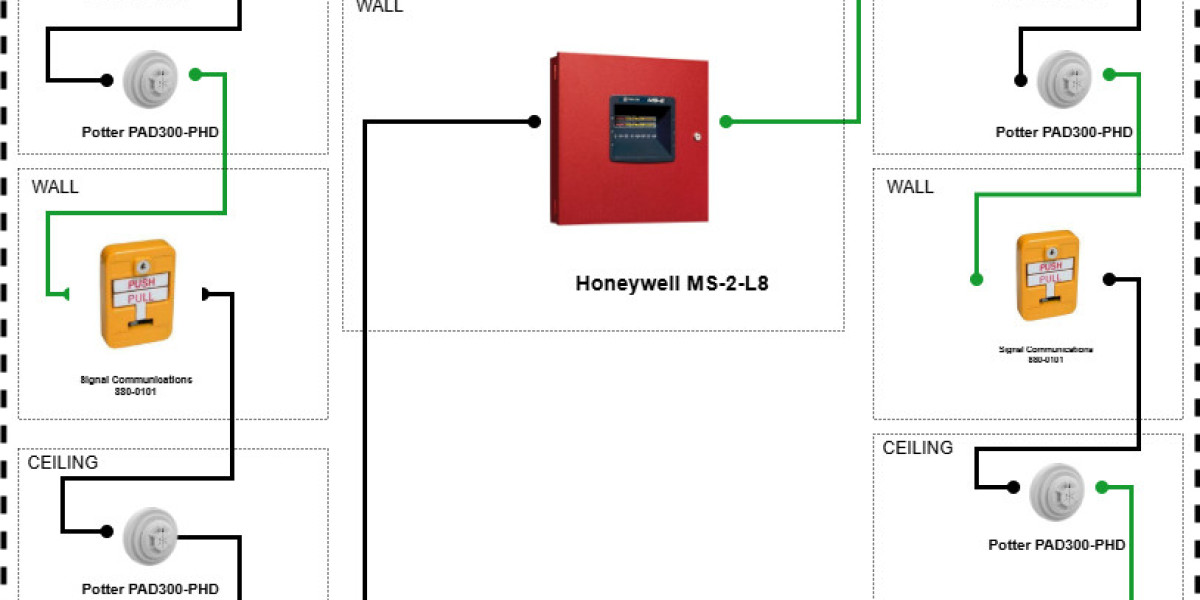

Fire safety in a home depends greatly on having the right number of fire alarms installed in the correct locations. Many homeowners assume that one or two alarms are enough. However, modern fire safety guidelines recommend a more comprehensive approach, especially for multi room homes. A two bedroom house requires proper coverage to ensure that every person inside receives early warning during a fire emergency. Understanding where to place alarms and how many you need will help you create a safer living environment for your family.
Basic Fire Alarm Requirements for Homes
Most fire safety organizations recommend placing fire alarms inside every bedroom, outside each sleeping area, and on every level of the home. These guidelines are designed to provide early detection no matter where a fire starts. In a two bedroom home, alarms must be placed strategically so that smoke is detected immediately, even if it starts in a hallway, kitchen, or living room.
Fire Alarm Placement Inside Bedrooms
Every bedroom in a two bedroom house should have its own smoke alarm. This is important because many home fires start during nighttime hours when residents are sleeping. Having alarms inside bedrooms ensures that the people sleeping inside are alerted quickly. Without an alarm inside the room, smoke may take too long to reach a hallway detector, reducing the time available to react.
Fire Alarm Placement Outside the Sleeping Area
In addition to alarms inside the bedrooms, you need at least one smoke alarm outside the sleeping area. In most two bedroom homes, bedrooms are close together, so one hallway alarm may cover both rooms. This ensures that if smoke starts outside the bedrooms, everyone in the sleeping area will still receive immediate warning. This extra layer of detection increases response time and improves overall safety.
Fire Alarms on Every Level of the Home
If your two bedroom home has more than one level, such as a ground floor and a first floor, you need one fire alarm on each level. Fires can start anywhere, including basements, living rooms, and utility rooms. A fire alarm on every level ensures smoke is detected quickly before it spreads to other areas of the home. If you have a basement used for storage, laundry, or utilities, placing an alarm there is strongly recommended.
Fire Alarm Placement in the Kitchen Area
Although kitchens are common areas for fires to start, smoke alarms should not be installed too close to cooking appliances because they may produce false alarms. Instead of placing a smoke alarm directly in the kitchen, install one nearby, such as in an adjacent hallway or dining area. The goal is to detect smoke quickly without frequent false triggers caused by everyday cooking.
Living Room and Common Area Considerations
Common areas like living rooms, lounges, or entertainment spaces should also have fire alarms. These areas often contain electrical devices, heaters, or candles that pose potential fire risks. A fire alarm in the living room ensures that any smoke or flames are detected early, especially when the room is used frequently by family members.
Heat Detectors for High Steam Areas
In places like kitchens, garages, or laundry rooms, a heat detector may be more suitable than a smoke alarm. These detectors respond to high temperatures rather than smoke, reducing the chance of false alarms. While heat detectors do not replace smoke alarms, they add valuable protection in locations where smoke alarms would not perform efficiently.
Minimum Number of Fire Alarms for a Two Bedroom House
To summarize the standard requirements, a typical two bedroom house should have at least the following fire alarms
One alarm inside Bedroom 1
One alarm inside Bedroom 2
One alarm in the hallway outside the bedrooms
One alarm on each additional level of the home
One alarm in the living room or main common area
One alarm near the kitchen but not inside it
If the house has a basement, one alarm should be placed there as well. This brings the total number of alarms to about five to seven depending on the layout of the home.
Interconnected Fire Alarms for Better Protection
Modern fire safety guidelines recommend using interconnected alarms. When one alarm detects smoke, all alarms in the home sound simultaneously. This ensures that everyone in the house is alerted even if the fire starts in a distant room. Interconnected alarms are especially important for homes with multiple rooms or multiple floors.
Regular Maintenance for Reliable Performance
Installing fire alarms is only the first step. To ensure they work correctly, regular maintenance is essential. Replace batteries once a year, clean alarms to remove dust buildup, and test each device monthly. If an alarm is more than ten years old, replace it with a new one to guarantee proper function.
Conclusion
A two bedroom house needs multiple fire alarms to provide complete protection. Installing alarms inside bedrooms, outside sleeping areas, on every floor, and in common areas ensures early detection of smoke and fire. Proper placement and a sufficient number of alarms create a safe environment for your family and give you peace of mind. By following recommended guidelines and maintaining your alarms regularly, you improve your home’s fire safety and reduce risks significantly.



Bài viết phổ biến












