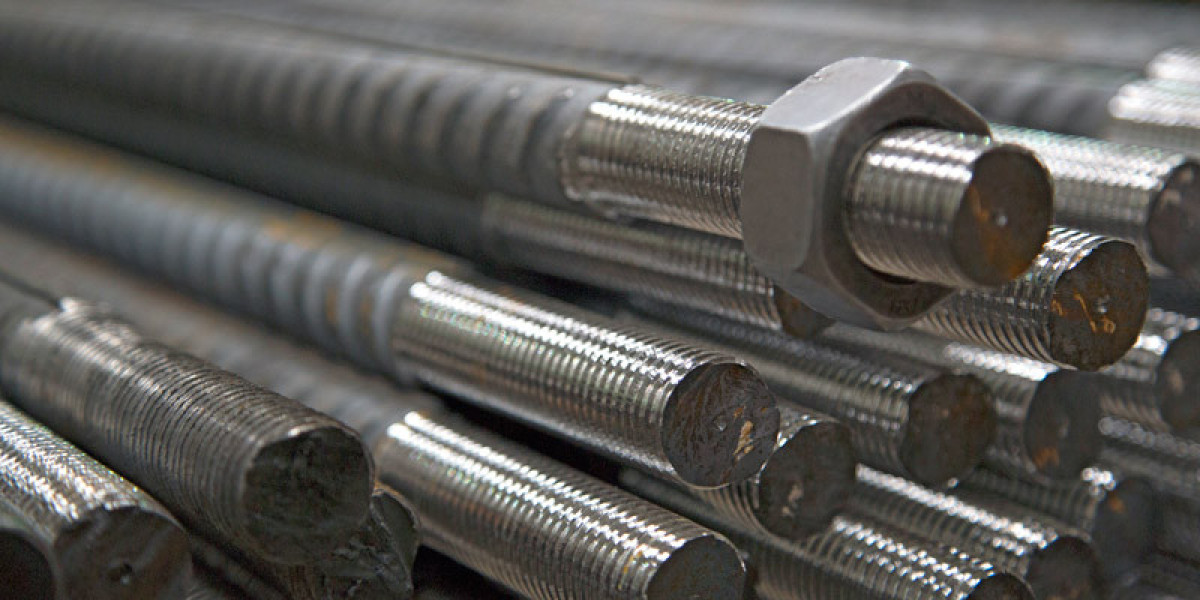

In the mining, tunnelling, and civil construction industries, ensuring rock stability is a top priority. Harsh geological formations, such as fractured rock masses, high-stress zones, and water-logged strata, demand solutions that go beyond conventional support systems. This is where expandable rock bolts have emerged as a revolutionary advancement, offering superior performance, adaptability, and long-term stability in the toughest rock conditions.
Whether you're constructing underground tunnels, stabilising slopes, or securing deep excavation zones, understanding how expandable rock bolts work can significantly enhance both safety and project efficiency. Leading companies like Argentium are at the forefront of providing advanced rock reinforcement systems that meet modern engineering challenges.
Understanding the Need for Advanced Rock Support Systems
Traditional rock reinforcement methods, such as mechanical bolts, friction bolts, and resin-grouted bolts, work well in moderate environments. However, they face limitations in the following conditions:
Highly fractured or weak rock formations
Zones with unpredictable stress redistribution
Water-saturated or chemically reactive rock
Long-term excavation projects requiring maximum durability
In such scenarios, conventional bolts may slip, corrode, or fail to provide adequate anchorage. This is where expandable rock bolts outperform, thanks to their ability to conform to irregular rock surfaces and provide instant, full-length support.
What Are Expandable Rock Bolts?
Expandable rock bolts are specialised support elements designed to stabilize rock masses by expanding radially against the borehole wall. Unlike traditional bolts that rely on mechanical anchoring or resin grouting, these bolts expand using high-pressure water or hydraulic fluid. This expansion creates uniform frictional contact along the entire length of the bolt.
Because the bolt expands to adapt to the borehole’s natural variations, it creates a secure, high-capacity support system ideal for tough rock conditions.
How Expandable Rock Bolts Work
To understand their effectiveness, here’s a streamlined look at the installation process:
Drilling the Borehole: A hole of predetermined diameter is drilled into the rock surface.
Insertion of the Bolt: The expandable bolt, typically made of corrosion-resistant steel, is inserted.
Hydraulic Expansion: High-pressure fluid inflates the bolt, allowing it to expand uniformly and grip the rock walls.
Immediate Full-Length Contact: The bolt achieves continuous anchorage along its full length, ensuring no gaps or weak contact points.
Load-Bearing: Once expanded, the bolt provides long-term stabilization capable of withstanding dynamic and static loads.
Companies like Argentium design their expandable rock bolts with advanced metallurgy and precision engineering, ensuring high reliability even in extreme conditions.
Why Expandable Rock Bolts Are Ideal for Tough Rock Conditions
1. Adaptability to Irregular Boreholes
Tough rock conditions often result in irregular or oversized boreholes. Conventional bolts fail to grip effectively in such scenarios. However, expandable rock bolts expand to match these variations, ensuring 100% surface contact and eliminating the risk of slippage.
2. Immediate Anchorage and Load Support
Unlike bolts that require resin curing time, expandable bolts offer instant reinforcement. This is crucial in environments where rock deformation happens quickly after excavation.
3. Durable and Corrosion-Resistant Design
Harsh underground environments can accelerate corrosion, compromising long-term support. Expandable bolts, especially those designed by brands like Argentium, use anti-corrosive materials that resist chemical reactions and groundwater exposure.
4. Superior Performance in Fractured or Weak Rock
Because they provide full-length friction anchorage, expandable rock bolts are highly effective in blocky, fractured, or weathered rock formations where traditional anchoring systems may fail.
5. Versatility in Application
These bolts are widely used in:
Mining tunnels
Metro and highway tunnels
Slope stabilization projects
Hydropower construction
Underground storage caverns
Their reliability in varied environments makes them a preferred choice among engineers worldwide.
Key Advantages of Expandable Rock Bolts
1. Uniform Pressure Distribution
The radial expansion ensures that pressure is evenly distributed, reducing point-loading and the chances of stress-related failure.
2. Fast and Efficient Installation
Contractors can stabilize excavated areas quickly, enhancing worker safety and improving project timelines.
3. High Load-Bearing Capacity
The full-length anchorage significantly increases shear and tensile strength, making these bolts capable of withstanding extreme geological pressures.
4. Minimal Dependence on Chemical Agents
Using hydraulic pressure instead of adhesives reduces environmental concerns and eliminates issues associated with resin curing.
5. Enhanced Project Cost Efficiency
While the upfront cost may be higher, the long-term durability reduces replacement and maintenance expenses.
Technical Features That Enhance Stability
Modern expandable rock bolts include several advanced features:
Seamless steel tubing for superior flexibility and strength
Optimized expansion profiles for maximum anchorage
Hydraulic fittings that ensure safe and controlled expansion
Corrosion-resistant coatings for extended life
Customizable lengths and diameters to suit project needs
With manufacturers like Argentium offering state-of-the-art designs, engineers can achieve greater control over safety and performance.
Case Example: Stability in High-Stress Zones
In deep mining operations, rock bursts and stress redistributions are common. Engineers often rely on expandable rock bolts to protect workers and equipment. Their ability to adapt, expand, and support shifting rock masses makes them a trusted solution in high-risk areas.
Why Engineers Prefer Expandable Rock Bolts Over Conventional Systems
They provide continuous contact, unlike point-anchored traditional bolts.
They offer better load transfer, improving excavation stability.
They reduce risks in water-logged or chemically demanding environments.
They enable faster excavation cycles due to rapid installation.
As urban underground construction grows, engineers increasingly opt for expandable systems to manage complex geology.
Future of Expandable Rock Bolts in Modern Infrastructure
The need for efficient, lightweight, and high-performance reinforcement systems continues to rise. Innovations in steel design, hydraulic equipment, and manufacturing processes will make expandable rock bolts even more powerful and accessible.
With companies such as Argentium investing in research and development, these bolts are becoming smarter, stronger, and more adaptable to the evolving demands of global infrastructure.
Conclusion
Tough rock conditions demand reliable, adaptable, and high-performance reinforcement systems. Expandable rock bolts have transformed the way engineers secure underground structures, providing immediate support, full-length anchorage, and long-term stability. Their ability to adapt to irregular geological formations and withstand extreme pressures makes them essential for safe and effective construction in challenging environments.
Using advanced solutions from top manufacturers like Argentium, industries can significantly enhance project safety, durability, and efficiency. As infrastructure expands and mining operations grow deeper, the role of expandable rock bolts will only become more critical.















