
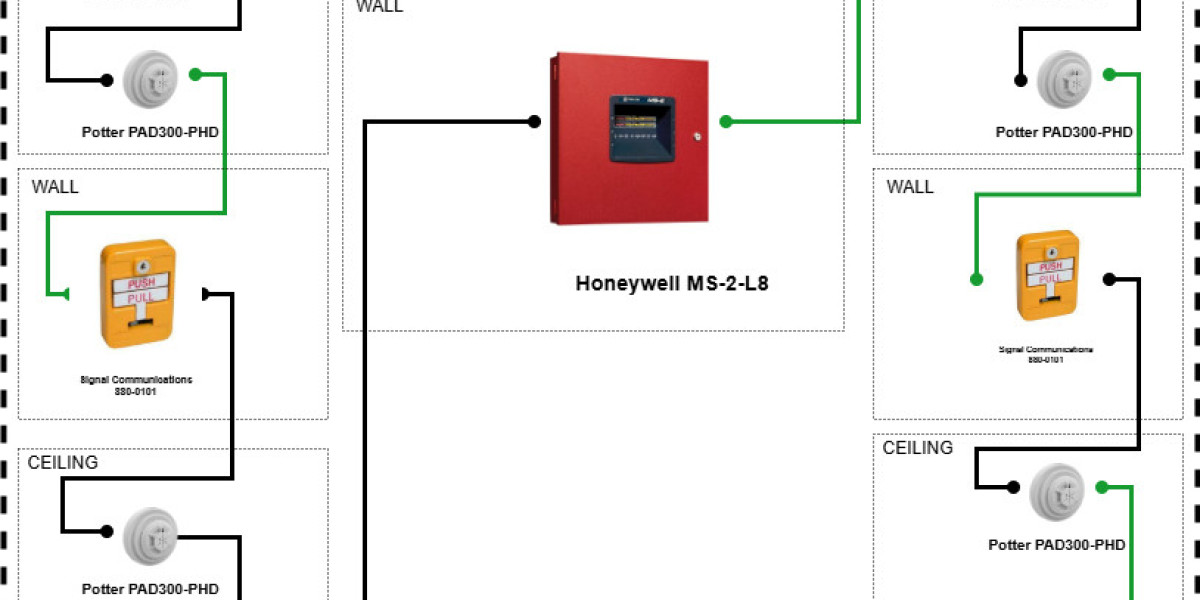

When planning fire safety in 2025, property owners often weigh the cost of wireless fire alarm systems against traditional wired systems. Both options have advantages and disadvantages, but understanding the differences in cost, installation, maintenance, and long-term value is essential. This guide compares wireless and wired fire alarm systems, helping you make an informed decision for your home or office.
Initial Installation Costs
Wired fire alarm systems require extensive cabling, conduit work, and professional installation. For homes and small buildings, installation can be time-consuming and expensive, often accounting for a large portion of the total cost.
Wireless fire alarm systems, on the other hand, eliminate most of the wiring. They use battery-powered detectors that communicate wirelessly, making installation faster and easier. In most cases, you can install a wireless system yourself without professional help, significantly reducing upfront expenses.
Typical Price Ranges
Wired Fire Alarm Systems:
Small home: 10,000 to 30,000
Medium building: 50,000 to 100,000
Large commercial building: 1,00,000 to 5,00,000 depending on size and complexity
Wireless Fire Alarm Systems:
Small home: 7,000 to 20,000
Medium building: 25,000 to 80,000
Large commercial building: 30,000 to 1,50,000 depending on number of devices and features
As the numbers indicate, wireless systems generally have lower installation costs, particularly for small to medium-sized buildings.
Maintenance Costs
Wired systems usually require less frequent battery changes because many devices are powered through the electrical wiring. However, troubleshooting wired systems can be more complicated and expensive if cables fail or detectors need to be replaced.
Wireless systems rely on batteries, but modern detectors in 2025 often have long-life sealed batteries lasting 5 to 10 years. Maintenance mainly involves checking battery status and replacing units when needed. Wireless systems may be slightly more maintenance-intensive, but the cost and effort are generally lower than major wired repairs.
Flexibility and Scalability
Wireless fire alarm systems offer superior flexibility. You can add or move detectors easily without rewiring, which is ideal for growing families, renovations, or office expansions. Wired systems are less adaptable. Adding new detectors usually requires additional cabling and professional installation, increasing costs and downtime.
Smart Features and Integration
Wireless systems often include smart features such as mobile notifications, remote monitoring, and cloud connectivity. These capabilities allow users to receive alerts even when away from home, test devices remotely, and integrate with smart home or building automation systems. Wired systems can support smart features, but integration is generally more complex and expensive.
Reliability and Performance
Both wired and wireless fire alarm systems are reliable when properly installed and maintained. Wired systems are less susceptible to wireless interference but may be vulnerable to cable damage. Modern wireless systems in 2025 use mesh networking and dedicated frequency bands to maintain strong and consistent communication, offering comparable reliability to wired solutions.
Cost vs Value Considerations
Wireless System Advantages:
Lower installation cost
Easy expansion and relocation
Smart features and remote monitoring
Faster installation time
Wired System Advantages:
Powered through building electricity, reducing battery dependence
Traditional option with proven reliability
Less concern about wireless interference
For most residential and medium-sized commercial properties, wireless systems provide better value because of ease of installation, flexibility, and added smart features. Wired systems may still be preferable in very large buildings where continuous power and high network reliability are critical.
Comparison Table
| Feature | Wired Fire Alarm | Wireless Fire Alarm |
|---|---|---|
| Installation Cost | High due to cabling and labor | Low to moderate, minimal wiring |
| Maintenance | Lower battery needs, complex repairs | Battery replacement every few years, easier troubleshooting |
| Flexibility | Difficult to move or expand | Easy to add or relocate detectors |
| Smart Features | Limited and costly | Often included, supports mobile alerts |
| Reliability | Very reliable if wired properly | Highly reliable with mesh networks and modern protocols |
| Suitability | Large buildings, industrial setups | Small to medium homes, apartments, offices |
Conclusion
In 2025, wireless fire alarm systems often provide a more cost-effective and flexible solution compared to traditional wired systems. They reduce installation time and costs, offer smart features, and are easy to scale as needs change. Wired systems remain reliable and may be suitable for very large or industrial buildings. Evaluating your building size, budget, and desired features will help you choose between wired and wireless systems. For most homeowners and small to medium-sized commercial properties, wireless fire alarms deliver better value and convenience without compromising safety.
Read more: https://bresdel.com/blogs/1304425/Best-Wireless-Fire-Alarm-Systems-in-2025-With-Comparison-Chart