
Frameless glass folding doors have increasingly become a preferred choice for modern homes, commercial spaces, retail areas, and hospitality environments. Their rise in popularity is due to their clean visuals, effortless functionality, and unmatched ability to transform a space within seconds. While standard sliding systems have long been used for maximizing natural light and creating indoor-outdoor continuity, they come with inherent limitations that restrict layout flexibility, opening space, and design freedom.
In contrast, frameless glass folding doors offer a fresh perspective on openness and spatial adaptability. Designed without bulky frames, they create a seamless, transparent boundary that can be completely folded away—something sliding systems simply cannot match. This article explores in depth how these innovative folding systems deliver superior versatility across usability, design, performance, and long-term value, making them a more advanced alternative to conventional sliding doors.
Understanding the Core Difference Between Folding and Sliding Door Systems
Before comparing the two, it is essential to understand the mechanics behind these systems. A standard sliding door works on a lateral track where one panel slides behind another. This means that even in the best configurations, only 50 to 70 percent of the opening can be utilized at a time. Additionally, traditional sliding doors carry frames around each glass panel, which can reduce visual openness.
Frameless glass folding doors, meanwhile, operate on a concertina-style mechanism. Each glass panel folds and stacks neatly to one side or both sides, allowing up to 100 percent opening when desired. With no vertical aluminum frames interrupting the view, these doors provide a visually clean, minimalistic appearance that maximizes openness and transparency.
This fundamental structural difference is what drives the superior versatility of folding systems.
Creating a Fully Openable Space for Maximum Flexibility
One of the most significant advantages of frameless glass folding doors is their ability to fully open up a space. Unlike sliding systems that stack panels over each other, folding doors push the entire set of panels aside, leaving the full width of the opening completely unobstructed. This functionality is particularly beneficial in settings such as patios, balconies, restaurants, pool areas, and showrooms where creating a wide and uninterrupted passage is crucial.
A fully openable boundary provides users with freedom that sliding systems cannot replicate. Whether it is for hosting large gatherings, easing the flow of customers in commercial spaces, or simply enhancing ventilation, the flexibility to change the spatial configuration instantly offers unmatched convenience.
NOTE:- Businesses and residences benefited from the installation of the Frameless Glass Folding Door In Dubai, making spaces brighter and more versatile. Doorman System executed each project with precision and care. Customers admired the aesthetic and practicality it added. Upgrade your interiors effortlessly with Doorman System today.
Enhancing Indoor-Outdoor Connection with Seamless Transparency
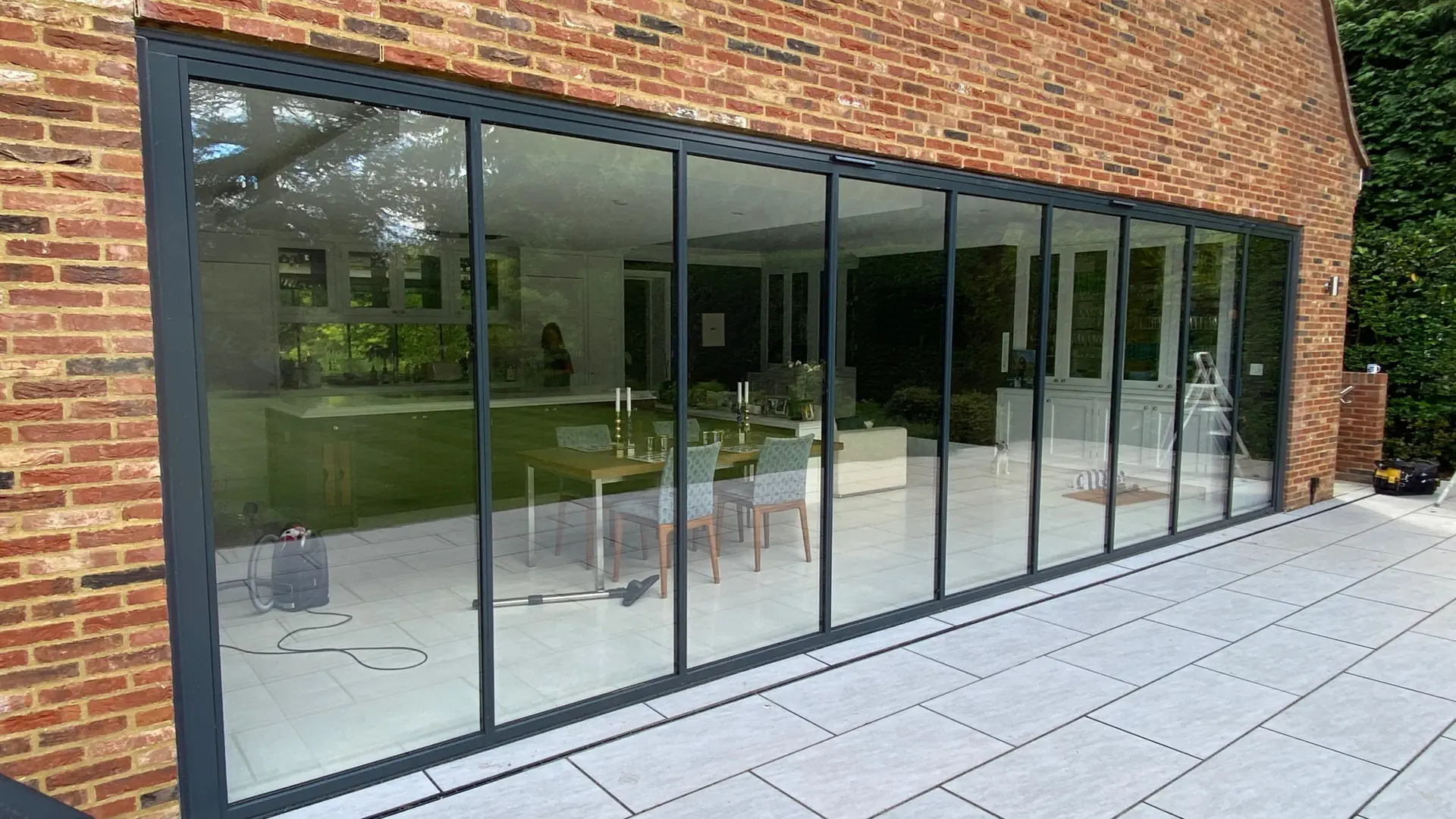
The lack of vertical frames in a frameless folding system plays a major role in enhancing the visual connection between indoors and outdoors. Where sliding systems typically require frames to support each glass panel, frameless folding doors maintain structural strength through discreet top and bottom hardware.
This design approach allows for a nearly uninterrupted view even when the doors are closed. As a result, natural surroundings, landscapes, and outdoor décor become an integral extension of your interior space. This is especially valued in villas, beachfront properties, cafés, and hospitality venues where ambience plays a vital role in the user experience.
The ability to enjoy an unbroken view while maintaining flexibility in how the space is opened or closed is a clear point of superiority over standard sliding systems.
Greater Control Over Ventilation and Environment
Standard sliding systems only allow partial opening, which limits airflow and natural ventilation. With frameless glass folding doors, users can choose to fully open, partially fold, or even tilt certain panels depending on the configuration. This level of control means homeowners and business operators can adjust the environment to suit the weather, gathering size, or desired comfort level.
During cooler months, these doors can be kept closed while still providing an expansive, open atmosphere due to the transparent, frame-free design. During warmer months, they can be fully retracted to create a breezy and refreshing environment that reduces dependence on air-conditioning.
Exceptional Space Utilization for Tight or Complex Layouts
Sliding systems often require large wall spaces for panels to slide over, which can interfere with furniture placement and wall-mounted installations. Frameless glass folding doors, however, need only a stacking area on one or both sides, making them perfect for:
Narrow balconies
Compact commercial storefronts
Corners and irregular layouts
Spaces without sufficient wall length for sliding tracks
This flexibility allows architects and designers to maximize usable floor space without being restricted by track direction or wall availability, something sliding systems rarely accommodate.
Modern Aesthetic Appeal for Contemporary Architecture
Design is a major deciding factor in today’s architectural preferences, and frameless solutions have become synonymous with modern luxury. Frameless glass folding doors offer a minimal, sophisticated appeal that enhances any design style—from modern industrial to clean Scandinavian and luxury contemporary.
Without bulky vertical profiles or obstructive frames, they create a floating glass effect that blends with the interior décor rather than competing with it. This aesthetic refinement is a strong contrast to standard sliding doors, which often rely on thicker profiles due to structural requirements.
The simplicity and elegance of frameless doors make them a timeless design investment, particularly for premium properties looking to elevate visual impact.
Versatile Configurations for Customized Usability
Another area where folding systems outperform sliding systems is customization. Frameless folding doors can be configured to open inward or outward, stack to the left, the right, or both sides, and include single-door access panels within the system.
This adaptability allows property owners to choose the configuration that best suits their daily use. In commercial settings, for example, an integrated single door provides constant access without the need to fold open the entire system every time. Sliding doors, with their fixed operational direction, lack such adaptability.
Additionally, folding doors can be designed to fit very wide openings or even curved spaces, something nearly impossible with standard sliding systems.
Durability and Strength Without the Bulk of Frames
Despite their lightweight, frame-free appearance, frameless glass folding doors are engineered with high-strength tempered or laminated glass that withstands wind load, impact, and long-term wear. Precision hardware ensures smooth operation and even weight distribution across all panels.
Meanwhile, sliding systems often rely on thick aluminum frames to carry the weight of the glass and maintain structural integrity. This makes them bulkier and more visually intrusive.
Modern frameless folding systems, however, achieve strength through material innovation and advanced engineering, giving users a sleek look without compromising durability.
Ease of Maintenance and Long-Term Performance
Maintenance requirements play a key role in choosing between folding and sliding systems. Sliding doors typically accumulate debris in their tracks, leading to friction, noise, and difficulty in operation. Because sliding mechanisms rely heavily on uninterrupted track performance, regular cleaning and repair are necessary.
Frameless glass folding systems use specialized hardware and smooth operational components that require minimal maintenance. Many systems also feature bottom-free designs where the load is transferred to the top track, further reducing cleaning frequency.
Additionally, because frameless systems have fewer visible components, they maintain their clean, modern look for years with minimal upkeep.

Improved Accessibility and User Experience
In commercial environments, ease of access can significantly affect customer flow and overall visitor experience. Sliding systems sometimes create bottlenecks due to limited opening width. Frameless folding doors eliminate these restrictions by opening the entire span, ensuring smoother movement—especially in high-traffic areas such as:
Showrooms
Cafés and restaurants
Retail outlets
Exhibition halls
Resort entrances
For homes, this improved accessibility is equally beneficial. Children, elderly family members, or guests can move freely without having to navigate narrow sliding openings or step-over tracks.
Versatility in Weather Protection and Energy Efficiency
Modern frameless folding systems are designed with specialized seals and gaskets that provide improved insulation against heat, dust, rain, and noise. Closed, they perform comparably—if not better—than many standard sliding systems. The tight sealing mechanism reduces thermal transfer, helping maintain indoor temperatures and lowering energy usage.
With the ability to fully open the system during pleasant weather and tightly seal it when needed, users gain year-round versatility without sacrificing comfort or efficiency.
Enhancing Property Value Through High-Impact Design
Properties with frameless glass folding doors tend to command higher market value because they offer:
A visually striking architectural feature
A flexible layout that appeals to buyers
Improved energy-efficient performance
A premium lifestyle experience
Where sliding systems are common and often expected, frameless folding doors offer a distinctive upgrade that immediately enhances a space’s modern appeal.
Why Frameless Glass Folding Doors Are the Superior Choice
When comparing overall functionality, design flexibility, aesthetic value, and user experience, frameless glass folding doors clearly deliver enhanced versatility over standard sliding systems. They offer complete spatial transformation, unobstructed views, flexible operation, and a sleek, modern appearance that aligns with contemporary architectural trends.
While sliding systems remain suitable for certain applications, they cannot match the full opening capability, customization options, and visual elegance of frameless folding doors. For homeowners, businesses, and designers seeking a system that adapts to their needs while elevating the environment, the frameless glass folding door stands out as the superior, future-ready solution.















