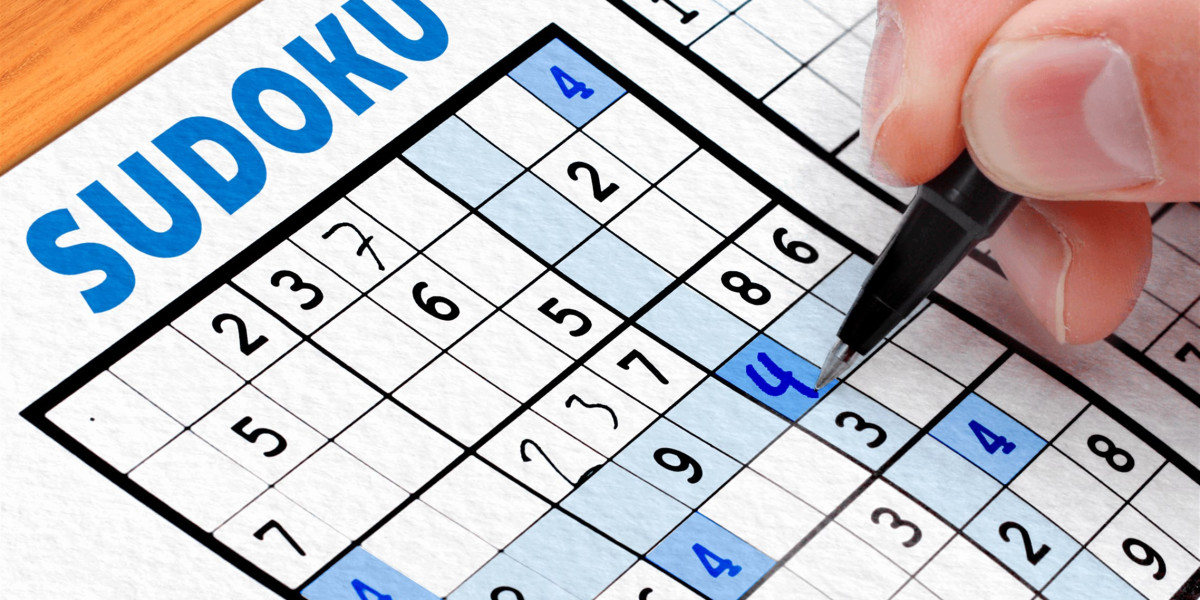

Sudoku. Just saying the word can make some people’s eyes glaze over, but for me, it’s pure excitement. What started as a casual curiosity has turned into one of my favorite ways to challenge my brain, relax, and even have a little fun with frustration. I never thought a grid of numbers could bring such mixed emotions—joy, irritation, and triumph all in one sitting—but here we are.
The First Time I Met Sudoku
I remember the day vividly. I was flipping through a weekend newspaper at a café, sipping on my latte, when I noticed a neat little grid tucked in a corner. Some squares had numbers, others were blank. “Why not give it a try?” I thought. I grabbed a pencil and started filling in the obvious choices. Easy, right? Ha! Within a few minutes, my confidence crumbled. Numbers I thought would fit perfectly suddenly contradicted each other. That was my first lesson: Sudoku is deceptively simple.
There’s something magical about the way Sudoku combines minimalism with complexity. The rules are clear: every row, column, and 3x3 subgrid must contain the numbers 1 through 9 without repeats. That’s it. No tricks. Yet, some puzzles can feel like a labyrinth where every path is full of dead ends and surprising twists. It’s this balance of simplicity and challenge that hooked me instantly.
Why I Love the Challenge
For me, Sudoku is a mix of meditation and mental athletics. I have a little ritual before I start: I brew a strong cup of coffee, sit by the window, and let the afternoon light spill over the puzzle. I like using a pencil, lightly sketching possibilities before committing, almost like I’m cautiously exploring a maze. The focus required is strangely calming. The world outside disappears, leaving only the grid, my pencil, and the tantalizing puzzle of logic.
Of course, not every moment is serene. Some puzzles drive me crazy. I’ve had evenings where I thought I was making progress, only to realize I had trapped myself with one wrong guess. My pencil squeaks across the paper, I mutter under my breath, and the coffee goes cold. And yet… I keep coming back. That tension, that tiny thrill of near-success, is addictive.
One of the most satisfying feelings is when a difficult puzzle finally “clicks.” I remember completing a particularly hard one after nearly two hours of trial and error. My cat, as always, was supervising from the couch. One final placement opened the floodgates: suddenly, everything made sense. I leaned back, grinning like an idiot, overwhelmed with pride and relief. That’s the beauty of Sudoku: it rewards persistence, patience, and careful thought.
My Personal Sudoku Tricks
Over the years, I’ve picked up a few strategies that make tough puzzles less intimidating:
Candidate Lists: Writing all possible numbers for a cell helps me visualize options and eliminate impossibilities.
Focus on Crowded Areas: Rows, columns, or 3x3 boxes that already have many numbers often reveal hidden placements.
Step Away: Sometimes, taking a short break is all I need. I return with a fresh perspective, and the solution suddenly appears.
Patience, I’ve learned, is the ultimate tool. And yes, mistakes happen, but they’re part of the process. Each wrong number is a learning opportunity, and every small success builds confidence.
Funny and Unexpected Moments
Sudoku has led to some unexpected, amusing experiences. One time, I brought a puzzle on a train ride, determined to solve it before my stop. A sudden bump sent my pencil flying across the aisle. A stranger lunged to catch it, and we ended up laughing and finishing the puzzle together. For a brief moment, Sudoku had turned strangers into allies.
I also alternate between paper and digital versions. The app on my phone is great for commuting, with features like hints and mistake tracking. But there’s something special about pencil and paper—the tactile satisfaction, the intimate focus, the little moments of triumph when you shade in a number just right. Both have their charm, and I enjoy switching between them depending on my mood.
Lessons Beyond the Puzzle
Sudoku has taught me more than logic and pattern recognition. It’s reminded me of the value of patience, persistence, and careful thought. Sometimes, solutions require methodical steps rather than rushing ahead. It’s also taught me to embrace mistakes: a wrong move isn’t failure; it’s a chance to learn, adjust, and try again.
The game is also humbling. No matter how skilled you become, there’s always a harder puzzle around the corner. Each one challenges your mind, stretches your patience, and makes victory feel earned. That’s the true appeal of Sudoku: the journey is as satisfying as the finish.
Why I Keep Coming Back
Even after years of playing, I still get excited when I spot new patterns or techniques. Advanced strategies like the “X-Wing” or “Swordfish” add layers of depth that keep the game endlessly fascinating. Every puzzle is an opportunity to practice problem-solving, test my patience, and experience that unique rush when everything aligns perfectly.
Sudoku is more than a numbers game for me. It’s a meditation, a mental workout, a source of amusement, and sometimes a gentle frustration that pushes me to think differently. It’s a reminder that even in a simple 9x9 grid, life can be complex, rewarding, and full of surprises.