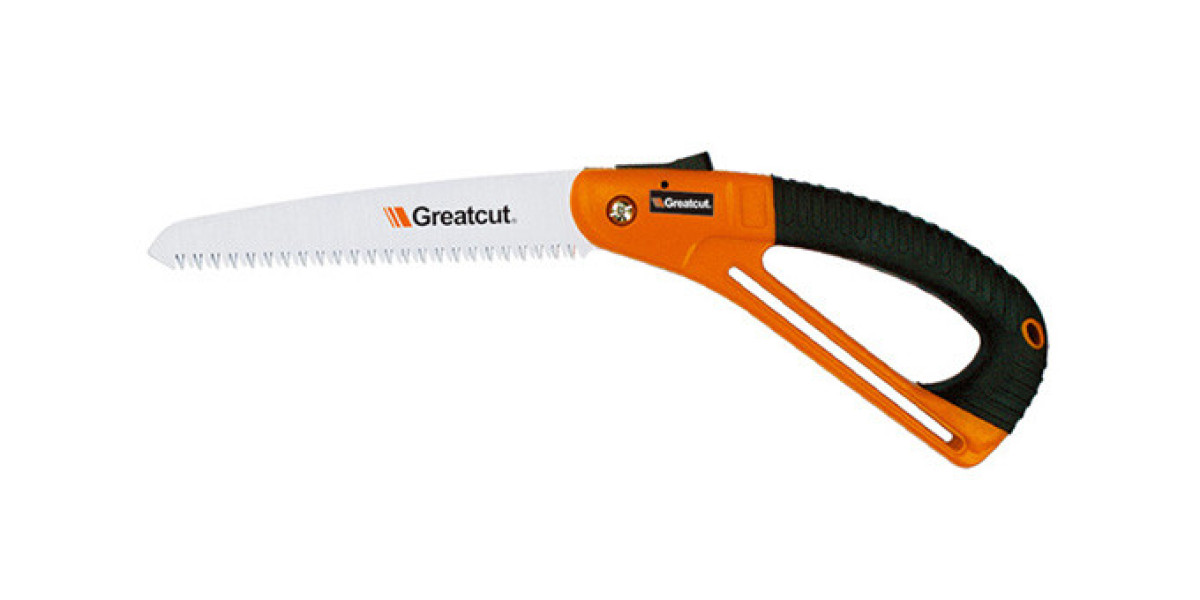

The performance of a folding saw is fundamentally dictated by the engineering of its blade, a component where material science and mechanical design converge. While the folding mechanism provides convenience, it is the blade's geometry, tooth pattern, and metallurgy that determine the tool's effectiveness on different materials. A folding saw blade must be hard enough to retain a sharp edge, yet possess a degree of flexibility to resist snapping under lateral pressure. Manufacturers produce blades tailored for specific applications, from fine pruning to coarse bucking, by varying tooth shape, set, and pitch. Understanding these elements reveals why one folding saw excels at cleanly slicing green wood while another is suited for rapid cuts in dry timber. This analysis centers on the cutting anatomy of the blade, concluding with insights into how these technical choices define the practical role of a specialized folding saw.
Tooth design is the primary variable controlling a folding saw's cutting action. The common peg tooth, with its deep, rounded gullets, is designed for efficient chip removal when cutting fresh, sappy wood, making it a standard for gardening and pruning folding saw models. A tri-edge or razor-tooth pattern, featuring three cutting surfaces per tooth, can provide a notably faster and more aggressive cut on both green and dry wood, though it may produce a slightly rougher finish. For finer work, such as cutting dowels or plastics, a blade with more teeth per inch (a higher TPI or PPI) and minimal set will yield a smoother, more controlled kerf. The "set" of the teeth—the alternating left and right bend—creates a kerf wider than the blade thickness, preventing binding and reducing friction as the folding saw moves through the material.
Blade length and kinematics directly influence cutting efficiency and user effort. A longer blade on a folding saw allows for a longer stroke, enabling the user to engage more teeth with each push or pull, which can speed up cutting larger-diameter branches. However, this increased length can sometimes introduce flexibility or vibration if the locking mechanism does not provide sufficient rigidity. The cutting action itself is typically optimized for either a push stroke or a pull stroke. Many modern folding saws are designed to cut on the pull stroke, as this places the blade in tension, reducing the chance of bending or buckling, and allows for the use of a thinner, sharper blade that requires less physical effort to operate effectively.
Material choices for the blade are crucial for durability and performance. High-carbon steel is commonly used for its ability to hold a sharp edge and its relative ease of sharpening, though it can be susceptible to rust if not cared for. Stainless steel blades offer strong corrosion resistance, a valuable trait for a folding saw used in damp environments, though they may be harder to resharpen. Some advanced blades incorporate a hardened cutting edge welded to a more flexible spine, combining wear resistance with toughness. The surface finish and coatings can also play a role, with some treatments designed to reduce friction and resist pitch buildup from resinous woods.
Selecting a folding saw becomes an exercise in matching blade specifications to anticipated tasks. A user primarily engaged in light pruning would benefit from a folding saw with a 6 to 8-inch peg-tooth blade, offering a good balance of control and cutting speed. For processing campfire wood, a longer blade with an aggressive tri-edge tooth pattern on a folding saw would be more effective. The ability to interchange blades on some folding saw models further enhances their versatility, allowing one handle to serve multiple cutting purposes. This focus on the blade transforms the folding saw from a simple convenience item into a precision cutting instrument, its true capability unlocked only when its steel teeth meet the intended material. The thoughtful engineering embedded in its blade ensures that a well-chosen folding saw is not just a tool that folds, but one that performs its specific cutting duty with reliable and efficient competence.
Ubicación del Autor
London, Reino Unido