
Choosing the right flag size comes down to two main factors: the physical dimensions of your space and the distance from which people will view the flag. A flag that is too small gets lost in its surroundings. A flag that is too large overwhelms the space and looks unprofessional. Getting this balance right determines whether your flag actually works as a marketing tool.
Before ordering any promotional flag, measure your space, consider your audience's viewing position, and match those factors to available size options.
Key Factors That Determine the Right Size
Several practical considerations influence which flag size will work best for your situation. Understanding these factors prevents costly ordering mistakes.
Available Floor or Ground Space
Every flag requires a base for stability. Larger flags need wider bases that occupy more floor area. In tight exhibition booths or narrow retail spaces, a tall flag with a wide base becomes an obstacle rather than an asset.
Ceiling Height for Indoor Spaces
Indoor flags must fit comfortably below the ceiling with clearance to spare. A flag that nearly touches the ceiling looks cramped. Aim for at least half a meter of clearance above your tallest flag.
Viewing Distance
This is the most overlooked factor. A flag meant to attract attention from 50 meters away needs to be significantly larger than one viewed from 5 meters. Text and logos must remain readable at your target viewing distance.
Surrounding Visual Environment
Consider what else competes for attention in the space. At a busy trade show with large displays everywhere, a small table flag will disappear. In a minimalist corporate lobby, even a medium sized flag makes a strong statement.
Standard Flag Size Categories
Flag manufacturers typically offer sizes within standard ranges. Knowing these categories helps you communicate clearly with printers and suppliers.
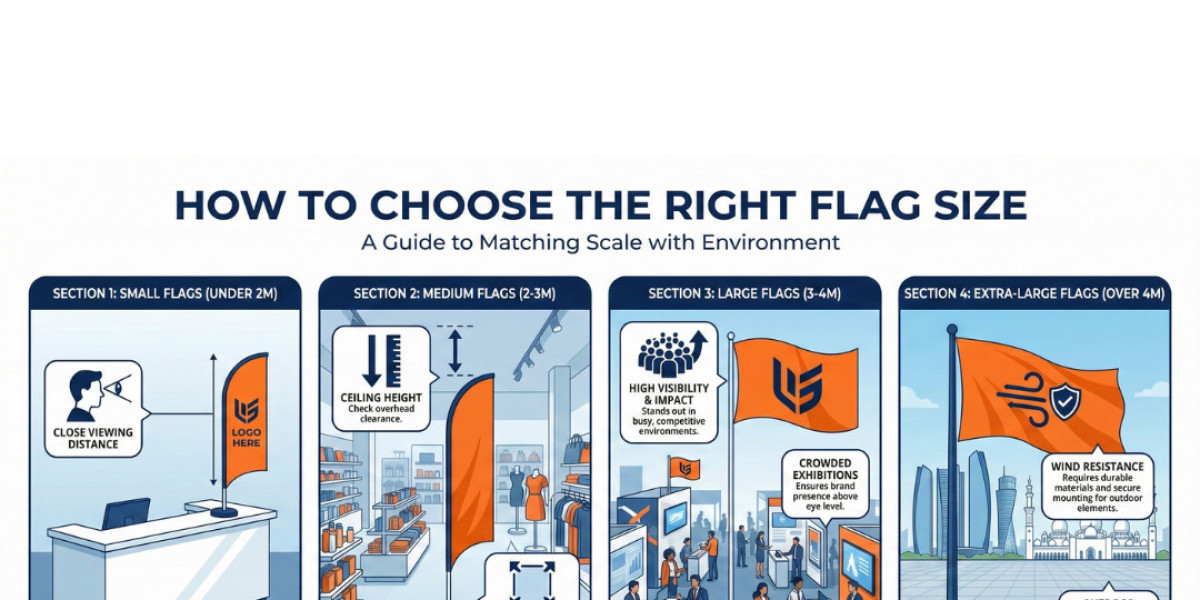
Small Flags (Under 2 Meters)
Heights between 1 and 2 meters work for tabletops, reception desks, and indoor point of sale displays. These flags suit close range viewing in compact spaces.
Medium Flags (2 to 3 Meters)
The most versatile category. Medium flags work inside exhibition halls, retail floors, showroom entrances, and small outdoor setups.
Large Flags (3 to 4 Meters)
Designed for larger indoor venues and outdoor events. These flags stand above crowd height and remain visible from significant distances.
Extra Large Flags (Over 4 Meters)
Reserved for major outdoor events, festival grounds, and large commercial properties. These require sturdy bases and proper anchoring against wind.
Sizing Recommendations for Indoor Spaces
Indoor environments have specific constraints. Ceiling height, foot traffic patterns, and proximity to walls all matter.
Exhibition Booths (3x3 Meters)
For standard booth sizes, flags between 2.5 and 3 meters work best. They rise above table displays without overwhelming limited space. Position them at corners to maximize floor area.
Retail Stores
For small boutiques, flags under 2 meters placed near product displays draw attention without blocking sightlines. Larger retail floors can accommodate medium flags near entrances.
Corporate Lobbies
Lobbies typically have higher ceilings. Flags between 2 and 3 meters create a professional impression. Place them beside reception desks or near seating areas.
Conference Rooms
Table flags between 30 and 50 centimeters suit conference settings. They add branding without distracting from presentations.
Sizing Recommendations for Outdoor Spaces
Outdoor spaces present different challenges. Wind, open sightlines, and variable terrain affect your size choice.
Storefronts and Building Entrances
Flags between 3 and 4 meters placed outside shop entrances catch pedestrian attention. Ensure the flag does not obstruct walkways or doorways.
Outdoor Events and Festivals
Large open areas demand larger flags. Sizes above 4 meters ensure visibility across crowded event grounds. Multiple flags of consistent size create strong brand presence.
Parking Lots and Car Dealerships
These spaces benefit from extra large flags that drivers notice from the road. Heights of 5 meters or more are common in automotive retail.
Common Sizing Mistakes to Avoid
Businesses frequently make these errors when selecting flag sizes:
Choosing Based on Budget Alone
Smaller flags cost less, but an undersized flag fails to deliver results. Spending slightly more on the right size offers better return on investment.
Ignoring Wind Conditions
Larger outdoor flags catch more wind. Without proper bases or ground anchoring, they topple over. Match your base weight to flag size and expected conditions.
Forgetting About Multiple Flags
When using several flags together, maintain consistent sizing. Mixed sizes look disorganized and weaken brand presentation.
Not Requesting Size Samples
Reputable providers for flags printing Abu Dhabi often supply sample poles or mockups. Seeing actual height in your space prevents surprises after purchase.
Working With Your Printer
A good printing provider does more than print. They consult on sizing based on your intended use. When discussing your order, share details about your space dimensions, indoor or outdoor placement, and viewing distances.
Experienced providers offering flags printing Abu Dhabi understand regional event venues and can recommend sizes based on common local setups. They also advise on base options that match your chosen flag dimensions.
Conclusion
Selecting the right flag size requires practical assessment of your space, audience viewing distance, and surrounding environment. Measure before ordering. Consider ceiling heights for indoor use and wind exposure for outdoor placement.
A properly sized flag commands attention without overwhelming its surroundings. Taking time to get this decision right means your investment delivers visible results at every event or location where you display your brand.
Frequently Asked Questions
Q.1 What flag size works best for a standard exhibition booth?
Ans: Flags between 2.5 and 3 meters suit most standard booths. They provide height above displays while fitting comfortably within limited floor space.
Q.2 How do I determine viewing distance for my flag?
Ans: Estimate where most of your audience will stand or walk. Measure from that point to your flag location. Larger distances require larger flags for readability.
Q.3 Can I use the same flag size indoors and outdoors?
Ans: Medium sized flags (2 to 3 meters) often work in both settings. However, outdoor use may require heavier bases for wind stability.
Q.4 What base type should I use for larger flags?
Ans: Water filled bases or heavy cross bases with added weights work for flags over 3 meters. Ground spikes suit soft outdoor surfaces like grass.
Q.5 Should all my event flags be the same size?
Ans: Yes, consistent sizing creates a professional, organized appearance. Mixed sizes look unplanned and reduce visual impact.