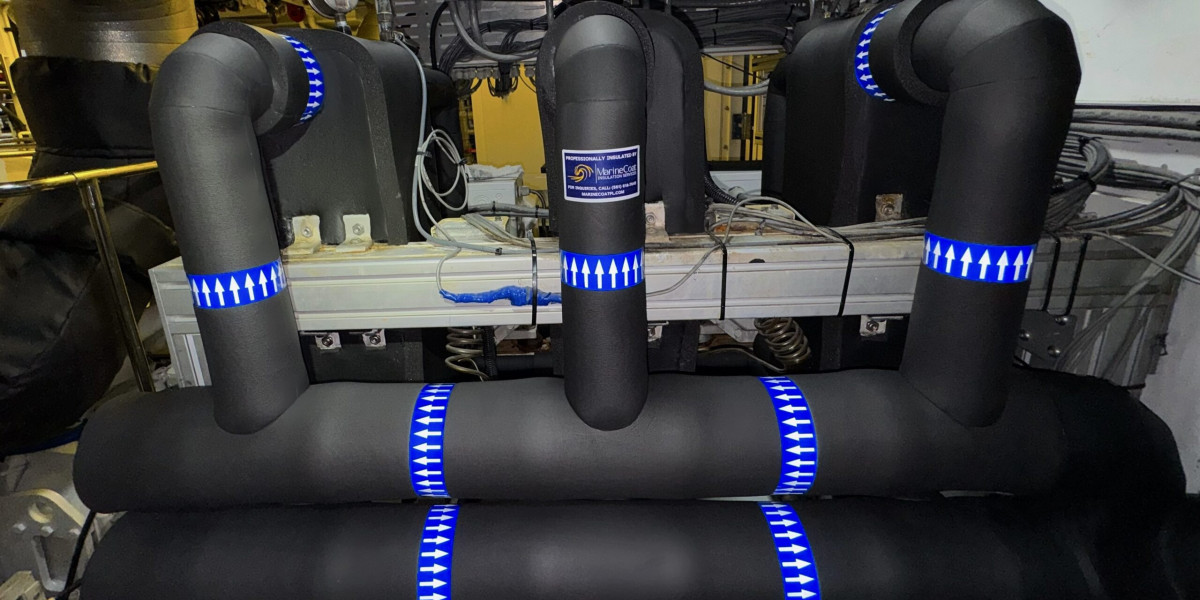

Corrosion represents one of the most persistent threats to marine vessels operating in salt-rich and moisture-dense environments. It develops silently, often hidden beneath surfaces and within confined compartments, gradually weakening structural and mechanical elements. Marine insulation companies contribute significantly to corrosion prevention by controlling the environmental conditions that allow deterioration to thrive. Through engineered insulation systems and protective applications such as marine pipe insulation, they reduce moisture exposure, regulate temperature variation, and shield vulnerable components from aggressive marine atmospheres. Their involvement transforms corrosion control from reactive repair into proactive preservation.
Understanding Corrosion Mechanisms in Marine Settings
Marine corrosion results from chemical reactions between metal surfaces, oxygen, moisture, and salt particles. Below deck, these reactions accelerate due to limited airflow and constant humidity. Temperature fluctuation intensifies the process, causing condensation to form repeatedly on exposed surfaces.
Marine insulation companies analyze these environmental triggers before designing insulation solutions. By reducing direct exposure to moisture and stabilizing surface temperatures, they disrupt the electrochemical conditions required for corrosion development.
Moisture Management as a Preventive Measure
Water presence remains the primary catalyst for corrosion. Condensation collects on cooler surfaces, especially around piping networks and structural supports. Once moisture penetrates unprotected areas, corrosion initiates rapidly.
Marine pipe insulation plays a crucial role by elevating surface temperatures above dew point levels. This thermal regulation prevents vapor from condensing on metal surfaces. Marine insulation companies incorporate vapor barriers and sealed jacketing systems to block moisture migration, ensuring dry conditions around critical components.
Thermal Stability and Metal Preservation
Temperature instability causes metals to expand and contract, creating microfractures in protective coatings. These imperfections allow moisture and salt to penetrate, accelerating corrosion beneath the surface.
Marine insulation companies reduce this stress by maintaining consistent temperature profiles across insulated systems. Marine pipe insulation minimizes heat loss and external temperature influence, preserving coating integrity and extending material lifespan.
Protection of Piping Networks and Fittings
Pipes transport fluids at varying temperatures, making them prime targets for condensation and corrosion. Joints, flanges, and valves often corrode first due to combined thermal stress and moisture exposure.
Marine pipe insulation provides continuous coverage across these vulnerable points. Marine insulation companies fabricate custom insulation sections that maintain uniform protection around complex geometries, preventing localized corrosion initiation.
Barrier Systems and Advanced Materials
Modern insulation assemblies function as multi-layer defense systems. Beyond thermal resistance, they include moisture barriers, corrosion-resistant cladding, and fire-rated coatings.
Marine insulation companies select materials engineered for salt resistance, low permeability, and long-term durability. Marine pipe insulation constructed from closed-cell or composite materials resists water absorption, preserving both insulation performance and underlying metal surfaces.
Hidden Space Preservation
Corrosion often develops in concealed compartments where inspections occur infrequently. Behind panels, beneath flooring, and within bulkhead cavities, moisture accumulates unnoticed.
Marine insulation companies address these risks through comprehensive coverage strategies. By insulating hidden piping runs and structural elements, they prevent moisture retention in inaccessible zones. Marine pipe insulation installed in these areas acts as a protective envelope, safeguarding components from unseen degradation.
Fire Protection and Corrosion Interaction
Fire exposure accelerates corrosion by altering metal composition and damaging surface coatings. High-temperature systems such as exhaust lines and fuel conduits require specialized protection.
Marine insulation companies integrate fire-resistant insulation materials that limit heat transfer during abnormal conditions. Marine pipe insulation surrounding high-heat systems reduces thermal shock, preserving material stability and minimizing corrosion acceleration after thermal events.
Vibration Control and Surface Integrity
Constant vibration aboard vessels loosens fasteners and abrades protective coatings. Once coatings fail, bare metal becomes vulnerable to corrosive agents.
Insulation materials absorb vibrational energy, reducing surface wear. Marine pipe insulation dampens oscillation along piping networks, while marine insulation companies ensure secure attachment methods that maintain coverage under continuous motion.
Compliance With Maritime Preservation Standards
Maritime regulations emphasize corrosion prevention to ensure vessel safety and longevity. Failure to control corrosion can lead to noncompliance, operational restrictions, or costly retrofits.
Marine insulation companies design insulation systems that meet classification society requirements. Marine pipe insulation installations include documentation and material verification that support regulatory approval and inspection readiness.
Economic Impact of Preventive Insulation
Corrosion repair represents a significant operational expense. Replacing corroded pipes, supports, or structural members requires downtime and labor-intensive work.
Marine insulation companies reduce these costs through preventive strategies. Marine pipe insulation protects assets before damage occurs, lowering maintenance frequency and extending service intervals. This proactive approach preserves vessel value and operational continuity.
Long-Term Structural Preservation
Corrosion compromises not only individual components but overall vessel integrity. Structural weakening progresses gradually, often remaining undetected until extensive damage has occurred.
Marine insulation companies contribute to long-term preservation by controlling the environmental factors that cause deterioration. Marine pipe insulation forms a critical part of this defense, protecting both piping systems and surrounding structures from corrosive exposure.
Conclusion
Corrosion prevention in marine environments requires more than surface coatings and periodic inspections. By regulating temperature, blocking moisture, and shielding vulnerable components, marine insulation companies play a vital role in preserving vessel integrity. Through engineered systems and targeted solutions such as marine pipe insulation, they disrupt the conditions that allow corrosion to develop. Their expertise transforms insulation into a strategic preservation tool, ensuring vessels remain structurally sound, compliant, and operational throughout demanding service lives.
Ubicación del Autor
United States of America