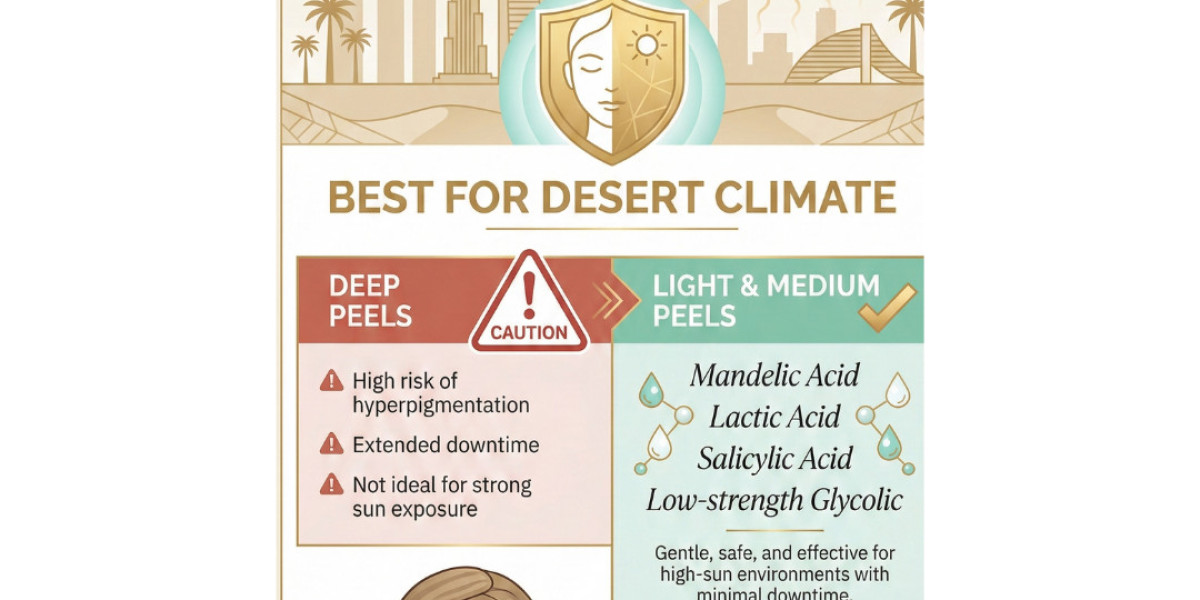

For Dubai’s hot, high UV environment, light to medium depth peels are the safest and most reliable choice. Specifically, mandelic acid, lactic acid, and low-strength glycolic or salicylic peels work best. They improve texture, pigmentation, and acne without leaving skin overly vulnerable to sun damage during recovery.
Deep peels and aggressive formulations may deliver faster results on paper, but in a climate where even short outdoor exposure can trigger pigmentation, they often create more problems than they solve.
The goal in Dubai is controlled renewal, not shock treatment.
Why Climate Changes the Peel You Should Choose
Dubai skin is under constant stress. Heat, air conditioning, dust, and strong sunlight affect the skin barrier every day. Most residents already have some level of tanning or uneven pigment, even if they do not visit the beach.
Chemical exfoliation makes skin temporarily more sensitive to UV. In cooler climates, this window is easier to manage. In Dubai, that same window becomes a risk period.
That is why experienced dermatology clinics avoid high-strength TCA or phenol peels for routine skin correction. They focus on peels that refresh and regulate without forcing long downtime.
The Peels That Actually Work Well Here
Mandelic acid peels are widely used for brown and olive skin in hot regions. They penetrate slowly, control acne, and brighten without sharp inflammation.
Lactic acid peels suit dry or sensitive skin. They smooth texture and restore clarity while maintaining barrier comfort.
Salicylic acid peels are effective for acne and clogged pores. They work well for oily skin that reacts to heat and humidity.
Low-strength glycolic peels help with dullness and early photoaging. In Dubai, they are applied in controlled layers rather than high percentages.
These options allow professionals to build results over sessions instead of forcing a dramatic change in one sitting.
This approach is the foundation of responsible chemical peeling in Dubai.
What Clinics Look For Before Choosing a Peel
Good practitioners do not choose a peel based only on skin type. They look at lifestyle.
They ask about:
Daily sun exposure
Outdoor work or travel
Use of sunscreen
Recent tanning or sunburn
Skin tone and pigment history
A client who works outdoors will receive a very different protocol from someone in an office.
In Dubai, treatment planning is about managing risk, not chasing fast change.
Recovery Is More Important Than the Acid
Even the mildest peel can backfire if aftercare is ignored.
Most post-peel pigmentation cases come from two habits. Going outdoors too soon and skipping the reapplication of sunscreen.
After a peel, the skin is in repair mode. UV exposure during this phase can lock in dark patches that take months to fade.
Clinics that operate in this region build their protocols around this reality. They choose peels that heal quickly and give patients a short, manageable protection window.
This is why chemical peeling in Dubai looks different from peels done in colder countries.
Conclusion
Dubai’s climate rewards caution. Light to medium depth peels such as mandelic, lactic, salicylic, and gentle glycolic formulas deliver consistent results without exposing skin to unnecessary risk. The best peel is not the strongest one. It is the one that fits your sun exposure, skin tone, and ability to protect healing skin. In a high UV environment, steady progress always beats aggressive correction.
FAQs
Can I get a chemical peel in summer in Dubai?
Yes, but only mild peels with strict sun protection.
Which peel is safest for brown skin?
Mandelic and lactic peels are commonly used for melanin rich skin.
How long should I avoid sun after a peel?
At least five to seven days with minimal exposure.
Are deep peels ever recommended here?
Only for specific medical reasons under close supervision.
Will peels help sun pigmentation?
Yes, when done gradually and paired with proper aftercare.