
In the world of local marketing, there is a moment every business owner faces where they decide it is time to stop waiting for the phone to ring and start making some noise. You know direct mail works you see it in your own mailbox every day but when you sit down to plan a campaign, you hit a fork in the road. Do you blanket the neighborhood with a saturation campaign, or do you buy a specific list of names and addresses?
It is a common dilemma. I have sat across the desk from dozens of clients who are paralyzed by this choice. They worry about wasting money sending flyers to people who don't care, but they also worry about the high cost of purchasing data lists. The truth is, there is no single best method; there is only the method that aligns with your specific business model.
To make the right choice, you need to understand the mechanics of the USPS EDDM Map Tool compared to traditional targeted mailing lists. This isn't just about postage rates; it is about how you want to introduce yourself to your community. Let’s break down the differences, the costs, and the strategies so you can decide which vehicle will drive your sales this quarter.
Understanding the Core Difference: Saturation vs. Precision
At a fundamental level, the difference between these two methods is the difference between fishing with a net and fishing with a spear. Traditional direct mail relies on a mailing list. This is a database of specific individuals that match a set of criteria for example, Homeowners in Zip Code 90210, aged 45-65, with an income over $150k. You are paying for the privilege of knowing exactly who lives at the address.
On the other hand, Direct Mail Marketing via Every Door Direct Mail (EDDM) is based on geography, not individuals. You don't buy a list of names; you select a Carrier Route. A carrier route is the specific path a postal worker walks or drives daily. When you use EDDM, you are telling the post office to put your piece in every mailbox along that specific route.
The trade-off is clear: EDDM gives you massive volume and lower costs, but you can't exclude the guy who rents an apartment from your roofing offer. Targeted lists allow you to exclude the renter, but you will pay significantly more for the data and the postage to reach the homeowner next door.
The Case for Every Door Direct Mail (EDDM)
EDDM was designed by the USPS specifically to help small businesses access local households without the barrier of entry that comes with buying expensive data. The beauty of EDDM lies in its simplicity and its cost-effectiveness. Because the mail carrier doesn't have to sort the mail they simply drop one piece in every box the postage rates are drastically lower, usually around 20 cents per piece compared to the 30 to 50 cents for standard mail.
For businesses that rely on a service radius, this is often the superior choice. If you own a pizza shop, a landscaping company, a dental practice, or a car wash, pretty much everyone with a mailbox is a potential customer. You don't need to know their name; you just need to know they live within five miles of your front door.
Leveraging Geography for Strategy
The secret weapon here is how you use the map. It’s not just about spraying mail everywhere; it’s about smart selection. By using a comprehensive map tool guide, you can identify which routes contain single-family homes versus apartments, or which routes are closest to your competitors.
I worked with a dry cleaner once who was convinced they needed a targeted list. We looked at the numbers and realized that for the price of sending 1,000 targeted postcards, they could send 3,000 EDDM postcards to the three carrier routes immediately surrounding their shop. Even if 10% of those homes were "waste," the sheer volume of the EDDM campaign brought in four times the new foot traffic.
The Hidden Power of the Map Tool’s Demographics
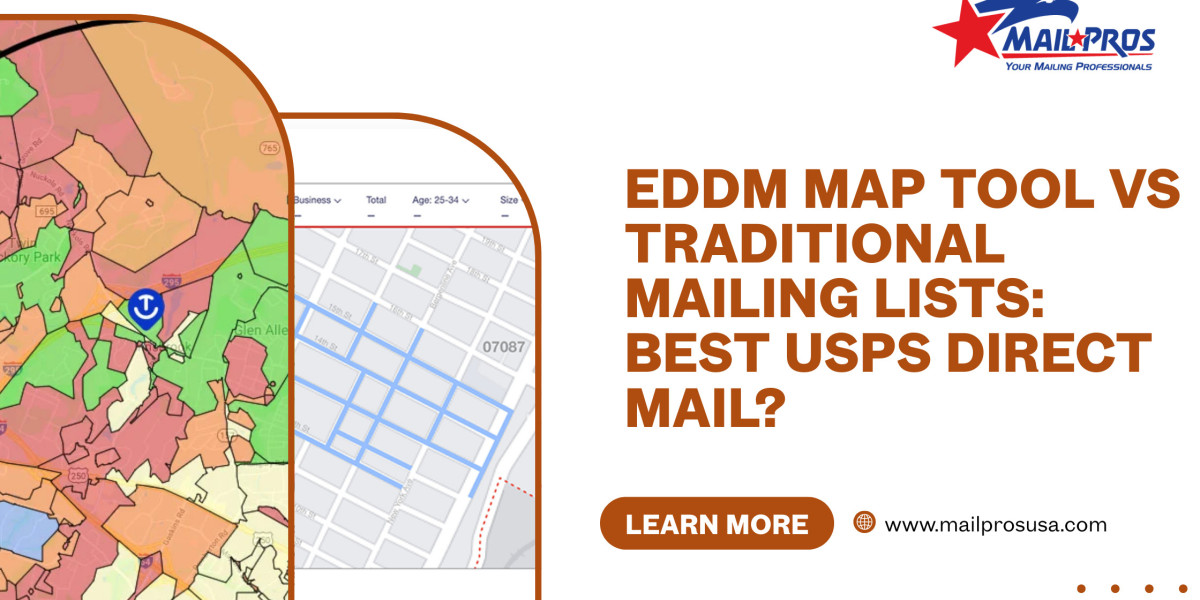
A common misconception is that EDDM is blind marketing. That isn't entirely true. While you cannot target John Smith, you can target Neighborhoods where people like John Smith live. The USPS tool overlays census data onto the carrier routes.
You can toggle filters to see the average household income, average age, and household size for a specific route. This allows you to create a profile of your ideal area. If you sell high-end entry doors, you can use mapping tool options to highlight only the routes where the average income supports a $5,000 home improvement purchase.
You are still hitting every home on that route, but you have statistically increased your chances of landing in front of a qualified buyer. It is a middle ground between the shotgun approach and the sniper approach.
The Case for Traditional Targeted Mailing Lists
So, if EDDM is cheaper and allows for demographic filtering, why would anyone use a traditional list? The answer is Niche. There are certain businesses where the waste of a saturation campaign is simply too high to justify.
If you are a pediatric dentist, you only want homes with children. If you sell hearing aids, you specifically need seniors. If you are a high-end financial advisor, you might need people with a net worth over $1M. In these cases, mailing to every door on a street is inefficient because 90% of the street might not qualify for your service.
With a targeted list, you can refine your data to incredibly specific details: purchasing behavior, magazine subscriptions, car ownership, and more. This allows for Variable Data Printing, where the postcard can actually address the recipient by name: Hey Susan, is your roof ready for winter? That level of personalization generally yields a higher conversion rate per piece, even if the overall cost is higher. For a deeper dive into the nuances of these tools, reviewing a EDDM Map Tool Guide can help clarify the distinction.
Cost Analysis: Postage, Printing, and Data
Let’s talk numbers, because this is usually where the decision is made. When you calculate the ROI of a campaign, you have to look at the Cost Per Acquisition (CPA).
With EDDM, your costs are heavily weighted toward printing because you are printing higher volumes. However, because you are printing thousands of the same generic card, EDDM Postcard Printing costs per unit are very low. You save on postage, you pay zero for data, and you get bulk print rates.
With targeted mail, you have three costs:
- The List: You pay per name (usually 10 to 20 cents per record).
- The Printing: Often higher because of smaller runs or variable data needs.
- The Postage: Significantly higher because it requires sorting by the post office.
However, you must weigh this against the value of a customer. If you sell a $20 pizza, you need low costs. If you sell a $50,000 kitchen remodel, you can afford to spend $1.00 per postcard to reach exactly the right person. If you are struggling with the math, it is helpful to evaluate EDDM value specifically for your industry margins.
Operational Differences
There is also a logistical difference. EDDM requires you (or your print provider) to bundle the mail into stacks of 50 or 100 with specific facing slips for each carrier route. It requires a bit of manual prep work. Targeted mail is usually just addressed, trayed, and dropped.
For many small business owners, the hassle of bundling is worth the savings. But if you are running a massive, multi-state campaign, the logistics of EDDM can become complex, whereas a targeted list is easily scalable through a mail house.
Which Strategy Fits Your Business Model?
After years of managing these campaigns, I have developed a simple litmus test for clients.
Choose EDDM if:
- Your customers are everybody (Restaurants, Gyms, Auto Repair).
- Your business relies on local convenience (Dry Cleaners, Coffee Shops).
- You are in the Home Services industry (Roofing, Siding, Landscaping) where neighbors often copy neighbors.
- You want to build general brand awareness in a specific town.
Choose Targeted Lists if:
- Your product is age-restricted or age-specific (Medicare supplements, toys).
- Your service is a luxury item that only the top 10% of earners can afford.
- You are doing a retention campaign to your existing customer database.
- You are a B2B company looking for specific job titles or industries.
Conclusion
The battle between the EDDM Map Tool and traditional mailing lists isn't about which one is "better" in a vacuum; it is about which one fits your current objective. EDDM is the king of local saturation and brand dominance. It allows you to paint the town with your brand for pennies on the dollar. Targeted lists are the masters of efficiency for niche markets, ensuring you never pay to reach an unqualified prospect.
My advice? Don't be afraid to mix them. Use EDDM to conquer your immediate neighborhood and fill the top of your funnel. Use targeted lists to upsell your current clients or chase high-value prospects. Marketing is rarely a one-size-fits-all endeavor.
If you are ready to explore the map or need help procuring a specific list, MailProsUSA has the experience and the tools to handle both. We can help you navigate the postal regulations, design a card that converts, and ensure your message lands in the right hands whether that’s every hand on the block, or just the chosen few.