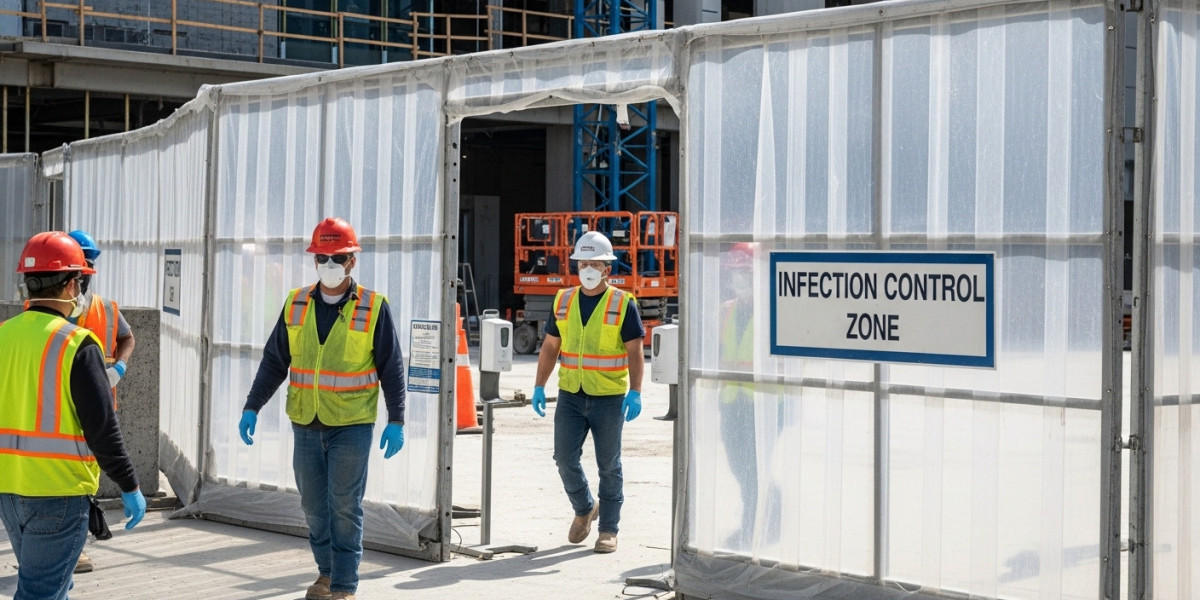

Modern healthcare environments represent some of the most complex architectural and operational challenges within the built environment. These facilities must function as sterile sanctuaries for healing while simultaneously undergoing constant modernization, maintenance, and expansion to accommodate evolving medical technologies. The intersection of active construction and clinical care creates a unique set of risks that extend far beyond the typical concerns of noise or debris. Within these walls, a simple renovation project can inadvertently release microscopic pathogens that remain dormant within wall cavities or ceiling plenums for years. These bioaerosols, once disturbed, possess the potential to migrate through ventilation systems and corridors, reaching individuals whose immune systems are already compromised. Consequently, the management of the physical environment becomes a critical component of the clinical care continuum, requiring a sophisticated synthesis of engineering, microbiology, and risk management.
Protecting patients from healthcare associated infections during renovation necessitates a shift from traditional building practices toward a more clinical and precise methodology. The primary threat during any disturbance of the building envelope is the aerosolization of fungal spores such as Aspergillus or bacteria like Legionella, which are frequently found in accumulated dust and water systems. For an oncology patient or a neonate in an intensive care unit, exposure to these contaminants can lead to severe complications or even mortality. This reality has prompted the development of rigorous protocols designed to isolate work zones and maintain air quality standards that rival those of surgical suites. Success in this field depends not only on the physical barriers erected but also on the systematic evaluation of every activity before a single tool is utilized.
Ensuring Safety Through Strategic Planning
Strategic planning requires all teams to communicate effectively during every phase of a project. Implementing the icra for construction protocols ensures that the hospital remains a sanctuary for healing while necessary upgrades occur within the facility walls. This framework helps bridge the gap between technical building requirements and clinical safety needs. Every project manager must identify the scope of the work and the proximity to vulnerable populations. By evaluating these factors early, organizations can prevent the migration of hazardous particles and maintain a sterile environment. This structured approach moves beyond simple paperwork and becomes a vital system for safeguarding the lives of those receiving care within the medical center.
Stratification of Patient Vulnerability and Risk Groups
The second component of a robust risk assessment involves identifying the specific needs of the patient population in or near the work zone. Not all areas of a hospital require the same level of environmental protection. Low risk groups include administrative areas and public spaces where patients are not typically present or are only passing through. In these zones, the primary concern is often aesthetics and basic cleanliness. Medium risk groups include areas like outpatient clinics or general physical therapy zones where patients may have some health challenges but are generally not severely immunocompromised.
High risk areas demand significantly more care. These include emergency departments, radiology suites, and general surgical units. In these spaces, the presence of open wounds or the use of invasive equipment makes patients more susceptible to infection. The highest risk category is reserved for populations with extreme sensitivity to environmental contaminants. This includes neonatal intensive care units, oncology wards, bone marrow transplant suites, and operating rooms. For these individuals, even a minute quantity of Aspergillus spores can lead to a life threatening infection. When construction occurs near these zones, the level of precaution must be absolute, often requiring the use of rigid, airtight barrier systems and continuous electronic monitoring of air pressure and particulate levels.
Organizational Dynamics and The Culture of Caring
The most sophisticated technology cannot protect patients if the personnel on site do not understand or respect the protocols. Healthcare construction requires a different mindset than standard commercial building. It is often described as a hospital under construction rather than a construction site that happens to be in a hospital. This philosophy, sometimes called a culture of caring, emphasizes that every action taken by a worker can have a direct impact on the life of a patient. Training is the foundation of this culture.
All workers, from the general contractor to the subcontractors, must be educated on the reasons behind the rules. They need to understand what a healthcare associated infection is and how their work can contribute to the spread of pathogens like Aspergillus. This training should include practical skills like how to use an anteroom correctly, how to transport debris in covered containers, and the importance of keeping work clothes clean. Empathy and kindness also play a role in the success of these projects. When construction teams recognize that the people on the other side of the barrier are in a fragile state, they are more likely to be mindful of noise, vibrations, and odors.
Common Compliance Failures and Financial Impacts
Even with the best intentions, projects can face challenges that compromise safety. One common mistake is underestimating the risks of small projects. A quick repair that involves opening a ceiling tile for just a few minutes can release enough spores to cause an infection if the area is not properly managed. Another frequent issue is the failure to consider adjacencies. Airflow is not limited to the room next door; it can move through ductwork or floor penetrations to areas several floors away. A comprehensive assessment must account for the spaces above, below, and surrounding the construction site.
Communication breakdowns are another significant risk. If the construction team plans a utility shutdown or a barrier adjustment without coordinating with the clinical staff, it can lead to dangerous situations. Operating rooms or intensive care units depend on stable power, water, and air quality. Any interruption to these systems must be planned and communicated well in advance to ensure that patient care is not disrupted. The financial stakes of infection control are immense. Healthcare associated infections add billions of dollars to the cost of care in the United States every year. The direct annual cost of treating these infections is estimated to be between 28 billion and 45 billion dollars.
Collaborative Risk Mitigation and Site Oversight
Success in healthcare construction depends on a multidisciplinary team approach. This team should include representatives from the construction manager, the design team, and the hospital infection control and safety departments. This combined knowledge about the environment of care and site challenges is essential for a positive end result. Crew members should each have assigned responsibilities and be trained on them, from maintaining the anterooms to routinely inspecting machines and changing filters. Daily check sheets can help track and enforce program compliance.
Communication is also key; speaking to nurse managers lets both teams understand each other's needs and schedules. All those working on the project must have a full awareness of what is around them to keep the entire community safe. Taking shortcuts could risk lives and cost a person their job. Insurance companies are starting to refuse payment to hospitals where patients obtain an infection during their stay, and the hospital may pass that cost along to the construction team if negligence is found.
Conclusion
Ensuring the safety of patients during the modernization of healthcare facilities requires a rigorous and unwavering commitment to environmental control. The complexity of these environments means that any physical disturbance can have far reaching consequences for the health and well being of those receiving care. By utilizing a structured approach that includes detailed risk assessments, robust engineering controls, and continuous monitoring, institutions can mitigate the invisible threats posed by bioaerosols and other construction related contaminants. This process is not merely a matter of regulatory compliance but a fundamental ethical obligation to provide a safe sanctuary for healing.
The success of these efforts depends on a combination of technical precision and a culture of caring that prioritizes the patient experience. Training every member of the team to understand their role in infection prevention is essential for maintaining the integrity of the environment of care. As technology continues to advance, the ability to monitor and manage these risks will improve, allowing for more efficient and safer facility upgrades. Ultimately, the goal is to ensure that every patient can recover in an environment that is free from secondary complications, regardless of the construction or maintenance activities occurring nearby. Through collaboration, innovation, and empathy, the healthcare industry can continue to evolve while maintaining the highest standards of safety and excellence.