
Billing psychotherapy sessions correctly is essential for mental health practices, clinics, and behavioral health providers. Two of the most commonly used CPT codes for individual therapy sessions are CPT code 90834 and CPT code 90837, and understanding the difference between them is critical for accurate reimbursement, compliance, and claims acceptance. These codes represent different session lengths and carry specific documentation expectations that directly influence how insurers process claims.
This comprehensive guide explores how to use each code correctly, what documentation is required, telehealth considerations, common mistakes to avoid, and how accurate billing supports your practice’s financial health.
Why CPT Codes 90834 and 90837 Matter for Your Practice
Proper use of CPT codes ensures services are billed in a way that reflects the actual clinical time and therapeutic care provided to patients. These time‑based psychotherapy codes must align with the documented minutes spent in direct patient care, excluding administrative tasks.
Misuse of these codes can lead to claim denials, delayed reimbursement, audit flags, and compliance issues. Understanding subtle but important differences between them helps you reduce denials, streamline claims, and improve revenue cycle performance.
1. What CPT Codes 90834 and 90837 Represent
CPT codes are part of the standardized procedure code set used across the United States to describe medical services for billing and reimbursement.
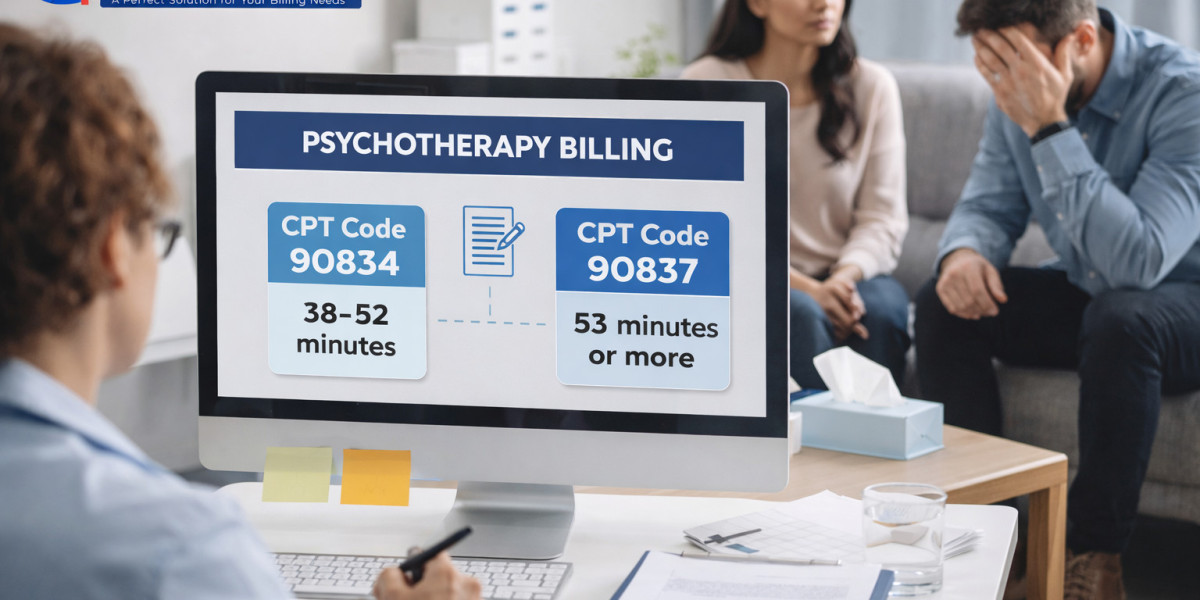
CPT 90834: Used for individual psychotherapy sessions with typical face‑to‑face time between 38 and 52 minutes.
CPT 90837: Used for extended psychotherapy sessions with 53 minutes or more of documented face‑to‑face therapy time.
The difference between these codes is based primarily on documented session length, not just scheduled time. This requires accurate time tracking and documentation in clinical notes.
2. Time Documentation: What the Top Medical Billing Company in Ohio Recommends
Accurate session timing is a core requirement for psychotherapy billing, and this is one area where the top medical billing company in Ohio consistently sees errors that lead to denials:
Always record the actual start and end times for every session in the progress note, not the scheduled time.
Only include direct patient contact time; administrative tasks like charting or prep work do not count toward the time‑based codes.
Billing 90837 without at least 53 minutes documented often results in denials or audit flags.
In many cases, simply using an electronic progress note that includes time stamps helps eliminate common documentation errors. Skilled medical billing partners train staff to capture actual time consistently so claims align with payer expectations and support full reimbursement.
3. Choosing Between 90834 and 90837
Selecting the right code depends entirely on the documented session duration:
Use 90834 when the patient encounter lasts 38–52 minutes.
Use 90837 when the encounter lasts 53 minutes or more, and clinical need supports the extended duration.
For sessions lasting significantly less or more than these ranges, other codes or add‑on codes may apply.
Accurately aligning code selection with documented therapeutic time is crucial for valid claims.
4. Documentation Best Practices
Good documentation practices both enhance reimbursement and reduce compliance risk:
Clearly note session start and stop times in the progress record.
Detail therapeutic interventions, clinical observations, and patient responses.
Indicate the clinical rationale when a session exceeds standard length.
Maintain organized progress notes that support the chosen CPT code.
Thorough progress notes help validate the choice of code if a payer reviews the claim.
5. Clinical Justification and Medical Necessity
Extended sessions can be clinically appropriate, but documentation must support that need:
Explain why the session required extended time rather than simply stating the duration.
Reference specific clinical goals, treatment progress, or complex therapeutic work.
Use objective clinical language showing intent and necessity, not convenience.
Detailed notes linking session content and clinical need improve insurer confidence in the claim.
6. Telehealth Billing and Time‑Based Codes
Telehealth sessions are treated the same as in‑person therapy when it comes to time‑based codes:
Both 90834 and 90837 apply to telehealth when documented time meets requirements.
Include the appropriate telehealth modifier (e.g., Modifier 95) if required by the payer.
Record telehealth session times accurately in the clinical note.
Telehealth compliance improves reimbursement and reduces claim rejection.
7. Avoiding Common Billing Mistakes
Errors often seen in psychotherapy billing include:
Billing 90837 without meeting time requirements.
Using estimated or scheduled time instead of documented time.
Failing to justify the extended clinical need for longer sessions.
Not following payer‑specific telehealth modifier rules.
Avoiding these mistakes improves claim acceptance rates and protects revenue.
8. How Accurate Coding Impacts Practice Revenue
Choosing the correct CPT code affects reimbursement levels:
90837 typically reimburses at a higher rate due to longer session duration.
Undercoding may leave revenue on the table.
Overcoding without documentation support increases audit risk.
Reliable coding practices play a direct role in your practice’s financial health.
9. Payer Policies and Preauthorization
Insurance plans may have varying rules:
Some payers may require preauthorization or documentation reviews for extended sessions.
Policies can differ based on location, plan type, or telehealth modality.
Knowing payer details in advance reduces denials and improves reimbursement timing.
Confirm payer requirements before billing extended sessions.
10. Working With the Best Medical Billing Services Providers
Partnering with the best medical billing services providers ensures your practice handles complex psychotherapy coding with confidence. Expert billing support can:
Verify documentation and coding accuracy.
Stay current with payer regulations and modifier requirements.
Assist with audits, denials, and appeal processes.
Train staff to prevent common errors.
Outsourcing or supplementing your billing team with experienced professionals can maximize revenue and reduce administrative workload.
Conclusion
Understanding CPT code 90834 and CPT code 90837 is essential to accurate, compliant psychotherapy billing. The primary difference between them is documented session length; 90834 applies to 38–52 minutes of therapy, and 90837 applies to 53 minutes or more. Accurate documentation of actual session time, clear clinical justification, and alignment with payer policies ensure claims are accepted and reimbursed properly.
Proper application of these codes and best billing practices helps reduce denials, strengthens your revenue cycle, and supports long‑term practice success. If you need help streamlining your billing process or improving reimbursement accuracy, book a free consultation to get personalized guidance and improve your coding and claims outcomes.
Frequently Asked Questions (FAQs)
What is the minimum documented time to bill CPT 90837?
You must document at least 53 minutes of face‑to‑face psychotherapy time to bill CPT 90837.Can CPT 90834 be used if a session is 50 minutes?
Yes, 90834 applies when the documented face‑to‑face time falls between 38 and 52 minutes.Are these codes applicable to telehealth sessions?
Yes. Both codes apply when documented time requirements are met and appropriate modifiers are included.What documentation is needed for 90837?
You must show start and end times, clinical rationale for extended duration, interventions used, and treatment progress.Can group therapy use these codes?
No. These codes apply to individual psychotherapy only. Group therapy uses different CPT codes.
Ubicación del Autor
1901 N Roselle Rd Ste 820AB, Schaumburg, IL 60195, United States