
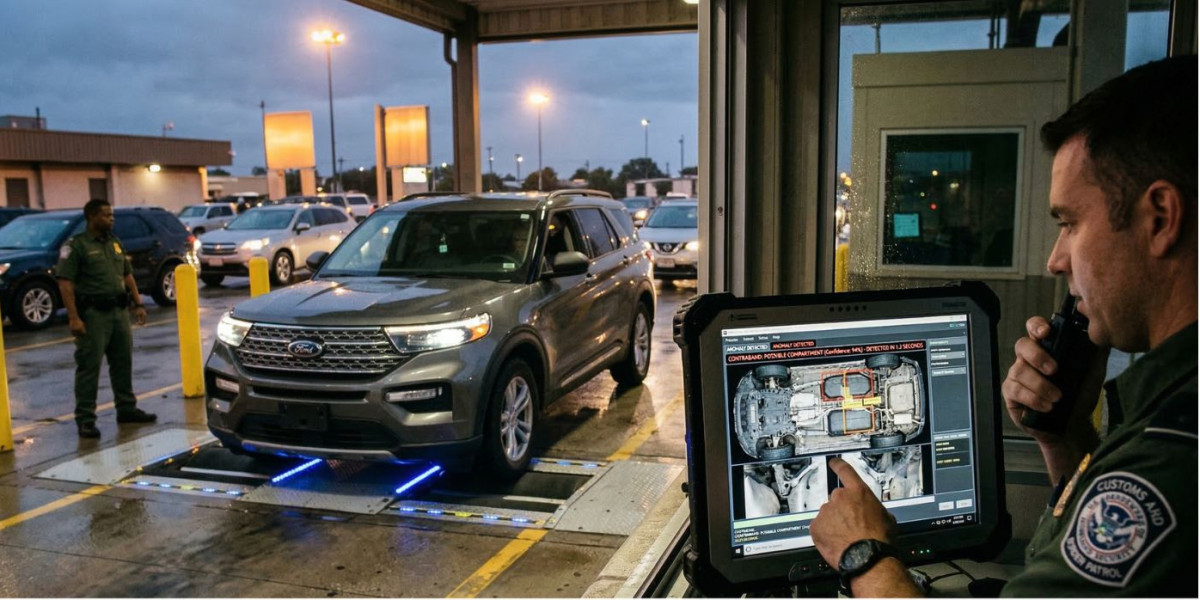

The United Arab Emirates has established itself as a global benchmark for safety, infrastructure development, and smart governance. As the nation continues to expand its airports, seaports, industrial zones, and government facilities, maintaining high levels of security has become increasingly complex. Traditional inspection practices, while still relevant in some scenarios, are no longer sufficient to address modern threats and high traffic volumes.
Intelligent inspection technology is now playing a vital role in supporting the UAE's long-term safety objectives. By combining automation, high-resolution imaging, and real-time analytics, these advanced solutions help organizations detect risks earlier, respond faster, and maintain efficient operations. The shift toward smarter inspection is not just a technological upgrade—it is a strategic move aligned with the country's broader vision for secure and resilient infrastructure.
The UAE's Growing Focus on Proactive Security
Security strategies in the UAE are increasingly proactive rather than reactive. Instead of relying solely on manual checks after vehicles arrive at checkpoints, authorities and facility operators are investing in systems that continuously monitor and analyze potential risks.
This proactive approach is essential in environments such as:
Government and military facilities
Airports and aviation hubs
Oil and gas installations
Border crossings
Large commercial complexes
With vehicle traffic steadily increasing across these locations, intelligent inspection tools allow security teams to maintain strict control without slowing operations. The goal is clear: prevent threats before they escalate while keeping the country's infrastructure running smoothly.
Limitations of Conventional Inspection Methods
Manual vehicle inspections have served security teams for decades, but they come with several limitations. Human inspectors can experience fatigue, visibility challenges, and inconsistencies during high-volume operations. In busy UAE facilities where thousands of vehicles may pass through daily, these limitations can create security gaps.
Additionally, manual inspections often require vehicles to stop for extended periods, leading to congestion and operational delays. In high-security zones, long queues can themselves become a risk factor.
Intelligent inspection technology addresses these weaknesses by delivering consistent, high-speed analysis regardless of traffic conditions. This ensures that security standards remain uniform throughout the day and night.
How Intelligent Imaging Enhances Threat Detection
One of the most significant advantages of modern inspection platforms is advanced imaging capability. High-definition cameras and sensors capture detailed views of vehicle exteriors and undercarriages within seconds. These images are automatically analyzed and stored for comparison.
This technology enables security teams to:
Detect foreign objects attached to vehicles
Identify structural anomalies
Compare current scans with historical records
Generate alerts for suspicious findings
In many UAE facilities, the implementation of UVSS has significantly improved the accuracy and speed of under-vehicle monitoring, allowing security personnel to focus on response and decision-making rather than manual searching.
Supporting Faster and More Efficient Checkpoints
Efficiency is a critical requirement across UAE infrastructure. Whether at a busy port in Abu Dhabi or a government complex in Dubai, vehicle flow must remain smooth while security remains uncompromised.
Intelligent inspection systems support this balance by enabling drive-through or slow-speed scanning. Vehicles no longer need to undergo lengthy manual checks in most scenarios. Instead, automated systems perform detailed analysis in real time.
This results in:
Reduced vehicle wait times
Lower congestion at entry points
Improved user experience for drivers
Higher throughput without sacrificing security
For rapidly growing urban environments in the UAE, this efficiency gain is especially valuable.
Integration With Smart Security Ecosystems
The UAE is widely recognized for its commitment to smart city initiatives. Intelligent inspection technology fits seamlessly into this ecosystem by integrating with other security components such as:
License plate recognition (LPR)
Access control systems
Central command centers
Video management platforms
When these systems work together, security teams gain a unified, real-time view of vehicle activity. For example, a vehicle can be identified, scanned, logged, and either cleared or flagged automatically within seconds.
This level of coordination enhances situational awareness and supports faster, more informed decision-making across critical facilities.
Enhancing Workforce Effectiveness
Another important benefit of intelligent inspection technology is improved workforce efficiency. Instead of relying on large teams to conduct repetitive manual checks, facilities can deploy smaller, highly trained teams supported by automation.
Personnel can focus on:
Monitoring alerts
Investigating anomalies
Managing incident response
Overseeing system performance
This shift not only reduces operational strain but also improves safety for security staff who would otherwise need to physically inspect vehicles in busy or potentially hazardous environments.
Aligning With the UAE’s Future Vision
The UAE’s long-term national strategies emphasize innovation, digital transformation, and resilient infrastructure. Intelligent inspection technology directly supports these priorities by delivering scalable, data-driven security solutions.
As infrastructure projects continue to expand across the country, the need for adaptable and future-ready security systems will only grow. Facilities that adopt intelligent inspection today are better prepared to meet evolving regulatory requirements, handle increasing traffic volumes, and respond to emerging threat patterns.
Conclusion: Building a Safer UAE Through Smart Inspection
Intelligent inspection technology is rapidly becoming a cornerstone of modern security strategy across the United Arab Emirates. By replacing inconsistent manual processes with automated, high-precision analysis, organizations can strengthen protection while maintaining operational efficiency.
From airports and ports to government and industrial sites, the adoption of smart inspection platforms supports the UAE's broader safety goals and smart infrastructure ambitions. As threats become more sophisticated and vehicle traffic continues to rise, intelligent inspection will remain essential to keeping the nation's critical assets secure, efficient, and future-ready.