
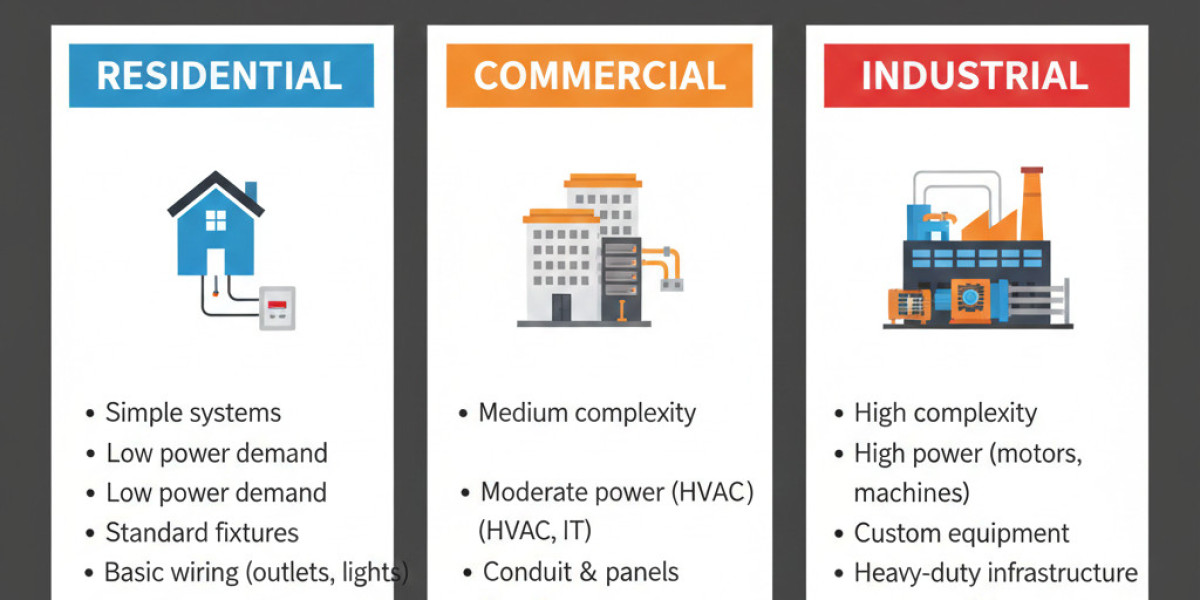

Electrical estimating is a main process in the electrical industry. There are many types of calculations in electrical estimating involving the calculations of material, labour and equipment costs for a project. In various sectors fundamentals of electrical estimating remain the same. Industrial electrical estimating requires a high budget, and on the other hand, residential and commercial require less budget and simple methods. Let’s talk about the unique aspects of industrial electrical estimating and how it separates from its residential and commercial counterparts.Differentiating industrial electrical estimating from residential and commercial electrical estimating
Project scope and complexity
Industrial electrical projects deal with complicated systems like power distribution, industrial automation (using computers and other systems to do tasks), Control systems and complex electrical concepts like arc flash studies, which help to reduce the chances of dangerous electrical explosions, designing rooms for the electrical equipment. On the other hand, residential and commercial projects deal with small and simpler electrical installations like wirings, lighting and receptacles. By recognising these methods, the navigator can better understand the challenges and deliver accurate and reliable estimates.
Equipment and material costs
Industrial electrical projects use unique and expensive equipment, which leads to increased costs like motor control centres (to control big machines), switchgear and transformers. The people who install and set up this equipment need to pay a heavy amount. While residential and commercial projects use less expensive equipment like wiring, light fixtures, and outlets, electricians who install these equipment are likely to pay a lesser amount.
Labor costs and productivity factors
Industrial electrical projects need skilful labourers who have many skills, such as experts in controlling and measuring systems, electrical engineers who are experts in designing electrical systems and also some automation engineers who can easily manage computer-controlled systems. This labour needs special training, safety protocols and different types of certifications, so this type of specialized labour costs more money. On the other hand, residential and commercial projects use basic types of labour like electricians who can easily install and maintain electrical systems. This type of labour generally requires low costs, and these are very straightforward.
Safety and regulatory considerations.
Industrial projects are complex, so they have strict safety rules, and safety is a top priority in industrial projects. Industrial projects including OSHA ( fall protection, scaffolding and hazardous material handling) and NFPA guidelines (cost of fire resistant materials and electrical equipment), arc flash regulations(these are the rules which prevent electrical explosions), some types of personal equipment (hard hats safety glasses, helmets and gloves) they require safety training sessions and different types of documentations to prove safety measure. It demands a higher level of attention to safety protocols. On the other hand, residential and commercial projects also have safety rules, but they are easier and less strict. Safety costs are lower and easily manageable.
Different techniques and methods
Industrial estimators use different types of advanced software and different techniques to estimate costs, such as CAD(computer-aided design), which helps them to create detailed electrical systems design, and BIM (building information modelling) to create digital models of buildings. These tools reduce time and errors and easily estimate costs. On the other hand, residential and commercial estimators use basic methods like traditional estimating methods and software such as Excel (spreadsheet), and it will take more time and is prone to error.
Risk factor
Estimating costs for industrial electrical projects has its challenges due to potential downtime and risks associated with safety and high equipment failure costs. This makes the process a lot harder than estimating for residential or other commercial premises. However, when you are working in a residential or commercial division, you are looking at lower risks as they are generally smaller in size and significantly less complicated. But when it comes to big industrial projects, you need a significant amount of expertise, knowledge and experience behind you to appropriately gauge the size, complexity as well as cost.
Conclusion
Industrial electrical estimating is complex and unique and requires special equipment, skilful labour, high costs and safety protocols. In short, industrial electrical estimating requires a special type of expertise and tools. Whereas residential and commercial estimating are simpler and straightforward requirements, they require simple labour and fewer safety concerns, traditional estimating methods, basic equipment and lower cost. By understanding these points, electrical contractors easily understand and manage electrical estimating, which helps them to deliver successful projects which fulfill the requirements of their clients.