
Hydraulic systems power heavy machinery used in construction, manufacturing, agriculture, mining, and transportation. These systems rely on clean hydraulic fluid to operate efficiently. But how does a hydraulic filter work, and why is it so important? Understanding its function helps equipment owners reduce breakdowns, improve performance, and extend machinery life.
The Role of Hydraulic Fluid
Hydraulic fluid transfers power within a system. It flows through pumps, valves, cylinders, and motors under high pressure. During operation, contaminants such as dust, dirt, metal particles, water, and sludge can enter the fluid. Even small particles can damage sensitive components and cause system failure.
This is where a hydraulic filter plays a critical role.
Basic Working Principle of a Hydraulic Filter
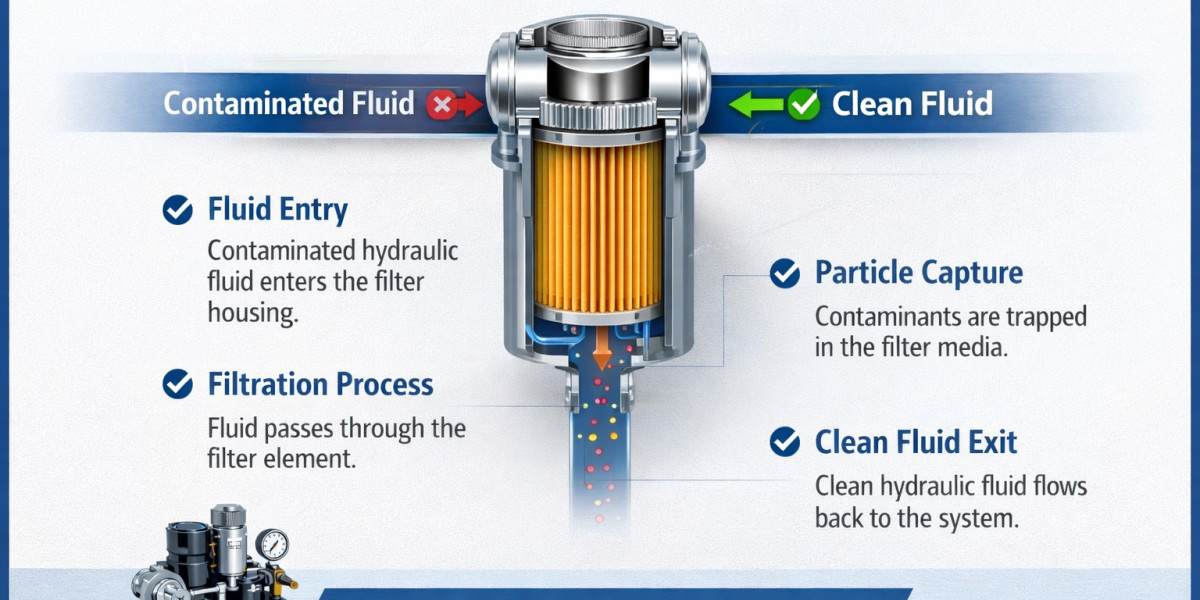
A hydraulic filter works by trapping and removing contaminants from hydraulic fluid as it circulates through the system. The filter contains a filter element made of special media designed to capture particles of specific sizes.
Here’s how the process works:
Fluid Entry – Contaminated hydraulic fluid enters the filter housing.
Filtration Process – The fluid passes through the filter element.
Particle Capture – Dirt, metal shavings, and debris are trapped in the filter media.
Clean Fluid Exit – Clean hydraulic fluid flows back into the system.
This continuous process keeps the hydraulic oil clean and protects internal components.
Types of Filtration Methods
Hydraulic filters use different filtration methods to remove contaminants:
1. Surface Filtration
Particles are trapped on the outer surface of the filter media. This method is common in cellulose filters.
2. Depth Filtration
Contaminants are captured throughout the thickness of the filter media. Synthetic or microglass filters often use depth filtration for higher efficiency.
3. Magnetic Filtration
Some hydraulic filters include magnets that attract and capture metal particles.
Key Components of a Hydraulic Filter
A typical hydraulic filter includes:
Filter Housing – Holds the filter element and directs fluid flow
Filter Element – The core component that captures contaminants
Bypass Valve – Allows fluid flow if the filter becomes clogged
Pressure Indicator – Alerts when the filter needs replacement
The bypass valve is especially important because it prevents system damage if the filter becomes blocked.
Importance of Micron Rating
The micron rating determines the size of particles the filter can remove. For example:
25 microns – Removes larger particles
10 microns – Medium filtration
3–5 microns – Fine filtration for sensitive systems
Choosing the correct micron rating ensures proper protection without restricting fluid flow.
Where Hydraulic Filters Are Installed
Hydraulic filters can be placed at different points in the system:
Suction Filter – Protects the pump
Pressure Filter – Protects downstream components
Return Line Filter – Cleans fluid before returning to the reservoir
Offline (Kidney Loop) Filter – Provides continuous cleaning
Each location serves a specific purpose in contamination control.
Why Hydraulic Filters Are Essential
Without proper filtration, contaminants cause:
Pump wear
Valve sticking
Cylinder damage
Increased downtime
Higher maintenance costs
Clean hydraulic oil improves system efficiency, extends component life, and reduces expensive repairs.
Final Thoughts
A hydraulic filter works as the protective barrier of a hydraulic system. By continuously removing harmful contaminants from the fluid, it ensures smooth operation, better efficiency, and longer equipment lifespan. Regular inspection and timely filter replacement are essential for maintaining optimal hydraulic system performance in any industrial application.
Ubicación del Autor
canada