
Played professionally under organizations like the Fédération Internationale de Volleyball or at the school level, understanding volleyball positions is essential for success. Each position has specific responsibilities that contribute to both offensive and defensive play.
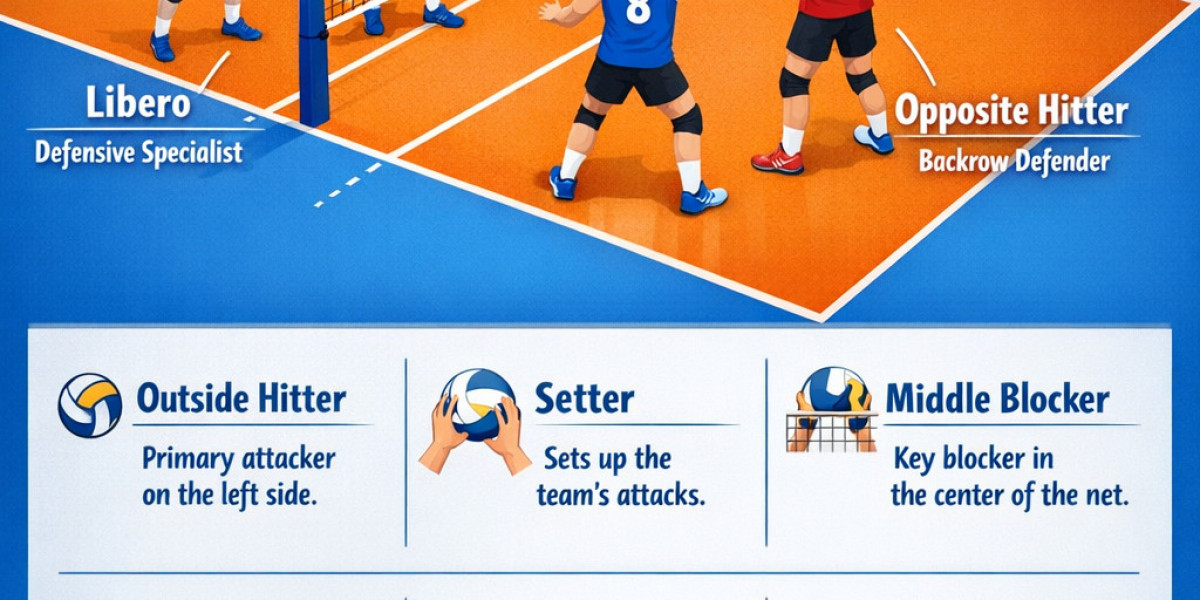
There are six main positions in volleyball : Setter, Outside Hitter, Opposite Hitter, Middle Blocker, Libero, and Defensive . Every player rotates on the court, but their specialized skills determine their primary role.
The Setter is often called the “playmaker” of the team. This player directs the offense by setting the ball up for attackers. A good setter must have excellent decision-making skills, quick reflexes, and strong communication abilities. They control the tempo of the match and decide which hitter receives the ball.
The Outside Hitter (also known as the Left-Side Hitter) is one of the most versatile players. They handle attacking from the left side, passing, and defensive coverage. Because they receive many sets and passes, outside hitters must be strong all-around players with solid ball control and powerful spikes.
The Opposite Hitter, positioned on the right side of the court, plays both offensive and defensive roles. They often block the opponent's outside hitter and provide scoring support. Opposites are typically strong attackers and reliable blockers.
The Middle Blocker focuses primarily on defense at the net. Their main job is to block the opponent's quick attacks and close gaps in the defense. Middle blockers must be quick, agile, and capable of reading the opponent's offensive patterns. They also perform fast, quick attacks near the setter.
The Libero is a defensive who wears a different colored jersey. This position was introduced to strengthen back-row defense. The libero cannot attack the ball above the net height or serve in some competitions, but they excel at digging, passing, and maintaining ball control. Their presence improves overall defensive stability.
A Defensive plays similarly to the libero but without the same restrictions or jersey distinction. They substitute in for weaker defensive players and help strengthen back-row performance.
Understanding these positions helps players develop specific skills and allows teams to function efficiently. Coaches build strategies around these roles to maximize performance during matches and tournaments.
Volleyball positions work together in rotation systems, ensuring that players transition smoothly between front-row and back-row responsibilities. Success in volleyball depends not only on individual talent but also on how well each position performs its role within the team structure.
Whether you are a beginner learning the basics or an aspiring competitive athlete, knowing the positions in volleyball is the foundation of mastering the game.
For more visit: https://sportsbyte.net/