
Introduction
Telehealth has transformed the way healthcare services are delivered across the United States, especially in rural regions where access to medical professionals can be limited. In states like Texas, where many communities are spread across large geographic areas, telehealth provides a critical bridge between patients and providers. However, while virtual care improves accessibility, managing the billing and reimbursement process can be complex—particularly for Rural Health Clinics (RHCs).
This is where RHC telehealth billing becomes essential. Clinics must follow specific guidelines, coding requirements, and payer policies to ensure proper reimbursement. Without an organized billing strategy, providers risk claim denials, delayed payments, and compliance issues.
For many healthcare providers in Texas, working with experienced billing professionals such as 247 Medical Billing Services helps streamline the process. With the right systems and expertise, clinics can focus on patient care while ensuring their telehealth services generate consistent revenue.
This article explores how RHC telehealth billing works in Texas, why it is important, and how clinics can optimize their billing processes to remain compliant and financially stable.
Understanding RHC Telehealth Billing
Rural Health Clinics operate under a unique reimbursement structure designed to support healthcare access in underserved areas. Telehealth services, which allow providers to treat patients remotely through digital communication technologies, must be billed according to specific federal and state regulations.
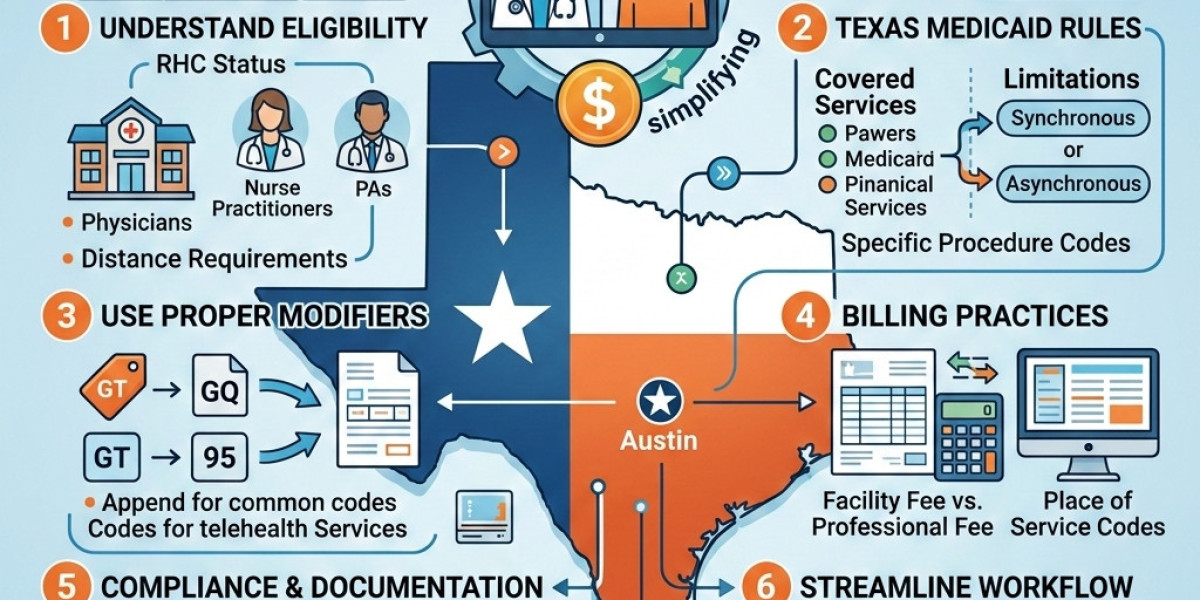
RHC telehealth billing refers to the process of submitting claims for telemedicine services provided by rural clinics while adhering to Medicare, Medicaid, and private payer guidelines.
Unlike traditional in-person visits, telehealth encounters require:
Specific billing codes
Appropriate service documentation
Compliance with telehealth eligibility rules
Correct modifiers and place-of-service codes
In Texas, these requirements may also vary depending on payer policies and regulatory updates.
Why Telehealth Matters for Rural Communities in Texas
Texas has one of the largest rural populations in the United States. Many residents live far from hospitals or specialized medical providers. Telehealth helps overcome these barriers by allowing patients to consult with healthcare professionals without traveling long distances.
Key benefits of telehealth in rural Texas include:
Improved healthcare access for remote communities
Reduced travel time and costs for patients
Faster medical consultations and follow-ups
Better chronic disease management
Increased healthcare efficiency
Because of these advantages, telehealth services have become a permanent part of healthcare delivery. However, clinics must implement effective RHC telehealth billing systems to sustain these services financially.
Telehealth Billing Regulations for RHCs in Texas
Billing telehealth services within an RHC requires adherence to multiple regulatory frameworks, including federal healthcare programs and Texas-specific policies.
Medicare Guidelines
Medicare provides reimbursement for certain telehealth services offered by Rural Health Clinics. However, providers must meet strict requirements related to:
Eligible telehealth services
Approved technology platforms
Provider qualifications
Proper coding and documentation
Medicare updates telehealth rules regularly, which makes staying compliant a continuous process.
Texas Medicaid Policies
Texas Medicaid also covers various telehealth services. However, coverage rules may differ from Medicare guidelines.
Important aspects include:
Covered telehealth service types
Approved provider categories
Documentation requirements
Telemedicine vs. telehealth distinctions
RHCs must ensure that each claim meets payer-specific guidelines before submission.
Private Insurance Requirements
Private payers in Texas often follow their own telehealth policies. While many insurers expanded telehealth coverage in recent years, billing requirements still vary.
Clinics must confirm:
Telehealth service eligibility
Modifier requirements
Authorization rules
Reimbursement rates
Failing to meet these requirements can lead to rejected claims.
Common Challenges in RHC Telehealth Billing
While telehealth offers many advantages, the billing process can be difficult for clinics that lack dedicated billing expertise.
Some of the most common challenges include:
1. Complex Coding Requirements
Telehealth encounters require the correct combination of procedure codes, modifiers, and place-of-service indicators. Incorrect coding can result in claim denials or reduced reimbursements.
2. Frequent Regulatory Changes
Healthcare regulations change frequently, especially for telehealth services. Clinics must stay updated with evolving Medicare and Texas Medicaid guidelines.
3. Documentation Errors
Accurate documentation is critical for successful telehealth claims. Missing or incomplete information can trigger audits or payment delays.
4. Claim Denials and Payment Delays
Even minor billing mistakes can cause claims to be rejected. This leads to additional administrative work and revenue loss.
5. Limited Administrative Resources
Many Rural Health Clinics operate with small teams. Managing telehealth billing alongside patient care can overwhelm staff members.
Best Practices for Successful RHC Telehealth Billing
To maintain a smooth revenue cycle, clinics should adopt proven billing strategies that improve accuracy and compliance.
Maintain Accurate Documentation
Every telehealth encounter should include detailed records such as:
Patient consent for telehealth services
Provider notes and diagnosis information
Duration and type of virtual visit
Technology used for the consultation
Proper documentation protects clinics during audits and ensures claim approval.
Stay Updated with Policy Changes
Telehealth rules evolve regularly. Clinics should continuously monitor updates from:
Medicare
Texas Medicaid
Private insurers
Remaining informed helps avoid compliance issues.
Use Correct Billing Codes and Modifiers
Telehealth claims must include accurate codes that reflect the type of service provided. Using the correct modifiers ensures that payers recognize the service as a telehealth visit.
Implement Revenue Cycle Monitoring
Tracking claims from submission to payment helps identify issues early. Clinics should review:
Claim rejection reports
Payment timelines
Denial patterns
These insights can improve billing efficiency over time.
Train Staff on Telehealth Billing
Staff members involved in billing must understand telehealth regulations and documentation standards. Regular training reduces errors and improves claim approval rates.
How Specialized Billing Support Helps RHCs
Many clinics in Texas partner with professional billing companies to manage complex healthcare claims. A specialized billing service understands the unique requirements of rural healthcare providers and telehealth services.
Organizations like 247 Medical Billing Services help RHCs streamline their revenue cycle while maintaining regulatory compliance. By handling coding, claim submission, and denial management, billing allow healthcare providers to focus on delivering quality patient care.
Professional billing support can offer benefits such as:
Reduced claim denials
Faster reimbursement cycles
Improved billing accuracy
Compliance with federal and Texas regulations
Lower administrative burden for clinic staff
For Rural Health Clinics expanding telehealth programs, reliable billing assistance can make a significant difference in financial performance.
The Future of Telehealth Billing in Texas
Telehealth is expected to remain a core component of healthcare delivery in Texas. Advances in technology, improved broadband access, and supportive healthcare policies continue to expand virtual care services.
Future trends likely to influence RHC telehealth billing include:
Expanded Medicare telehealth coverage
Greater integration of remote patient monitoring
New digital healthcare technologies
Increased payer support for virtual care services
More streamlined telehealth reimbursement systems
As these changes occur, clinics will need adaptable billing strategies that keep pace with regulatory developments.
Conclusion
Telehealth has revolutionized healthcare access for rural communities in Texas, enabling patients to receive timely medical care without traveling long distances. However, delivering virtual services successfully requires more than just technology—it also demands efficient and compliant billing practices.
RHC telehealth billing involves navigating complex regulations, coding requirements, and payer policies. Without proper management, clinics may face claim denials, compliance risks, and revenue loss.
By adopting best practices such as accurate documentation, policy monitoring, and revenue cycle oversight, Rural Health Clinics can improve billing performance and maintain financial stability. Additionally, partnering with experienced professionals like 247 Medical Billing Services allows healthcare providers to streamline their telehealth billing processes while focusing on patient care.