
Fear of the unknown prevents many from taking the first step toward better skin. If yellow laser treatment is something you're considering, you've probably spent time worrying about whether it will hurt.
Here's the simple truth: most people find it much easier than they expected. Let's walk through what you'll actually feel and how to make sure you stay comfortable from start to finish.
How This Technology Works
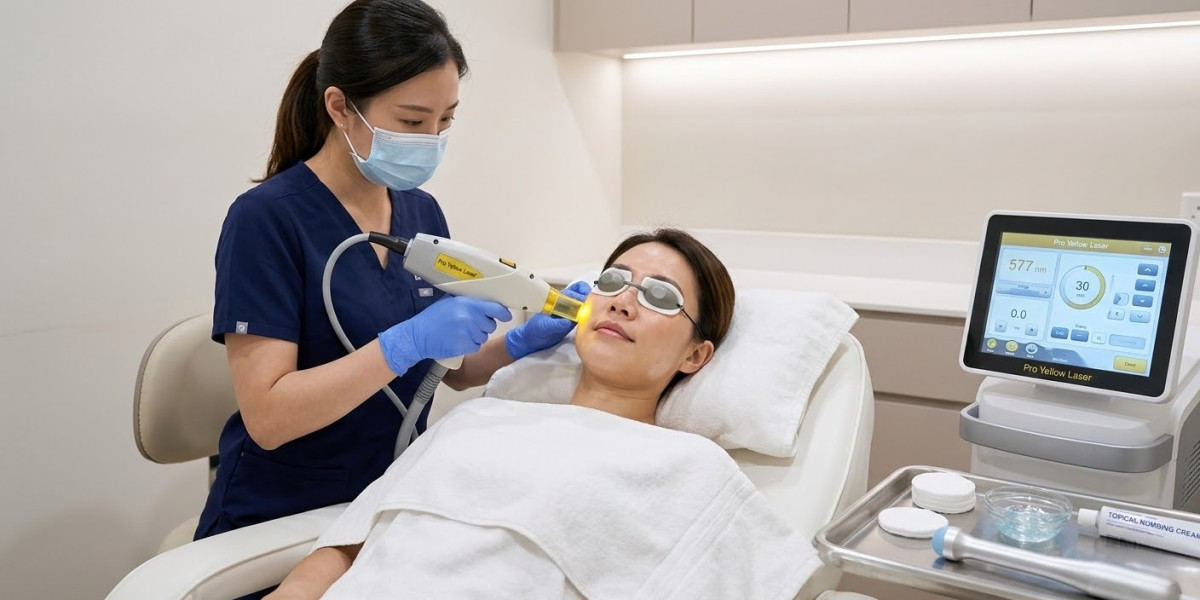
Yellow laser treatment uses a specific type of light—yellow light at 577 nanometers, to be exact. This is the Pro Yellow Laser, and it's special because it can fix two problems at once: broken blood vessels and unwanted pigmentation.
The reason this matters for your comfort is that 577 nanometers is very precise. It goes straight to the problem areas without spraying energy into the skin around them. This means less damage to healthy tissue, which naturally means less discomfort for you.
The Real Feeling: What Patients Say
When you ask people who've actually had yellow laser treatment to describe it, they tend to say the same things. Most talk about feeling warm, like a gentle heating pad, or a slight prickling that comes and goes quickly. It's not burning, and it's not sharp. Some doctors say it's like a rubber band snapping, but softer than that sounds. If you've tried other lasers before, you'll probably notice this one feels gentler than green laser or IPL treatments.
The numbers back this up. When researchers ask patients to rate their pain, the average answer is about 3 out of 10. Many people don't need any pain medicine at all, and almost everyone says it was less uncomfortable than they feared. People trying laser for the first time are usually the most surprised by how doable it is.
Why Some People Feel It More Than Others
Your experience won't be exactly the same as someone else's, and there are clear reasons why. Your face has thinner skin and more nerve endings than your arms or legs, so working on facial redness tends to feel stronger than treating spots on your body. Also, darker patches of skin need more laser energy to break up the pigment, so you might feel more intensity in those specific areas.
Who does your treatment matters more than you might think. A skilled provider knows how to set the machine right, move quickly and smoothly, and use cooling at the right moments. Someone without much experience might not just give you worse results—they might also make the whole thing less comfortable for you.
Making Yourself Comfortable
Today's clinics have built-in cooling that blows cold air on your skin right before each pulse of laser. This numbs the surface and takes the edge off any sting. Many places also have ice wands or cold gel pads they can use between passes. These simple things make a real difference.
If you're nervous or know you have sensitive skin, you can ask for numbing cream. You put it on about half an hour before your appointment, and it gives you control over your comfort level. Not everyone needs it, but it's good to know it's there.
You can also control the pace. A yellow laser treatment usually takes 30 to 45 minutes, but you don't have to do it all in one go. It's completely fine to ask for a break if you need one. And here's the most important thing: speak up if something feels too strong. Good providers watch your face and adjust immediately. They don't want you to suffer in silence, and they can change the settings in seconds.
After Your Appointment
Most people feel fine when they get up from the table. You might look a bit red for an hour or two, and your skin might feel warm for a few hours after that. Some areas might tingle a little, especially if they're sensitive. All of this is normal and nothing to worry about.
If you want to, you can use cold compresses to feel better. Stay out of the sun for a while after treatment, and give your skin a break from strong products like retinol or acids for about a week.
Sticking With the Plan
Yellow laser treatment doesn't show results right away. Most people need six sessions, spaced three weeks apart. Some skin problems get better faster, others take longer. The feeling during each session should stay about the same, unless your provider turns up the power because you're responding well. Knowing this ahead of time helps you stick with the full course instead of quitting after a few sessions.
What This Treatment Can Fix
This one treatment handles several common complaints. It calms rosacea and facial redness by targeting the tiny blood vessels causing the flush. It fades freckles and sun spots by breaking up the extra pigment. It smooths out redness and texture left behind by acne, and it shrinks small spider veins on your face or body. All of this adds up to more even, clearer skin.
A big plus: yellow laser treatment works on all skin colors, including darker tones. Many lasers are risky for people with more melanin because they can cause dark spots after treatment. The 577nm wavelength avoids most of this risk, making laser finally an option for people who were told before that it wasn't for them.
When to Wait or Speak Up
Hold off on booking if you've recently tanned or have a sunburn—wait until your skin is back to normal. If you get cold sores, tell your provider, especially if you're treating the area around your mouth, because the laser can trigger an outbreak. Some medications make your skin more sensitive to light, so share your full medication list before you start.
If you feel real pain during the treatment, say something right away. That's not how it should feel, and no good provider wants you to just tough it out. They can adjust things immediately.
The Final Word
For most people, yellow laser treatment is a minor inconvenience, not real pain. The sensation is brief, limited to specific spots, and can be controlled with cooling or numbing cream.
Compared to stronger lasers, the side effects are minimal and you recover quickly. If worrying about pain has stopped you from fixing a skin problem that's been bothering you, this is one of the gentler ways to get results.
Talk openly with your provider about any worries before you start. The good ones want you to feel informed and relaxed before they begin.
Ubicación del Autor
1 Grange Road, Orchard Building #12-02, (Located above H&M), Singapore 239693