
If you are a student aiming for top academic results, understanding the IGCSE grading system and what an IGCSE passing grade is very important. International students are enrolling in IGCSE at a very fast rate, so understanding the grading system, the expectations, how to perform, and how to prepare will save them a lot of heartache.
In this case, it does not matter if you are a parent, teacher, or student. This will be a complete guide to how IGCSE grades are calculated, the various grading levels, and other useful tips for getting a higher score.
What is IGCSE?
IGCSE is the acronym for the International General Certificate of Secondary Education, a secondary education exam taken by students, usually aged 14 to 16. IGCSE is a pathway to higher education qualifications such as A-levels or the International Baccalaureate, and, as such, the system is flexible yet maintains a high level of difficulty.
Because IGCSE is internationally accepted, unlike many national examinations, it is an attractive option for students who want to complete their secondary school education to pursue further studies overseas. For students taking the IGCSE, it is very important to understand the grading system and the passing grades for all subjects.
The IGCSE Grading System 1 to 9
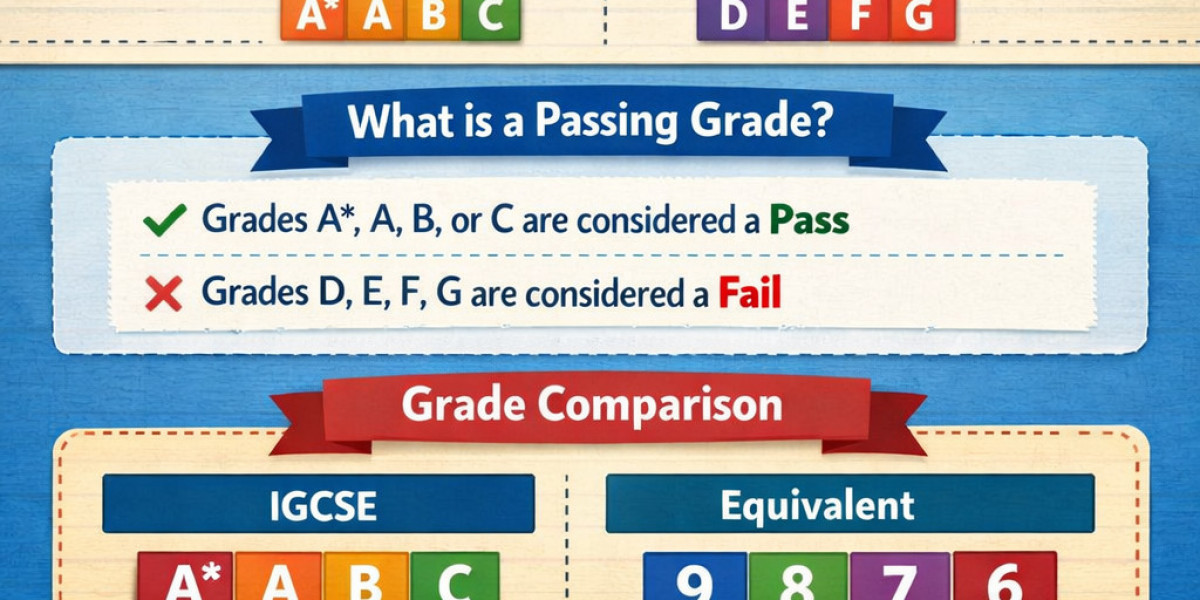
The IGCSE grading system has changed over the years. Grades used to range from A-G*, with U meaning ungraded or failed. However, many examining boards have adopted the ‘IGCSE grading system 1 to 9 to be able to be consistent globally and to provide more detailed differentiation between student performance. Let's quickly evaluate what the different scores mean.
Numeric Grade | Alphabetic Equivalent | Performance Indicator |
9 | A* (high) | Exceptional, top-performing students |
8 | A* / A | Excellent, above-average mastery |
7 | A | Very good understanding of the subject |
6 | B | Strong performance, comfortably above pass |
5 | C | Good performance, standard pass level |
4 | C / D | Minimum pass level for the IGCSE passing grade |
3 | D / E | Below average, may require improvement |
2 | E / F | Poor, below the pass threshold |
1 | F / G | Very poor performance |
U | Ungraded | Did not meet minimum requirements |
In most IGCSE subjects, Grade 4 is considered a pass; therefore, Grade 4 is recognised as having suitable knowledge to be able to further your education.
How IGCSE Grades Are Calculated
A student who understands how IGCSE grades are assessed can create a reasonable set of target grades that are achievable and design a study plan that will help them achieve those goals. Grades are assessed on the following criteria:
Written Examinations: Most subjects use written exams to assess knowledge, understanding, and the practical application of what has been taught. There are different types of exams, ranging from multiple-choice to short-answer questions, and they even include prompts for student-response essays.
Coursework / Practical Assessments: Certain areas, especially in the sciences and arts, require additional coursework or practical assessments. These are assessed against certain criteria and are quite influential on the overall grade.
Weighting of Components: Each grading system varies slightly. For instance, when coursework and exam weighting are 30% and 70%, respectively, the exam board sets boundaries to define a grade range based on the scores.
Grade Boundaries: Each year, exam boards set grade boundaries based on overall results and exam difficulty. As a result, the number of points required to achieve grade 4 (the passing grade of the IGCSE) varies from year to year.
Once students understand the grading system, they can easily evaluate the factors that contribute to the grades they want to achieve.
Why Understanding the IGCSE Passing Grade Matters
There are various reasons that knowing the IGCSE passing grade is important:
Academic Planning: Understanding which grades are required is essential for determining which pathways are available, such as which A-levels or other pre-university options are open.
Target Setting: Working towards and achieving targets is beneficial; therefore, grades are important.
Gap Closing: Students must receive support and appropriate help to avoid failing in those subjects.
For example, scoring a 3 in a subject where a grade 4 is a pass can highlight the need for more tutoring or revision, as failing to do so may reduce progress.
How Online Tutoring Can Help You Excel
Success at IGCSE is not just about hard work but smart work. Online tutoring platforms like Mixt Academy offer personalised tutoring on specific IGCSE challenges and tasks, processes, and weaknesses you will need for IGCSE. With online tutoring, students can:
Create Individual Learning Programs: Weaknesses are identified by online IGCSE tutors, and subjects and topics are addressed together.
Flexible Scheduling: Optimise your study time to improve retention.
Exam Strategies: Tutors teach how to earn marks and eliminate test anxiety and time stress.
Tracking Progress: Continuous assessment ensures students stay on track to achieve at least the IGCSE passing grade and aim higher.
Common Misconceptions About IGCSE Grades
Here are the common misconceptions about IGCSE grades.
“Getting a Grade 4 is poor.”
A grade 4 is the minimum to pass, but further grade improvements are possible; a high pass remains achievable.
“Only the exams matter.”
This is an incredibly poor mindset. Although the practicals and the submissions matter, they do not matter at all for practical gradings.
3. "Grades cannot be changed."
The IGCSE system uses a relative grading system. If a student puts in sufficient effort, they will move up in rank or grade.
4. ''Tutoring online is not efficient."
Top online IGCSE tutors and the latest tools to deliver results comparable to face-to-face tutoring.
Tips to Achieve Higher IGCSE Grades
Below are the useful practical tips to achieve higher IGCSE grades.
Understand What Is Required: Each subject has its own requirements. Know the requirements to pass the IGCSE and earn high grades.
Understand What Is Weak: Identify where marks are lost and spend more time fixing those areas.
Increase Past Paper Practice: The more familiar a student is with an exam's format, the more confident they will be.
Get an IGCSE Tutor: An online IGCSE tutor will show a student how to handle various challenges, enhance their exam technique and encourage them.
Regulate Your Time: Make sure to dedicate the same amount of time to each subject. Do not spend more time on the subject you like best.
Conclusion
Understanding IGCSE grade calculation, IGCSE grading system 1 to 9, and IGCSE passing grade is equally as important as putting in effort to achieve success in IGCSE. Realistic goals, addressing weak areas, and expert tutoring put students in the best position to achieve higher academic grades. Online IGCSE tutoring platforms are a good option for students who need a little more guidance. They offer a good balance of structured, interactive, and flexible learning. No matter if you want to achieve just a passing grade or if you want to score as high as you can, it is great to have an expert online IGCSE tutor to help you with the right tools and methods.
FAQs
What is considered an IGCSE passing grade?
A grade 4 or higher is generally regarded as the IGCSE passing grade, allowing students to move to A-levels. A student must get a grade 4 for IGCSE.
How does the IGCSE grading system 1 to 9 differ from the A–G system?*
The 1–9 grading system is built to be more specific in distinguishing between students. 9, 8, and 7 are top A*–A grades, and 4 and 5 are passing grades.
How IGCSE grades are calculated?
Your grade can include any or all of the following: exams, coursework, and practical assessments. However, each subject has its own specifications, and exam boards set grade boundaries each year based on overall student performance.
Can online tutoring help me achieve a passing grade?
Yes, personalised tutoring and facilitated guidance to help students achieve and even surpass the IGCSE passing grade are available at a private IGCSE tutoring centre.
How can I aim for top grades beyond the IGCSE passing grade?
To achieve a standard that exceeds passing, a strong focus on exam techniques, regular practice with previous exam papers, and specifically targeted tutoring are highly beneficial.