
The Credit Risk Gap and What Causes It
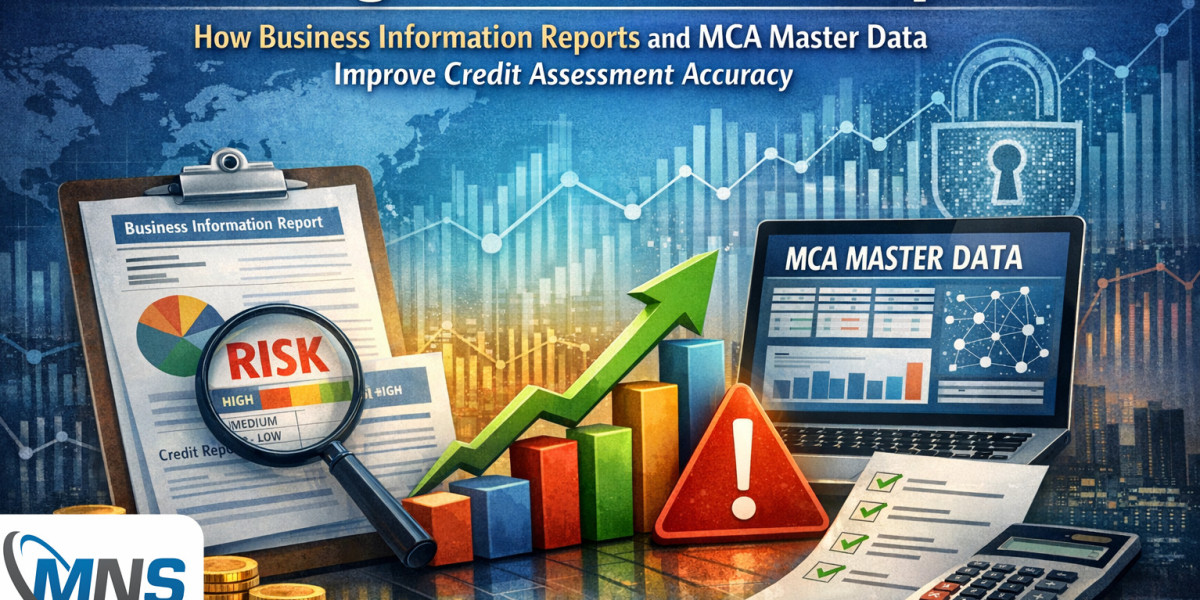
Every credit decision involves a gap — the distance between what a creditor knows about the borrower or buyer at the time of assessment and what they would need to know to make a fully informed decision. When this gap is narrow, credit assessment is accurate and outcomes are predictable. When it is wide, seemingly sound credit decisions produce unexpected defaults, write-offs, and the cascading cash flow consequences that follow. Closing this gap is the central objective of effective credit risk management, and the two most powerful tools available for doing so in the Indian commercial context are the Business Information Report and MCA Master Data.
The credit risk gap exists for several reasons. Financial statements are historical documents that may be 12 to 18 months out of date by the time they inform a credit decision. They capture financial performance but say nothing about legal standing, compliance behaviour, or the history and integrity of the individuals managing the business. Applicants for credit have an inherent incentive to present their position favourably, which can result in the omission of material information that a creditor would consider relevant. And subjective assessments — gut feel about a client's reliability based on relationship history — are vulnerable to bias and blind spots that structured data analysis does not share.
What the Business Information Report Contributes
A Business Information Report is a structured intelligence document that assembles multiple dimensions of a company's profile into a single, analyst-ready format. For credit assessment specifically, the most valuable elements are those that supplement the financial data the applicant provides with independently verified information from authoritative third-party sources.
Payment behaviour data is among the most predictive components available in a Business Information Report. How a company has historically paid its suppliers and creditors is one of the strongest indicators of how it will pay in the future. A company with a consistent track record of prompt payment represents a meaningfully different risk proposition from one with a pattern of late settlement, partial payments, or disputes — and this distinction is often invisible in financial statements that report the net position without the underlying behaviour.
Litigation history adds a further dimension that purely financial analysis misses. A company that is involved in multiple active legal disputes — whether as plaintiff, defendant, or respondent in regulatory proceedings — carries legal and financial contingency risks that may not be reflected in its reported balance sheet. The Business Information Report makes these risks visible before a credit commitment is made rather than after it has become a problem.
What MCA Master Data Adds to the Picture
MCA Master Data — the corporate registration, compliance, and directorship information maintained by the Ministry of Corporate Affairs for all companies incorporated in India — provides the structural and legal foundation that financial analysis cannot supply. Several dimensions of MCA data are particularly significant for credit assessment accuracy.
Company status verification is the most fundamental check. A company whose MCA status shows as struck off, under liquidation, or dormant presents a risk so fundamental that it should halt any credit consideration immediately. Even among active companies, the compliance record visible in MCA data — whether annual returns and financial statements are being filed on schedule, whether there have been regulatory actions or penalties — provides a meaningful signal about management discipline and operational stability.
Director cross-association analysis is one of the most powerful and underutilised applications of MCA Master Data in credit risk assessment. Since MCA records link every director to all their current and historical company associations, it is possible to build a comprehensive picture of the key individuals behind a credit applicant — how many companies they have been associated with, whether any of those companies have been struck off or wound up, and whether any pattern of short-lived or non-compliant entities suggests a higher risk profile than the specific applicant company's own record would reveal.
How the Two Sources Complement Each Other
The power of combining a Business Information Report with MCA Master Data lies in the way the two sources address different dimensions of credit risk that neither can adequately cover alone. MCA data answers structural and legal questions: Is this a real, legitimately constituted, currently compliant company managed by directors with clean corporate histories? The Business Information Report answers financial and behavioural questions: Does this company pay its obligations reliably, is its financial position sound, and does it carry any litigation or reputational risks that should affect the credit decision?
A credit applicant who passes both layers of scrutiny — clean MCA status and director history, strong financial ratios, positive payment behaviour, no significant litigation exposure — presents a substantially lower risk profile than one who passes only one layer or neither. The combination of both sources transforms credit assessment from a process based primarily on self-reported financial data into one grounded in independently verified, multi-dimensional intelligence.
Practical Integration into the Credit Assessment Workflow
Integrating Business Information Reports and MCA Master Data into a credit assessment workflow does not require complex systems or large dedicated teams. The most effective approach is to establish a standard pre-approval checklist that includes both a Business Information Report review and MCA data verification for all credit applications above a defined exposure threshold. This threshold-based approach ensures that the most significant credit decisions receive the most thorough data foundation, while lower-value decisions are processed efficiently without disproportionate due diligence overhead.
For existing credit relationships, periodic review of both data sources — typically annually, or more frequently for high-exposure accounts — ensures that the information informing credit limits and terms remains current and that any deterioration in the counterparty's profile is detected in time to adjust exposure before a default occurs.
Conclusion
The credit risk gap is not a structural inevitability — it is an information problem with an information solution. Business Information Reports and MCA Master Data, used in combination within a structured credit assessment workflow, provide the independently verified, multi-dimensional intelligence needed to make credit decisions that are accurate, defensible, and genuinely reflective of the risk being accepted. Businesses that close this gap systematically experience fewer defaults, smaller write-offs, and more predictable cash flow — outcomes that make the investment in quality credit intelligence one of the most rational and high-return commitments a credit function can make.