
Understanding NGO Registration in India
Before starting the registration process, it is crucial to understand the types of NGOs recognized under Indian law. Typically, NGOs can be registered as:
- Trusts – Governed by the Indian Trusts Act, 1882.
- Societies – Governed by the Societies Registration Act, 1860.
- Section 8 Companies – Non-profit companies under the Companies Act, 2013.
Each type has specific requirements and documentation, but the general steps in the NGO procedure for registration remain similar.
Step 1 – Prepare the NGO Project Report
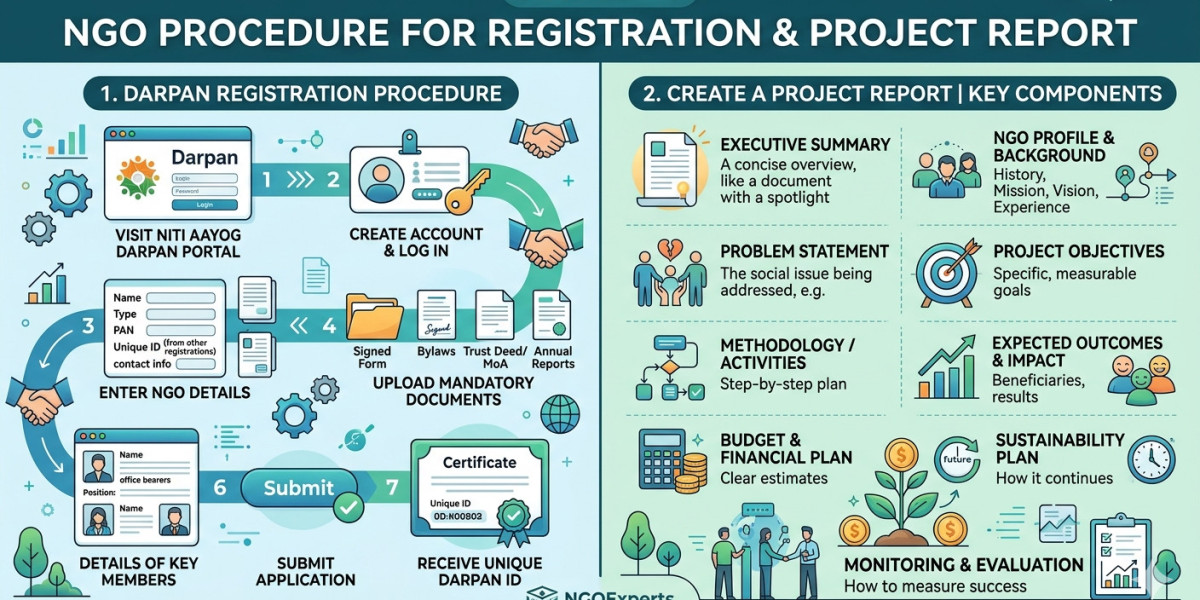
One of the first and most important steps in registering an NGO is preparing an NGO Project Report. This report outlines:
- The mission and objectives of the NGO
- Detailed plan of activities and programs
- Target beneficiaries and area of operation
- Estimated budget and funding sources
A well-prepared project report ensures transparency and helps during the approval process for registration as well as future grants or funding opportunities. At NGOExperts, I assist clients in drafting comprehensive reports that meet all legal and functional requirements.
Step 2 – Complete Darpan NGO Registration
After preparing the project report, the next step is Darpan NGO registration, which is required for NGOs to receive government grants and access various welfare schemes. The Darpan portal, managed by NITI Aayog, requires the following:
- A digital copy of the NGO registration certificate
- PAN and Aadhaar of the NGO or key members
- Detailed NGO Project Report
Once submitted, the NGO receives a unique Darpan ID, which is essential for future compliance and funding applications. At NGOExperts, I ensure that this registration is completed accurately and quickly to avoid delays.
Step 3 – File the Legal Documents
The legal documentation for the NGO procedure for registration varies depending on the type of NGO:
- Trust Registration: Trust deed, list of trustees, and affidavit
- Society Registration: Memorandum of Association (MOA), rules, and list of members
- Section 8 Company Registration: MOA, Articles of Association (AOA), and board of directors details
Submitting correct and complete documentation is crucial to avoid rejection or long delays.
Step 4 – Obtain PAN, TAN, and Bank Account
After successful registration and Darpan NGO registration, the NGO must apply for:
- PAN (Permanent Account Number) for tax purposes
- TAN (Tax Deduction and Collection Account Number) if applicable
- Open a dedicated bank account in the NGO’s name
These steps complete the formal registration process and allow the NGO to start operations legally.
Tips for a Smooth Registration Process
- Prepare a clear and realistic NGO Project Report
- Ensure all documents are accurate and verified
- Seek professional guidance to avoid procedural errors
At NGOExperts, I provide end-to-end assistance in the entire NGO procedure for registration, from project report drafting to Darpan registration and compliance.
Starting an NGO can be a fulfilling journey if done with proper guidance. By following this step-by-step approach, your organization can operate legally, access government grants, and create a real impact. Partnering with NGOExperts ensures a smooth and hassle-free registration process so that you can focus on serving your community.
Conclusion
Completing the NGO procedure for registration is a crucial step for anyone looking to make a meaningful social impact. From preparing a detailed NGO Project Report to completing Darpan NGO registration and filing all legal documents, each step ensures your organization operates legally and efficiently. Partnering with NGOExperts simplifies the process, providing professional guidance at every stage. With proper planning and support, your NGO can start its journey smoothly, access government grants, and focus on creating lasting change in the community.