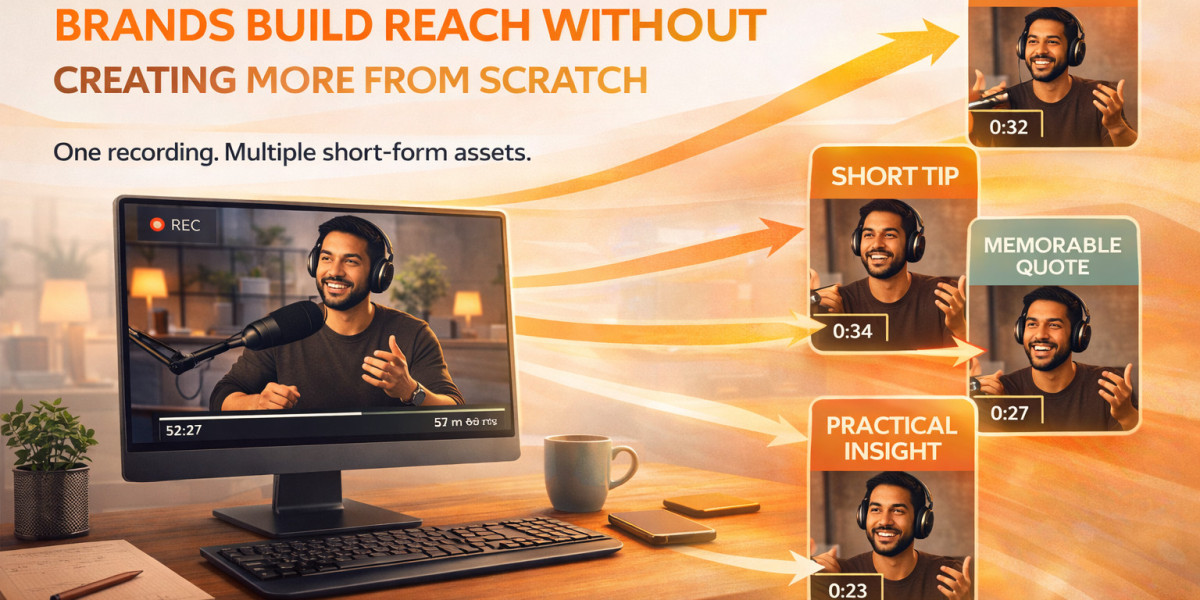

A lot of brands think they need to create more content to grow.
More videos. More podcasts. More webinars. More founder interviews. More livestreams. More posts for every platform.
That sounds logical at first. More content should mean more reach.
But in many cases, the real problem is not a lack of content.
It is a lack of content leverage.
That is where clipping campaigns become useful.
A clipping campaign helps a brand take one long-form recording and turn it into multiple short-form assets that can be distributed across different channels over time. Instead of relying on one full upload to do all the work, the brand creates several smaller touchpoints that keep the message active long after the original recording is finished.
That changes the entire content workflow.
Because once a brand starts thinking this way, one podcast episode is no longer just one podcast episode. One webinar is no longer just one webinar. One founder interview is no longer one isolated upload. Each long-form asset becomes a source of repeated discovery, repeated visibility, and repeated chances to connect with new people.
That is why clipping campaigns matter.
Why most brands underuse their best content
One of the biggest problems in content marketing is not weak content.
It is underused content.
A team spends time planning a webinar, booking a guest, setting up a recording, editing the full episode, and publishing the final version. Then what happens? Maybe they post one extra clip, maybe they do not, and then the rest of the value inside that recording gets buried.
That happens constantly.
A good long-form recording often contains:
- a strong opinion
- a short teaching moment
- a memorable quote
- a myth-busting answer
- a teaser-worthy segment
- a quick takeaway
- an explanation that solves a common audience problem
In other words, it contains far more than one post.
But if the team only treats it as one post, most of the value gets lost.
That is why clipping campaigns have become more important. They solve a waste problem. They help brands get more useful output from source material they already worked hard to create.
What clipping campaigns actually do
A clipping campaign creates a system for turning long-form content into short-form content with purpose.
That purpose matters.
This is not just about trimming a 40-minute video down into random shorter clips. A proper clipping campaign identifies the moments most likely to perform well on shorter attention platforms, packages those moments in a way people actually want to watch, and distributes them over time so the source content continues creating visibility.
A clipping campaign can include:
- short educational clips
- quick opinion-led moments
- summary-style posts
- short answers to common questions
- teaser videos
- short quote clips
- platform-specific edits for Reels, Shorts, TikTok, LinkedIn, and X
This means one long-form asset can fuel multiple publishing moments instead of one brief spike of attention followed by silence.
That is the core advantage.
Why one upload is rarely enough anymore
People do not discover brands the same way they used to.
Most audiences are not patiently browsing company websites and watching full-length uploads from start to finish. Discovery now happens in fast-moving feeds, fragmented attention windows, and repeated small encounters.
Someone may first see a 20-second clip.
Then a quote.
Then another short insight.
Then a teaser that makes them curious enough to check the full version.
That is a very different discovery path from the old model of “publish one full video and wait.”
This is why long-form content still matters, but it needs support around it.
Without that support, even very good source material can fade too quickly. The content may be useful, insightful, and worth sharing, but if it is not broken into smaller, more accessible moments, too much of it stays hidden.
Clipping campaigns solve that by creating more entry points into the same brand message.
Why clipping campaigns improve visibility
Visibility is not just about one strong post.
It is about repeated exposure.
A single clip may get someone’s attention once. A sequence of useful clips keeps the brand in circulation. That repeated presence makes the brand easier to remember and easier to trust.
This is especially important for brands operating in crowded markets, because attention is rarely won in one shot. It is usually built through frequency, familiarity, and relevance.
Clipping campaigns help with that because they let one source recording create several separate touchpoints. That means the brand can stay active over a longer period without needing to constantly film brand-new content every few days.
This is one reason more teams are investing in structured clipping campaigns rather than relying on random repurposing. They want their content to keep working instead of expiring too fast after launch.
That is smarter distribution.
Why clipping campaigns reduce content burnout
A lot of teams know they need to stay consistent, but consistency becomes difficult when every post depends on a fresh idea, a fresh recording, and a fresh editing cycle.
That is where content burnout starts.
Founders get tired of recording.
Small teams run out of time.
Agencies get pulled into client work.
Marketing teams lose rhythm.
The calendar starts feeling like a burden.
Clipping campaigns reduce that pressure.
Once the long-form source exists, the team already has material to work with. That creates breathing room. Instead of chasing constant new production, they can keep publishing from content that is already there.
That does not just help output.
It helps sustainability.
A content system that depends on endless fresh filming is fragile. A content system that gets more value from each recording is much easier to maintain.
Why this matters for smaller teams and growing brands
Large brands can sometimes survive inefficient workflows because they have more people and bigger budgets.
Smaller brands usually cannot.
That is why clipping campaigns are especially useful for:
- B2B companies
- agencies
- founders
- consultants
- podcasters
- educators
- service businesses
- personal brands
These groups often already create useful long-form content, but they do not always have time to fully repurpose it. As a result, they keep starting over instead of building on what they already made.
Clipping campaigns help smaller teams create leverage.
One webinar can become multiple posts.
One founder interview can support a week of short-form content.
One podcast episode can create several discovery points across platforms.
That is a better use of time, a better use of production effort, and a better use of the original recording.
Why random posting is not the same thing
Some teams already cut short clips from long videos, but they do it in an inconsistent way.
A clip gets published because someone had time to make it.
Another gets posted a few days later.
Then nothing happens for a week.
Then the team scrambles again.
That is not really a clipping campaign.
That is reactive posting.
A clipping campaign is different because it creates a deliberate sequence. The clips come from the same source, support the same larger visibility goal, and are distributed with more structure. That structure is what helps the brand feel present over time rather than appearing in random bursts.
That difference is important.
Random activity may create occasional noise.
A campaign creates momentum.
Why one recording should do more work
If a team has already invested time into creating long-form content, that content should work harder.
That is the simplest way to think about clipping campaigns.
A webinar should not create one upload and then disappear.
A podcast should not produce one publish date and then fade away.
A founder interview should not be treated like one finished asset and nothing more.
Each source recording should continue paying off after the original release.
That is what clipping campaigns are designed to do. They extend the useful life of content by transforming one large asset into multiple smaller assets that can continue reaching people over time.
That improves return on effort in a very practical way.
Why clipping campaigns support better growth
Growth depends on reach, consistency, and frequency.
Clipping campaigns support all three.
They help a brand reach more people because short-form content creates more opportunities for discovery. They improve consistency because one recording can generate several posts instead of one. And they increase frequency because the same source can keep producing usable assets long after the full upload is published.
That makes the overall system stronger.
Instead of constantly asking, “What do we create next?” the team starts asking, “What else can this recording give us?”
That is a much more scalable way to think.
Final thoughts
Clipping campaigns matter because they help brands get more from the content they already create.
They turn one long-form recording into multiple short-form opportunities. They make visibility easier to maintain. They reduce waste from valuable source material. And they help brands stay active without depending entirely on nonstop new production.
That is what makes them effective.
Not just more clips.
A better way to turn one recording into an ongoing distribution system.
For most brands, that shift is more valuable than simply producing more. Because growth does not always come from making more content. Very often, it comes from using existing content better, longer, and with more intention.