
Introduction
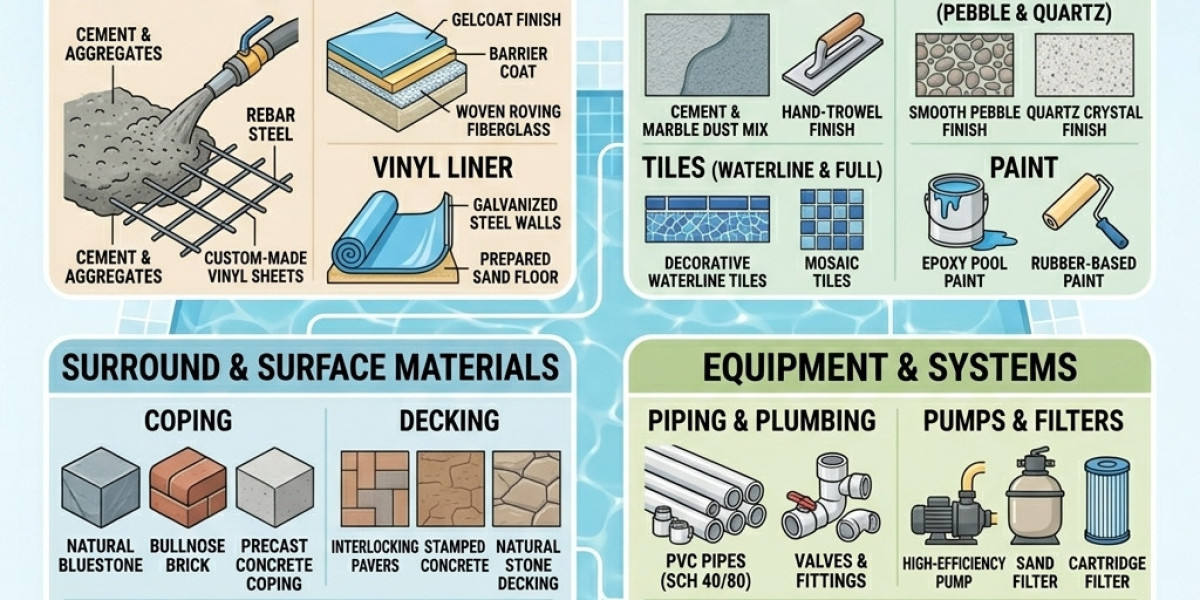
Swimming pools are built using a combination of strong structural materials, waterproofing systems, and finishing elements that ensure durability and visual appeal. Understanding the materials used in swimming pool construction is essential for making informed decisions and achieving long-lasting results.
At Swimwell Pools, we prioritize high-quality materials and modern techniques to ensure every pool is built for strength, safety, and performance. The right materials not only enhance the look of the pool but also reduce maintenance and improve longevity.
Core Structural Materials
1. Concrete
Concrete is the most widely used material in pool construction. It provides a solid and durable structure that can be customized into any shape or size. Reinforced concrete ensures long-term strength and flexibility in design.
2. Steel Reinforcement
Steel bars are used within the concrete structure to add strength and stability. This reinforcement helps the pool withstand pressure and prevents structural damage over time.
3. Shotcrete or Gunite
Shotcrete and gunite are sprayed forms of concrete used to build the pool shell. These materials are ideal for custom designs and provide excellent durability.
Waterproofing Materials
4. Waterproofing Compounds
Waterproofing is essential to prevent leaks and protect the pool structure. Specialized coatings and sealants are applied to ensure long-term water resistance.
5. Waterproof Membranes
Membranes act as an additional protective layer, especially in areas prone to seepage. They enhance durability and reduce maintenance issues.
Interior Finishing Materials
6. Tiles
Tiles are commonly used for the pool interior. Options include ceramic, porcelain, and glass tiles, offering durability, easy cleaning, and aesthetic appeal.
7. Plaster Finish
Plaster provides a smooth and classic finish for the pool surface. It is widely used for its simplicity and effectiveness.
8. Pebble Finish
Pebble finishes create a textured, natural look and are known for their durability and resistance to wear.
9. Mosaic Tiles
Mosaic tiles are used for decorative designs, adding a luxurious and unique touch to the pool.
Plumbing and Circulation Materials
10. PVC Pipes
PVC pipes are used for water circulation, filtration, and drainage. They are corrosion-resistant and long-lasting.
11. Valves and Fittings
These components control water flow and ensure efficient operation of the pool system.
Filtration and Equipment Components
12. Pumps
Pumps circulate water through the filtration system, keeping it clean and safe.
13. Filters
Filters remove dirt and impurities. Common types include sand, cartridge, and DE filters.
14. Skimmers and Drains
These help collect debris and maintain proper water circulation.
Decking and Surrounding Materials
15. Natural Stone
Natural stone is used for pool decks and surroundings, offering durability and a premium appearance.
16. Concrete Pavers
Concrete pavers are strong, versatile, and available in various designs and textures.
17. Wood or Composite Decking
These materials provide a warm and stylish look, ideal for modern pool areas.
Additional Materials for Features
18. Glass Panels
Glass is used in modern and infinity pool designs for a sleek and elegant effect.
19. Lighting Systems
LED and underwater lights enhance visibility and aesthetics, especially at night.
20. Heating Systems
Heating components help maintain comfortable water temperatures for extended usability.
Mid-Content Insight
Selecting the right materials is crucial for achieving durability and performance. The quality and type of materials directly influence the success of swimming pool construction, making it important to balance strength, aesthetics, and maintenance requirements.
Factors to Consider When Choosing Materials
- Durability and lifespan
- Resistance to chemicals and water
- Maintenance requirements
- Compatibility with design
- Environmental conditions
Careful selection ensures that your pool remains efficient and visually appealing over time.
Benefits of High-Quality Materials
- Long-lasting structural strength
- Reduced maintenance needs
- Better resistance to wear and tear
- Enhanced visual appeal
- Improved overall performance
Investing in quality materials ensures a reliable and durable swimming pool.
Conclusion
Swimming pool construction involves a wide range of materials, each contributing to the pool’s strength, functionality, and design. From structural components like concrete and steel to finishing materials like tiles and decking, every element plays an important role.
At Swimwell Pools, we focus on using premium materials to deliver pools that meet the highest standards of quality and durability. By understanding the materials used in swimming pool construction, you can make better decisions and create a pool that offers long-term value and performance.
FAQ
1. What is the most important material in pool construction?
Concrete is the most important material due to its strength and versatility.
2. Why is steel used in pools?
Steel reinforcement adds strength and prevents structural damage.
3. Which finish is best for pools?
Tiles and pebble finishes are popular for their durability and appearance.
4. Are waterproofing materials necessary?
Yes, they prevent leaks and ensure long-term durability.
5. Can material choice affect maintenance?
Yes, high-quality materials reduce maintenance and improve performance.
Read Our Previous Blog ----------> How Can I Reduce Swimming Pool Construction Cost Without Compromising Quality?
Ubicación del Autor
City Arcade Road