
The moment of recognition often arrives unexpectedly—perhaps while scrolling through photographs from a recent vacation or adjusting your appearance before a video conference. You pause, really looking at your reflection, and notice how time has subtly reshaped your features. The jawline that once framed your face with crisp definition now seems softer, less architectural. The skin of your neck moves differently when you turn your head, suggesting a looseness that wasn't present in years past. These aren't sudden changes but the gradual, inevitable accumulation of biological processes. When individuals first seek solutions that don't involve scalpels and sutures, an ultherapy treatment almost invariably becomes their initial point of investigation.
Yet the landscape of patient experiences is remarkably varied. Some people conclude their treatment series thrilled by visible improvements that continue evolving for months. Others finish their protocol wondering if anything meaningful actually occurred. What creates such dramatically different outcomes? The answer involves your distinctive biological constitution, the technical proficiency with which the procedure is delivered, and your tissue's unique capacity to respond to focused ultrasound energy. Before you schedule your first ultherapy treatment, understanding these elements isn't merely helpful—it's essential for protecting your investment and emotional well-being.
The Mechanism: Sound as a Sculpting Tool
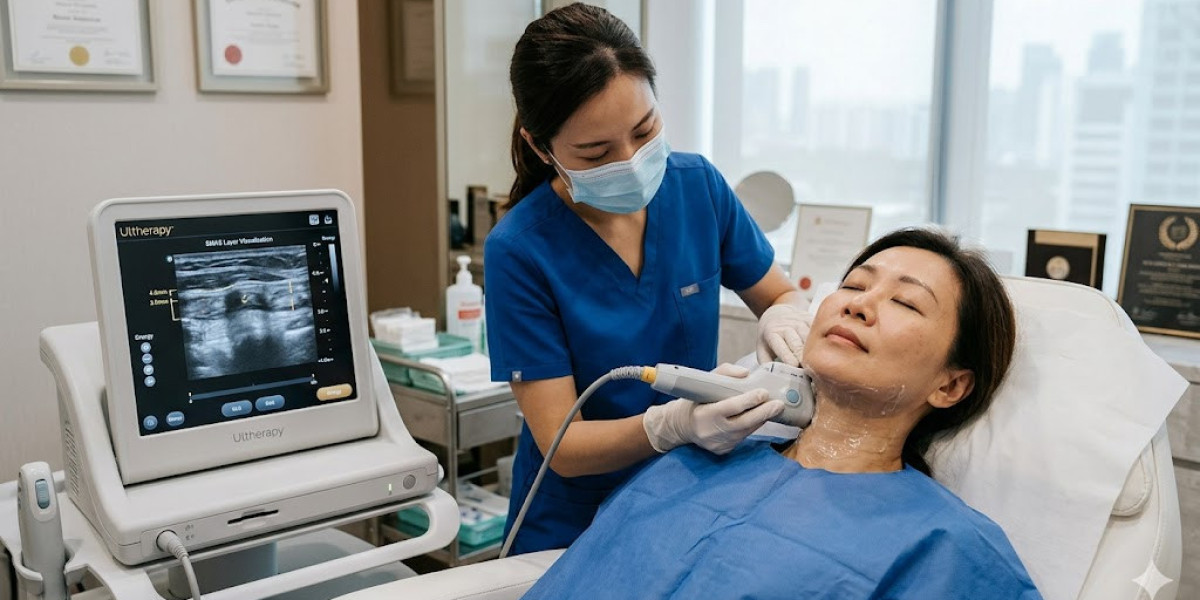
Ultherapy operates on principles that fundamentally distinguish it from other aesthetic modalities. Rather than creating change through the skin's surface, it employs micro-focused ultrasound energy to target deep structural tissues—the SMAS layer that skilled surgeons manually lift and reposition during traditional facelift surgery. This acoustic energy penetrates through the epidermis and dermis without damaging them, concentrating its thermal effect at precise depths within the fibromuscular plane.
The technology creates microscopic coagulation points within this target tissue. Your body interprets these thermal micro-injuries as signals to activate repair mechanisms. Specialized cells called fibroblasts migrate to these zones and begin manufacturing fresh collagen fibers. Over the following three to six months, this new collagen organizes into a tighter, more youthful structural matrix that literally elevates the overlying skin from its foundational support.
This biological timeline cannot be compressed or accelerated. Collagen synthesis proceeds at the pace of cellular metabolism, not cosmetic convenience. The sophistication of this approach lies in its architectural focus—it rebuilds structural integrity rather than merely polishing surface appearance. However, this same mechanism establishes an important limitation: your results are entirely contingent upon your body's collagen-producing capacity. If your fibroblast activity is compromised by age, health status, or genetic factors, even the most meticulously executed ultherapy treatment will yield correspondingly constrained lifting effects.
Who Responds Most Favorably
The patients who achieve truly satisfying improvements share specific, identifiable characteristics. They typically present with mild to moderate skin laxity—looseness that is visible and bothersome, yet not so severe that surgical excision becomes the only logical intervention. Think of individuals in their late thirties through early fifties who can see the early formation of jowls or slight descent of the brow, but whose skin still demonstrates reasonable elasticity when manipulated.
These optimal candidates also tend to have relatively thin subcutaneous fat layers in the areas targeted for treatment. When significant adipose tissue pads the space between skin and muscle, the physics of lifting become substantially more challenging. The ultrasound energy must generate sufficient thermal contraction to elevate not just the skin itself, but the considerable weight of underlying fat. In patients with fuller facial structure, some surface tightening may occur, but the overall contour transformation typically remains subtle. The technology excels at refinement and elevation—it was never designed to address substantial volume or significant tissue redundancy.
Age certainly influences outcomes, but biological age proves more predictive than chronological age. A vibrant, healthy sixty-year-old with excellent muscle tone, consistent exercise habits, and a lifetime of diligent sun protection might respond beautifully to ultherapy treatment. Conversely, a forty-year-old with extensive photodamage, smoking history, poor nutrition, and sedentary lifestyle might see disappointing results despite their younger years. The decisive factor is tissue quality—the integrity, hydration, and cellular vitality of the dermal matrix. Responsive, well-nourished tissue produces crisp, architecturally meaningful lifts. Depleted, damaged tissue yields improvements that, while real, remain modest in scope.
When Alternative Approaches Become Necessary
Certain presentations simply fall outside the therapeutic window of this technology. Individuals with severe skin laxity—those whose neck skin hangs in visible folds, whose cheeks sag dramatically, or whose eyelid tissues have become redundant—generally require surgical management for meaningful improvement. An ultherapy treatment can stimulate tissue contraction through collagen neogenesis, but it cannot make excess skin disappear or overcome significant gravitational descent. If you can pinch your neck skin and it remains folded without tension, ultrasound energy will not restore the smooth, taut appearance of youth, regardless of how many sessions you complete. The modality lacks the mechanical capacity to address such structural challenges.
Body composition significantly constrains potential outcomes. Patients with higher body mass indices typically experience markedly reduced lifting efficacy. Ultrasound waves must penetrate through adipose tissue to reach the SMAS layer, and thick fat deposits absorb, scatter, and dissipate acoustic energy before it reaches its intended target. While modern transducers achieve impressive penetration depths, substantial subcutaneous fat inevitably diminishes the thermal effect at the critical tissue plane. These patients often achieve superior aesthetic balance by combining their ultherapy treatment with adjunctive procedures such as radiofrequency-based skin tightening, injectable neuromodulators, or strategic dermal filler placement.
Medical history introduces additional variables that can compromise success. Systemic conditions that impair collagen synthesis and connective tissue metabolism—diabetes mellitus, autoimmune disorders affecting collagen, chronic corticosteroid therapy—can blunt or delay the healing response. If your body's collagen production machinery operates below optimal capacity, both the timeline to visible results and their ultimate magnitude will suffer correspondingly. Previous facial surgeries also complicate predictions, as scar tissue, altered anatomy, and changes in blood supply can create unpredictable patterns of energy distribution and tissue response.
The Practitioner Difference
Equipment sophistication represents only half the equation. The professional guiding that equipment frequently determines whether your investment generates satisfying returns or disappears without meaningful impact. Ultherapy treatment demands extraordinary precision in energy placement and depth control. Your provider must possess intimate, detailed knowledge of facial bony anatomy and understand how tissue depth and density vary across different facial zones and among different individuals. They employ real-time ultrasound imaging to visualize exactly where energy deposits occur, adjusting technique based on your unique anatomical presentation.
This precision requirement makes your selection of aesthetic clinic a decision of genuine consequence that deserves careful research and consideration. Seek facilities where practitioners maintain current, specific certification in this technology and can demonstrate substantial case experience with diverse patient presentations. Request to review before-and-after documentation featuring patients whose facial structure, skin type, ethnic background, and age range closely mirror your own. Polished marketing materials featuring generic models provide no meaningful insight into what you might realistically expect. A conscientious, ethical provider will honestly assess whether you're positioned for success or whether factors such as recent weight fluctuations, active smoking, or concurrent medical conditions suggest that postponement or alternative approaches would serve you better.
The treatment experience itself measurably affects outcomes. The procedure generates sensations that range from mild warmth to significant discomfort, depending on individual pain tolerance and the specific areas being treated. Skilled practitioners have mastered techniques for managing this experience—optimal pacing of energy delivery, pressure modulation, appropriate analgesic protocols, and psychological support. If you're experiencing excessive pain or anxiety, you'll unconsciously tense facial muscles, which alters tissue density and compromises the precision of energy delivery. A provider who prioritizes your comfort and relaxation isn't merely being kind or indulgent—they're actively optimizing conditions for maximal collagen stimulation and best possible results.
Timeline, Maintenance, and Long-Term Planning
Immediate, dramatic transformation is not part of the ultherapy treatment experience. You'll leave your aesthetic clinic looking essentially identical to when you arrived, perhaps with some transient redness or minor swelling that resolves within hours. The biological work happens invisibly, beneath the surface, over the following weeks and months. For the first several weeks, you might scrutinize your reflection daily and detect no perceptible change whatsoever. This is normal and expected. Then, typically around the eight to ten-week mark, subtle firmness and improved contour become perceptible. By months four through six, the lifting effect reaches its peak expression and full maturity.
While the majority of patients achieve their aesthetic goals with a single comprehensive session, approximately fifteen to twenty percent benefit from a second ultherapy treatment to deepen or extend the effect. This determination depends entirely on your individual starting point in terms of tissue laxity and your unique biological response to the initial intervention. Maintenance planning must also factor into your long-term strategy. Collagen undergoes constant enzymatic turnover, with natural degradation continuing regardless of your treatment history. To preserve your investment and results, many patients choose to schedule maintenance or "touch-up" sessions every twelve to twenty-four months, creating a sustained management approach rather than expecting permanent, unchanging transformation.
This modality doesn't offer permanent, frozen-in-time results—it provides a powerful, scientifically grounded tool for managing age-related changes without surgical intervention. For appropriately selected individuals with realistic expectations, ultherapy treatment offers genuine, measurable aesthetic benefit. But it is not magic, and it is not universally applicable. The best outcomes emerge from the intersection of suitable candidacy, honest expectation-setting, and expert provider execution. Do your due diligence, select your aesthetic clinic with care and discernment, and engage in candid, detailed dialogue about what this technology can realistically achieve for your unique facial architecture and biological profile. That foundational conversation—transparent, individualized, and free from pressure or hype—represents the true beginning of successful aesthetic intervention.
Ubicación del Autor
1 Grange Road, Orchard Building #12-02, (Located above H&M), Singapore 239693