
Let me tell you something they don’t teach in professor training seminars.
I have spent two decades watching the classroom flip upside down. Twenty years ago, “taking notes” meant a three-ring binder and a cramping hand. Today? Your backpack is the cloud, and your pen is a keyboard.
But here is the raw truth: Most students are still taking digital notes like it is 2005. They open a blank document, hit record on a lecture, and call it a day. That is not learning. That is digital hoarding.
If you are going to rely on online class notes to pass your exams, build your career, or simply survive a Tuesday morning statistics lecture, you need a system. Not a gimmick. A system.
Over the last twenty years, I have tested every app, every method, and every workflow. I have watched the rise of AI, the death of the highlighter, and the strange rebirth of the audio format. Let me walk you through how to build a set of online notes that actually work for you, not against you.
The Silent Killer of Virtual Learning: Passive Note Taking
Here is what most students get wrong. They treat their note-taking app like a net. They try to catch every word the professor says. By minute fifteen, they have three pages of text and zero idea what any of it means.
Effective online class notes are not a transcript. They are a compression tool.
Think of your brain like a suitcase. A transcript is like throwing unfolded laundry into the suitcase. It explodes when you open it. Good notes are folded, stacked, and vacuum-sealed. You fit more knowledge in less space, and you can retrieve it instantly.
So how do we build that? Let us break down the anatomy of a perfect digital note.
Why Your Memory is a Liar (And How Notes Fix It)
You have experienced this. You sit through a 90-minute lecture. You understand everything in the moment. The professor asks a question, and you nod along. Then you get home, open the textbook, and… blank. Nothing.
That is the curve of forgetting. Within 24 hours, you lose nearly 70% of what you heard if you do not interact with the material.
Your online class notes are the anchor. But here is the trick: they only work if you touch them again within 24 hours. Not just reading. Editing. Rewriting a messy sentence. Adding a question in the margin. Recording a voice memo asking yourself a question about the material.
I once worked with a nursing student who failed her first two exams. She took beautiful notes. Color-coded. Perfect margins. But she never revisited them. We switched her system to a “24-hour review rule” using short audio summaries she listened to on her commute. She started using a best audio book approach—treating her own notes like a story she narrated back to herself. Her next exam score jumped by 22 points.
The Audio Revolution in Your Study Routine
Speaking of audio—let me challenge a popular belief. You do not have to be looking at a screen to learn effectively.
One of the biggest breakthroughs in the last decade has been multi-modal learning. Some of the best students I know take their written online class notes and convert them into audio files. They listen while walking the dog, folding laundry, or driving to work.
This is not cheating. It is reinforcement.
There is a reason audiobooks exploded. The spoken word engages different neural pathways than the written word. When you hear information after you have written it down, you build two separate memory traces. That means twice the retrieval strength.
If you are looking for the best audio books site to understand how professional narrators structure information, pay attention to their pacing and repetition. They do not rush. They pause after big ideas. They change tone for different concepts. You can steal that technique for your own note reviews.
Similarly, finding the best audiobook in your subject area—whether it is a history lecture or a biology textbook—can give you a massive edge. But do not stop there. Record your own micro-summaries. Three minutes. One key idea. Listen to it five times. You will be shocked at how much sticks.
From Chaos to System: The Three-Tier Note Framework
After twenty years, I have boiled down effective online class notes to three distinct layers. Most students only use layer one. That is why they struggle.
Layer One: The Raw Capture (During Class)
Speed over perfection. Use bullet points, abbreviations, and even sentence fragments. Do not use complete sentences. Complete sentences are for essays, not for live lectures. If the professor says something twice, put a star next to it. If they say “this will be on the exam,” put three exclamation points.
Pro tip from the trenches: Leave a 30% margin on the right side of your page. That blank space is for layer two.
Layer Two: The 24-Hour Refinement (The Next Morning)
This is where the magic happens. Go back to your raw notes within 24 hours. In that right margin, write questions. “Why did X cause Y?” “What is the exception to this rule?” Summarize each paragraph in one sentence at the bottom.
If a concept is fuzzy, do not guess. Highlight it in yellow. That yellow means “go find the answer.” This turns your online class notes into a to-do list, not just a reference document.
Layer Three: The Audio Summary (Commute or Workout)
Here is the step 99% of students skip. Open your voice memo app. Set a timer for three minutes. Summarize the entire lecture out loud like you are explaining it to a friend who missed class. Do not read your notes. Speak from memory.
Listen to that recording twice before the next class. This single habit will cut your exam prep time in half.
Why You Should Never Type Every Word (And What To Do Instead)
I see this mistake constantly. A student discovers transcription software and thinks they have found a life hack. They record the lecture, run it through an AI, and paste 5,000 words into their online class notes.
Stop. Please stop.
Transcription is not comprehension. You have created a searchable document, yes. But you have not created knowledge. Your brain did no work.
Instead, use the Cornell Method (that margin I mentioned earlier) or the Mapping Method (drawing connections between ideas). Visual learners, in particular, thrive with mind maps. Use a tool that lets you drag and drop concepts. When you physically move ideas around a canvas, you are forcing your brain to evaluate relationships. That is deep learning.
A Quick Word on Distractions (And One Resource You Might Like)
We have to address the elephant in the Zoom room. Your browser has eighteen tabs open. Your phone is buzzing. You are “taking notes” but also checking email.
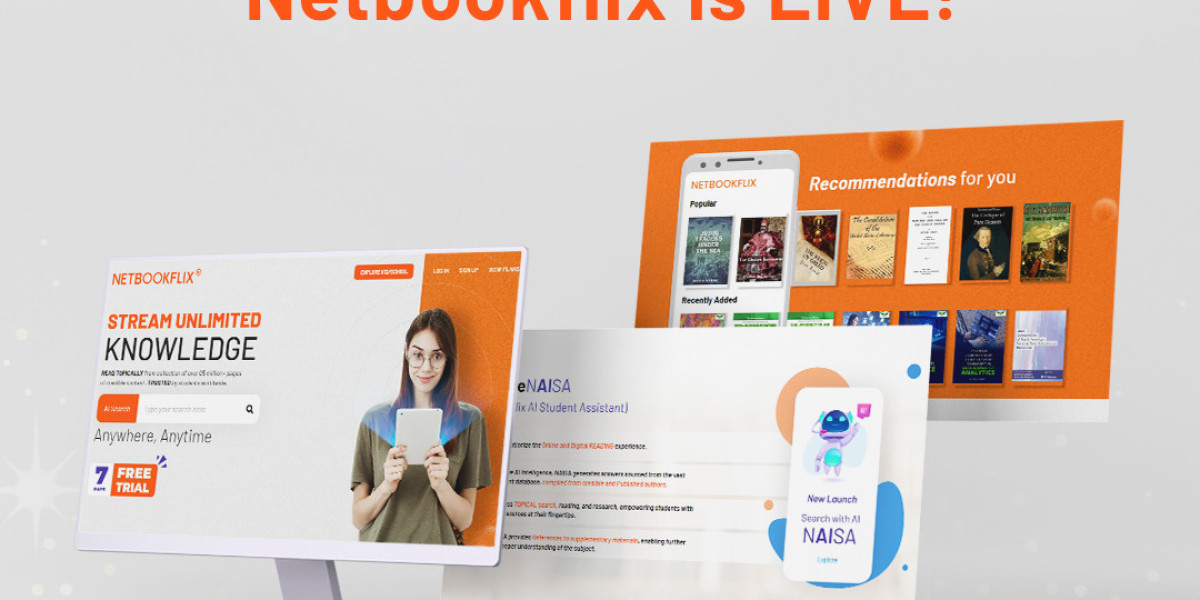
I am not going to lecture you on focus. You already know you need it. But I will give you one practical tip: create a distraction-free digital space just for note review. Some people use minimalist text editors. Others use a platform like Netbookflix to structure their study sessions around short, focused video summaries before diving into written notes. The tool matters less than the ritual. Turn off notifications. Set a 25-minute timer. Review only. No creation. No browsing. Just refinement.
How to Turn Your Notes Into a Collaborative Superpower
Here is a secret from my 20 years of consulting. The best students are not the smartest. They are the most generous.
Share your online class notes. I know that sounds counterintuitive. You worked hard on them. Why give them away? Because teaching is the highest form of learning. When you share your notes and someone asks a clarifying question, you are forced to think deeper. Join a study group where everyone uploads their notes to a shared drive. Compare structures. You will see gaps in your own understanding that you never noticed alone.
One caveat: always verify your school’s academic integrity policy. Sharing notes is usually fine. Sharing exam-specific answers is not. Use common sense.
The 10 Most Common Questions About Online Class Notes (Answered)
1. What is the best format for online class notes if I have a learning disability like ADHD?
Short, bulleted lists with lots of white space. Avoid dense paragraphs. Record audio summaries and listen while moving (walking or fidgeting). Many ADHD learners find the best audiobook narrators use a rhythm that improves focus—copy that pacing.
2. Can I use AI to summarize my online class notes for me?
Yes, but only after you write your own version first. AI is a refinement tool, not a creation tool. Use it to check for clarity or suggest headings, never as a replacement for your own brain.
3. How often should I review my notes to actually remember the material?
Use the 2-7-30 rule. Review within 2 days, then 7 days, then 30 days. For audio review, treat your recordings like the best audio book you own—listen on repeat during low-focus tasks.
4. What is the single biggest mistake students make with digital notes?
Saving everything. Delete liberally. If you cannot explain a concept out loud without looking at your notes, those notes are not finished.
5. Should I handwrite notes on a tablet or type them on a keyboard?
Handwriting forces slower processing, which improves memory. Typing is faster but often shallower. Use handwriting for conceptual classes (philosophy, history) and typing for data-heavy classes (stats, coding).
6. Where can I find the best audio books site to learn better note-taking strategies?
Look for sites that offer non-fiction summaries with accompanying PDFs. The combination of audio + written transcript mirrors the dual-coding strategy that makes online class notes effective.
7. How do I organize notes for a class that has no textbook?
Create your own table of contents. After each lecture, write a one-sentence summary and a one-paragraph question. Use those questions to build your own “exam” before finals week.
8. What if my professor talks too fast to take any notes at all?
Stop trying to write everything. Write only the question-and-answer pairs. Every lecture is a series of problems and solutions. Capture the problem, then the solution. Ignore the stories in between.
9. Can I share my online class notes with future students?
Most professors are fine with this as long as you are not selling them. Be transparent. Some students build incredible study guides and give them away freely—it reinforces their own mastery.
10. What is the best audiobook for learning how to study more effectively?
Look for titles focused on cognitive psychology or memory techniques, but listen actively. Take notes while you listen. Pause the best audiobook every few minutes to write down one actionable idea you will try tomorrow.
The Bottom Line (From Someone Who Has Seen It All)
You do not need a dozen apps. You do not need a perfect system on day one. You need consistency.
Start with one lecture this week. Take raw notes. Wait 24 hours. Refine them with questions. Record a three-minute audio summary. Listen to it twice. That is it. That is the entire secret after twenty years.
Your online class notes are not just a record of what a professor said. They are a conversation between your past self and your future self. Make that conversation useful. Make it clear. And for once, stop typing every single word.
You have the tools. You have the method. Now go take notes like your future depends on it—because it does.
Ubicación del Autor
E-29, Sector-08,Noida,Uttar Pradesh,201301,India