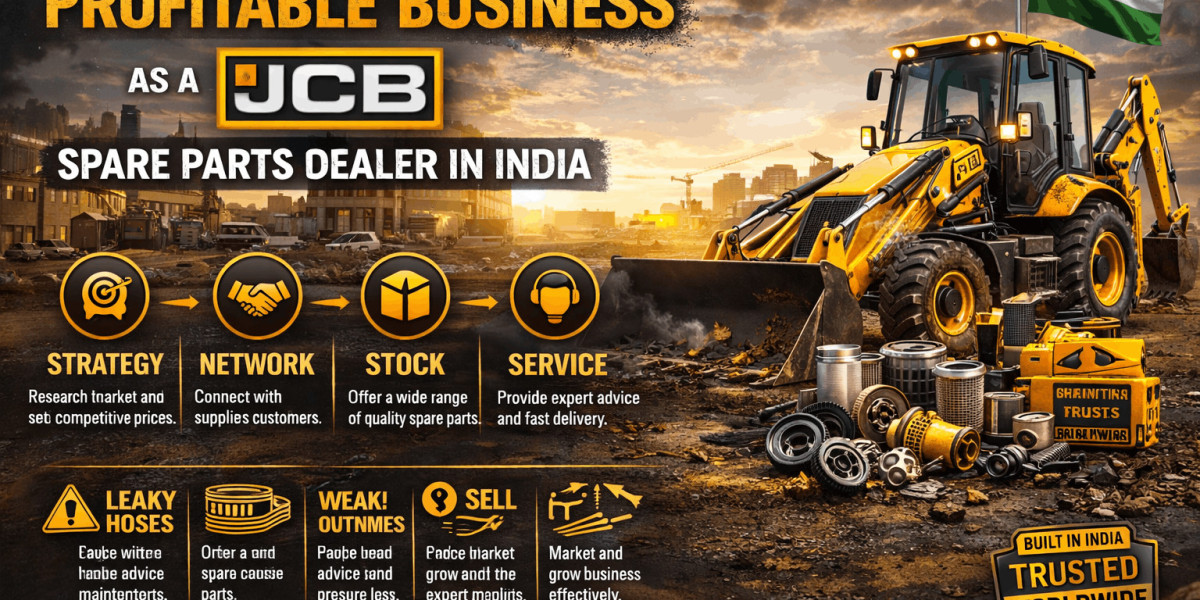

India's construction industry is growing faster than ever before. New roads, highways, bridges, metro projects, dams, and urban development are happening across every state. At the centre of all this construction activity is one machine that you see everywhere — the JCB backhoe loader. And where there are JCB machines, there is a constant, never-ending demand for spare parts.
For anyone looking to start or grow a business in the construction equipment industry, becoming a jcb spare parts dealer is one of the most reliable and profitable opportunities available in India today. The demand is consistent, the margins are good, and the market is growing every year as more machines enter service and more contractors understand the value of genuine parts.
But like any business, success as a spare parts dealer does not happen automatically. It requires the right knowledge, the right supplier relationships, and the right approach to serving your customers. This article will walk you through everything you need to know to build a profitable JCB spare parts dealership from the ground up.
Why the JCB Spare Parts Business Is a Strong Opportunity
Before we get into the how, let us understand why this business makes so much sense right now.
India has one of the largest populations of JCB machines in the world. Hundreds of thousands of backhoe loaders, excavators, and telehandlers are operating across the country at any given time. Every single one of these machines needs regular servicing. Every service requires filters, oil, seals, and consumable parts. Every breakdown requires replacement components.
This creates a demand that never stops. Unlike many businesses where demand fluctuates with seasons or economic cycles, the demand for spare parts is driven by machines that are already in the field and must keep working. A contractor cannot stop work because parts are unavailable. They find a supplier who can deliver and they stick with that supplier for years.
The recurring nature of this demand is what makes the spare parts business so attractive. Once you build a customer base of machine owners, contractors, and mechanics who trust you, they come back again and again. Your business grows with every new machine that enters your area and every new relationship you build.
Step 1 — Understand Your Market
The first step to building a successful dealership is understanding who your customers are and what they need. In the JCB spare parts business your customers fall into a few clear categories.
Machine owners are your most direct customers. They own one or more JCB machines and need parts for regular servicing and breakdown repairs. They value availability, genuine quality, and a supplier they can trust to give them the right part for their specific machine.
Mechanics and workshops are another important customer group. A good workshop mechanic services many different machines and needs a reliable parts supplier who can identify and supply the correct part quickly. Building relationships with local mechanics gives you a steady stream of business from all the machines they service.
Construction companies with large fleets are the highest value customers. They buy in volume, need consistent supply, and are willing to pay fair prices for genuine parts and reliable service. Landing one large construction company as a customer can significantly change the scale of your business.
Rental companies are also growing rapidly in India. They rent JCB machines to contractors and need to keep their fleets running at all times. Downtime on a rental machine is lost rental income so they are very motivated to find and work with a reliable parts supplier.
Understanding which of these customer types is most common in your area helps you stock the right parts, set the right prices, and approach the right people when building your customer base.
Step 2 — Choose the Right Supplier
Your supplier relationship is the foundation of your dealership. Everything you sell comes from your supplier. The quality of your parts, the range of your inventory, your pricing, and your ability to fulfil orders quickly all depend on who you buy from.
Choosing the wrong supplier is the single biggest mistake new dealers make. A supplier who sells low quality copies as genuine parts will eventually destroy your reputation. A supplier with a limited range means you cannot serve all your customers' needs. A supplier with slow delivery means your customers wait and eventually find someone else.
The right supplier has several key qualities. They have been in business for many years with a proven track record. They supply genuine OEM standard parts that perform correctly and last as long as they should. They have a wide product range covering all the common JCB models in your market. They can deliver reliably and quickly. And they offer competitive dealer pricing that allows you to make a good margin while still offering fair prices to your customers.
Robot India is one of India's most established suppliers of earthmoving and construction equipment spare parts with over 30 years of experience. They supply genuine quality parts for JCB backhoe loaders, excavators, and other earthmoving machines to a network of dealers across India and export to more than 40 countries worldwide. For a new or growing dealer, partnering with a supplier of this calibre gives you immediate access to a wide product range, genuine quality assurance, and the credibility that comes with being associated with a trusted name in the industry.
Step 3 — Build Your Initial Inventory Smartly
One of the most common mistakes new dealers make is either stocking too little — and constantly disappointing customers with out-of-stock situations — or stocking too much of the wrong things and tying up capital in slow-moving inventory.
The smart approach is to start with fast-moving parts that every machine needs regularly. These are the parts that sell consistently regardless of which specific machine model a customer owns.
Filters are at the top of this list. Engine oil filters, air filters, hydraulic filters, and fuel filters are replaced at every service on every machine. Stocking a good range of earthmoving spare parts including filters for the most common JCB models in your area ensures you can fulfil the most frequent customer requests immediately.
Pins and bushes are another fast-moving category. They wear out with regular use and need replacement every few months on a working machine. Seals and O-rings, belts, hoses, and common electrical parts like batteries and switches are also worth stocking from the beginning.
As your business grows and you learn which models are most common in your area and which parts your specific customers need most frequently, you can expand your inventory strategically based on real demand data rather than guesswork.
Step 4 — Price Your Parts Correctly
Pricing is one of the most important and most misunderstood aspects of running a spare parts dealership. Many new dealers make the mistake of trying to compete purely on price — offering the lowest prices in the market to attract customers.
This strategy rarely works in the long run. Customers who come to you only because you are cheapest will leave the moment someone else offers a lower price. And constantly cutting prices erodes your margins until the business is no longer profitable.
The better approach is to compete on value — genuine parts, reliable availability, fast delivery, and good service — at fair and competitive prices. Machine owners understand that genuine parts cost more than cheap copies. They are willing to pay a fair price for parts they can trust. Your job is to be the supplier they trust.
Set your prices at a level that covers your costs, provides a healthy margin, and is competitive with other genuine parts dealers in your area. Do not try to match the price of sellers offering low quality copies — you are not selling the same product and you should not pretend otherwise.
Step 5 — Build Relationships That Last
In the spare parts business, relationships are everything. A customer who trusts you does not shop around. They call you first every time they need a part. They refer other machine owners to you. They stay loyal through price fluctuations and market changes because they value the relationship and the reliability you provide.
Building these relationships takes time and consistent effort. Always give honest advice about parts — even if it means telling a customer they need a more expensive part than they hoped for. Always deliver what you promise on time. Always stand behind the quality of what you sell. Always be available when a customer needs you urgently.
These simple habits build a reputation that no amount of advertising can buy. In a market where trust is scarce, being genuinely trustworthy is your strongest competitive advantage.
Step 6 — Grow Your Business Systematically
Once your dealership is established and profitable, there are several clear paths to growing it further.
Expanding your product range is one option — adding parts for other machine brands like Case, Komatsu, Hitachi, or Hyundai that are also common in your area. Many machine owners operate mixed fleets and having a one-stop supplier for all their parts needs is very attractive.
Building a delivery capability is another growth lever. Many machine owners and mechanics cannot easily come to your shop during working hours. Offering delivery — even within a limited radius to start — removes a barrier and makes you more convenient than competitors who only sell over the counter.
Going online is increasingly important. Having a basic website or even an active presence on WhatsApp Business where customers can check availability and place orders makes your business accessible 24 hours a day. Many parts inquiries happen in the evening or early morning when the machine is idle and the owner is planning the next day's work.
Final Thoughts
The JCB spare parts dealership business in India is a genuine opportunity for anyone who approaches it seriously and builds it on the right foundations — genuine parts, trusted supplier relationships, smart inventory management, fair pricing, and strong customer relationships.
The construction industry will keep growing. The number of JCB machines in the field will keep increasing. The demand for genuine, reliable spare parts will keep rising. The question is not whether the opportunity exists. The question is whether you are ready to build the business that captures it.
Start with the right supplier. Stock the right parts. Serve your customers honestly. And build one relationship at a time. That is the formula for a spare parts dealership that grows consistently and profitably for many years to come.
Ubicación del Autor
Plot No. 2, Site No. 2 14/3, NH-19, Block A, DLF Industrial Area, Sector 32, Faridabad, Haryana 1210