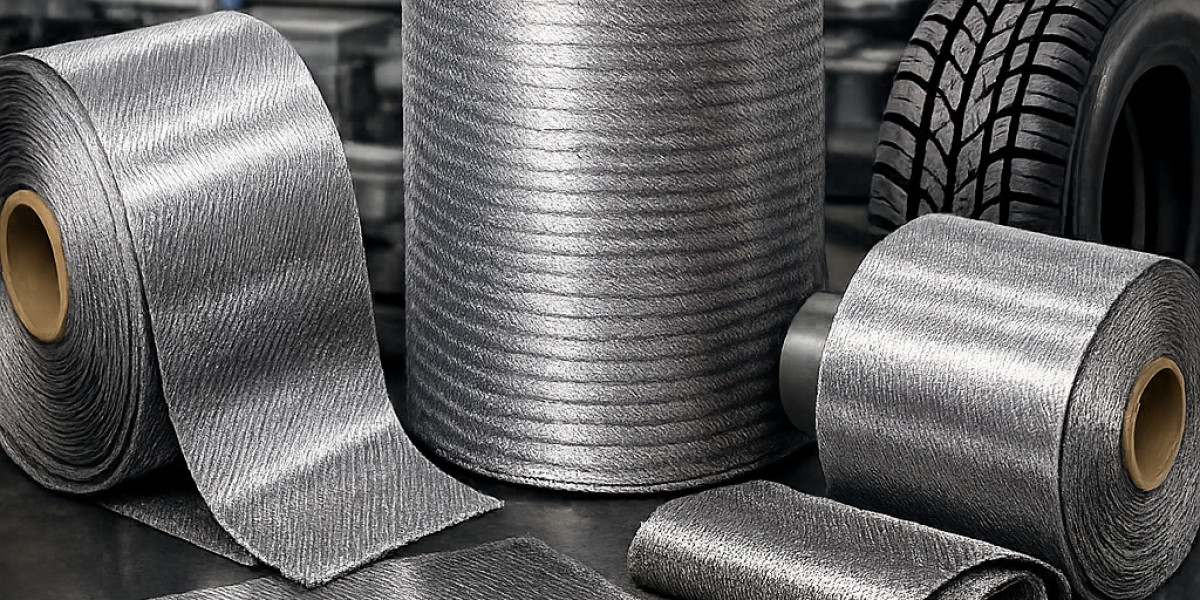

The tire cord fabrics market's positive CAGR through 2031 navigates genuine commercial and operational challenges whose management determines competitive positioning and margin sustainability across the forecast period. The Tire Cord Fabrics Market Outlook analysis from The Insight Partners identifies four primary challenges and the strategic responses deployed by leading participants as per the full report.
Challenge 1: Raw Material Price Volatility
Tire cord fabric manufacturing relies on petrochemical derived polymer inputs including caprolactam and adipic acid for nylon production and purified terephthalic acid for polyester production, whose pricing is influenced by crude oil feedstock cost cycles, chemical plant capacity utilization dynamics, and regional supply demand imbalances. Nylon polymer price volatility has historically been significant due to caprolactam supply concentration and cyclohexane feedstock dependency, creating production cost uncertainty that complicates long term pricing commitments in supply contracts with tire manufacturer customers whose procurement programs prefer stable pricing.
Raw material price management strategies include backward integration into polymer production as practiced by Indorama Ventures through its integrated polyester polymer to cord fabric operations, long term raw material supply agreements with preferred pricing provisions, formula based pricing contracts with tire manufacturer customers that pass through documented raw material cost changes, and product portfolio diversification across multiple material types that provides natural hedging when one polymer feedstock experiences price spikes while others remain stable. SRF Group's multi material capability across nylon and polyester serves this diversification strategy.
Check valuable insights in the Tire Cord Fabrics Market report. You can easily get a sample PDF of the report https://www.theinsightpartners.com/sample/TIPRE00007033
Challenge 2: Intense Price Competition in Commodity Segments
The commodity grade nylon and polyester cord fabric segments face significant price competition from Asian manufacturers whose labor and energy cost structures create competitive pricing that Western and Japanese manufacturers with higher cost bases struggle to match in procurement programs where technical specification requirements are met by all competitive suppliers. This commodity price competition creates margin pressure in the volume segments that represent the majority of market procurement by weight while premium and specialty segments remain less price sensitive.
Manufacturers addressing this challenge through product portfolio premiumization investing in above standard specification products including high tenacity grades, hybrid systems, and sustainable certified alternatives whose performance or sustainability differentiation commands above commodity pricing reduce their commodity segment exposure while building margin accretive positions in less price competitive premium segments. HYOSUNG ADVANCED MATERIALS' high tenacity product focus and Kordsa's technology investment exemplify this premiumization response.
Challenge 3: Sustainability Transition Investment Requirements
Converting production systems from conventional petroleum derived inputs to recycled or bio based alternatives requires significant capital investment in alternative feedstock procurement, process adaptation, and certification program management. The timeline and investment required for sustainability transition creates cost burden before corresponding revenue premium is realized, creating interim margin pressure during conversion programs.
Challenge 4: EV Tire Qualification Timeline and Specification Diversity
Multiple automotive OEMs developing distinct EV platforms with unique tire specifications create fragmented qualification requirements that require cord fabric development programs for each platform, multiplying qualification investment without proportional volume guarantee from each individual program.
Competitive Landscape
- SRF Group
- Indorama Ventures Public Company Limited
- Star Polymers Inc.
- Kolon Industries, Inc.
- HYOSUNG ADVANCED MATERIALS
- Kordsa Teknik Tekstil
- Toray Hybrid Cord, Inc.
- CORDUS
- Century Enka Limited
- Shenma Industrial Co., Ltd.
Conclusion
Raw material volatility, commodity price competition, sustainability transition investment, and EV qualification fragmentation are the four primary challenges in the tire cord fabrics market through 2031, each addressed through strategic mitigation that converts constraints into competitive differentiation for well positioned manufacturers. The full analysis is available from The Insight Partners.
Frequently Asked Questions (FAQs)
Q1. How does product portfolio premiumization address commodity price competition in tire cord fabrics?
Premiumization toward high tenacity grades, hybrid cord systems, sustainable certified alternatives, and smart integrated cord products creates specification positions in procurement segments where technical or sustainability differentiation commands above commodity pricing, reducing the revenue proportion earned in price only competitive commodity segments and improving aggregate margin despite continued commodity segment price pressure.
Q2. What risk does EV platform specification diversity create for tire cord fabric qualification investment?
Each distinct EV platform tire specification requiring dedicated cord fabric qualification creates investment in testing, development, and certification programs whose cost must be amortized across expected production volumes that are uncertain at qualification program commencement, creating investment risk that manufacturers without broad multi customer EV development relationships cannot diversify across multiple simultaneous platform qualification programs.
About The Insight Partners
The Insight Partners is a one stop industry research provider of actionable solutions. We help our clients in getting solutions to their research requirements through our syndicated and consulting research services. We specialize in industries such as Semiconductor and Electronics, Aerospace and Defense, Automotive and Transportation, Biotechnology, Healthcare IT, Manufacturing and Construction, Medical Devices, Technology, Media and Telecommunications, Chemicals and Materials.
Contact Us
The Insight Partners
Phone: +1-646-491-9876
E-mail: [email protected]
Also Available In: Korean | German | Japanese | French | Chinese | Italian | Spanish