
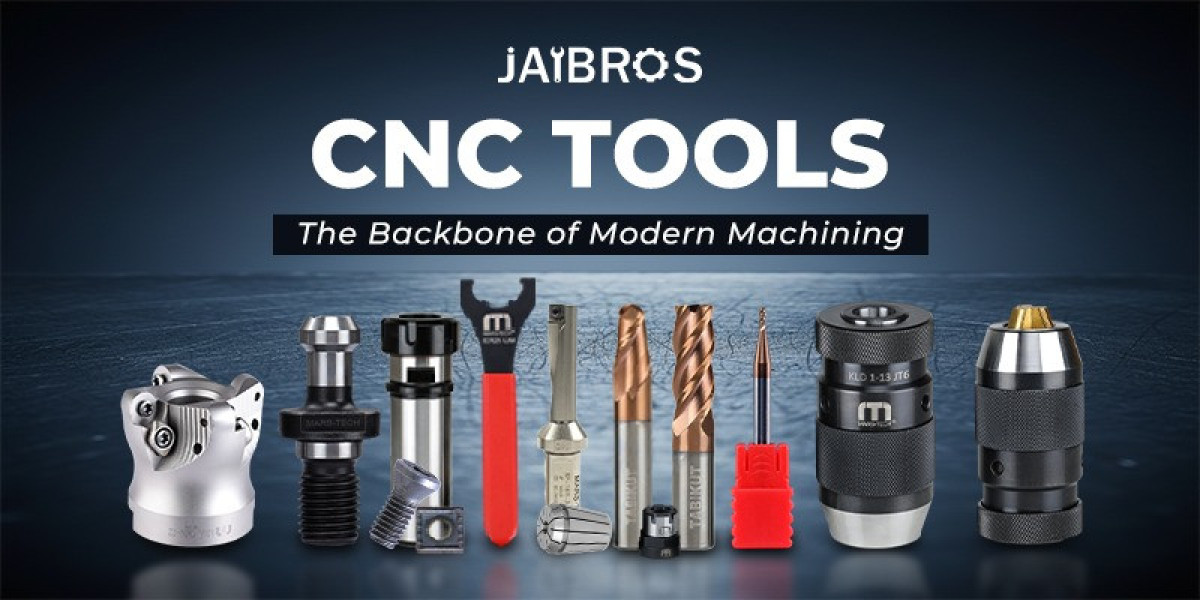

Types of CNC Tool Used in Milling, Turning, and Drilling
The emergence of CNC machines has led to a change in the manufacturing industry because of its accuracy and speed during production. This is attributed to the various sectors that benefit from the machinery, which include the automotive, aerospace, and electronics industries since there is a lot of accuracy in production. There are several considerations that should be made while producing this machinery.
It is important to look at the different types of CNC machines and the uses they have for us to understand how efficient CNC machines work. There are various types of CNC machines, and each one serves a different purpose.
1. Milling Tools Used in CNC Machining
Milling is a versatile process that uses rotary cutters to remove material from a workpiece. It is commonly performed on cnc machine tools to create flat surfaces, slots, and complex shapes.
Common Milling Tools:
End Mills – Used for cutting slots, profiles, and contours
Face Mills – Designed for machining flat surfaces
Ball Nose Cutters – Ideal for 3D surfaces and finishing work
Chamfer Tools – Used for angled edges and deburring
These milling tools are widely applied in precision manufacturing. Their efficiency depends on factors such as coating, geometry, and cutting parameters.
Key Points:
Tool coating helps reduce heat and wear
Proper tool selection improves machining efficiency
A rigid cnc tool holder enhances stability
2. Turning Tools in CNC Operations
Turning is a machining process where the workpiece rotates while the tool removes material to create cylindrical shapes. Turning tools are mainly used in lathe machines for producing shafts, threads, and grooves.
Types of Turning Tools:
Roughing tools for heavy cutting
Finishing tools for smooth surfaces
Grooving tools for slot creation
Threading tools for screw threads
These Turning tools are designed for precision and durability. Their performance largely depends on cutting angles, insert quality, and machine setup.
Key Points:
Proper tool geometry improves chip control
Stable mounting using a cnc tool holder ensures accuracy
Insert materials affect tool life and finish
3. Drilling Tools and Their Applications
Drilling is one of the most commonly used operations in machining. It involves creating holes in a workpiece using specialized cutting tools. Among the available options, Carbide drills are highly preferred for their strength and efficiency.
Types of Drilling Tools:
Twist drills for general use
Center drills for precise starting points
Deep hole drills for specialized tasks
Carbide drills are ideal for high-speed operations and hard materials. They maintain sharpness longer and provide better performance in demanding conditions.
Key Points:
Coolant improves tool life and hole quality
Drill geometry impacts cutting efficiency
Proper use of a cnc tool holder ensures precision
4. Importance of CNC Tool Holders
The cnc tool holder is a crucial component in machining that connects the cutting tool to the machine spindle.
Types of CNC Tool Holders:
Collet chucks for precision work
Hydraulic holders for vibration control
Shrink fit holders for high-speed machining
Milling chucks for heavy-duty applications
A high-quality cnc tool holder improves the overall performance of cnc tools and enhances machining accuracy.
Key Points:
Reduces tool runout
Improves surface finish
Increases tool life
5. Overview of CNC Tool Types and Selection
There are many cnc tool types available for different machining operations.
Major CNC Tool Categories:
Cutting tools like end mills and drills
Finishing tools for polishing and grinding
Specialized tools for custom machining
Understanding various cnc tool types helps operators achieve better results while using advanced cnc machine tools.
Key Points:
Tool material impacts durability
Coatings enhance wear resistance
Correct selection reduces machining errors
FAQs
Q1. What are CNC tools used for?
cnc tools are used for cutting, shaping, and finishing materials in automated machining processes.
Q2. What are the main types of CNC tool types?
The main cnc tool types include milling tools, drilling tools, and turning tools used in different operations.
Q3. Why are Carbide drills better than standard drills?
Carbide drills offer better durability, heat resistance, and longer life compared to traditional drills.
Q4. What is the function of a CNC tool holder?
A cnc tool holder securely holds the cutting tool and ensures stability and accuracy during machining.
Q5. How do cnc machine tools improve productivity?
cnc machine tools automate machining processes, reduce human error, and increase production speed and consistency.
Conclusion
It is a task that needs the proper use of the correct tools for operations like milling, turning, and drilling. Examples of such tools used in CNC machining include milling, turning, and carbide drills among others. Together with the cnc tool holder and cnc machine tools, the tools can do their jobs perfectly well. The more knowledge one gets regarding various cnc tools, the more one will be able to improve his efficiency and productivity in the manufacturing process.
Ubicación del Autor
Manhattan, Nueva York, Estados Unidos