
Have you ever been sitting at a big event, someone is up on stage giving what looks like an incredibly important speech, the whole room is engaged and nodding, and you are just sitting there because you cannot understand a single word they are saying? It is one of the most frustrating feelings in the world, honestly. You did not travel all the way to a conference just to stare at someone's slides and guess what is going on.
This is a problem that happens at events across Dubai and the Middle East all the time, and it is exactly the kind of problem that DLC Events solves with their AI speech translation service. Real-time speech translation is not some futuristic concept that is still being figured out, it is here, it is working beautifully right now, and it is changing the way events run across the region.
What Is Real-Time Speech Translation?
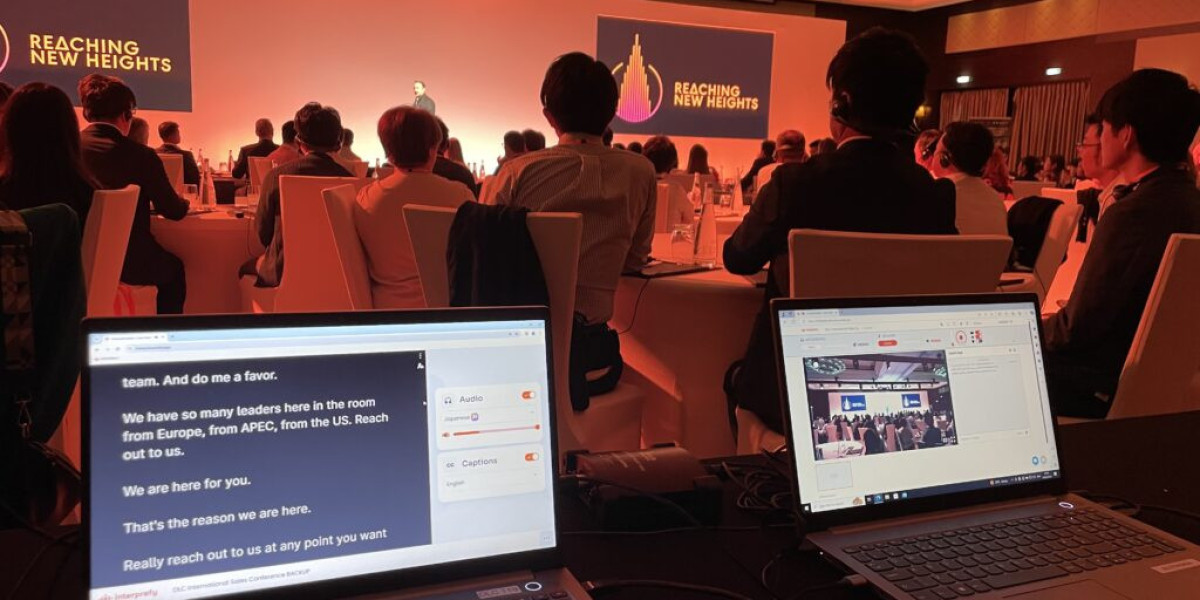
It is exactly what it sounds like, but let us walk through it properly because the details are actually quite cool. When someone stands up at a conference and starts speaking in English, Arabic, French, or any other language, the AI Speech Translation system listens to every word being said and converts it into another language almost immediately, within just a couple of seconds. That translated version then either plays through a small earpiece that attendees are wearing, or it appears as live captions on a screen in front of them.
So while the speaker is talking in English, the person sitting three seats away who only speaks Arabic is hearing or reading a clean, accurate Arabic translation in real time. Nobody has to wait. Nobody has to tap someone on the shoulder and ask what just happened. The whole event moves forward smoothly, and every single person in that room feels like they belong there.
DLC Events brings this exact experience to conferences, corporate meetings, product launches, and large-scale international gatherings all across Dubai and the wider Middle East. And the difference it makes to an event is genuinely remarkable.
How Does This Tech Actually Work?
This is the part most people are curious about, and once you understand it you will appreciate just how much is happening in those two or three seconds between when someone speaks and when you hear the translation.
It all starts with the microphone. The speaker talks into a mic, and the AI system immediately starts picking up those sounds and converting them into written text. This is called speech recognition, and it works in a very similar way to when you speak to your phone, and it types out what you said. The system that DLC Events uses, powered by Interprefy, one of the most trusted names in this space globally, has been trained on massive amounts of real human speech, which means it handles different accents, different speaking paces, and even rooms with a bit of background noise without losing the thread of what is being said.
Once the words are in text form, the AI gets to work on the actual translation. And this is not a simple word-swapping exercise, that would produce sentences that sound clunky and weird. Instead, the system reads the full meaning of what was said and then reconstructs that same meaning naturally in the target language, the way a fluent speaker of that language would actually say it. The result feels natural, not robotic.
Finally, that translated text either gets pushed as audio into the listener's earpiece or displayed as live multilingual captions on screen. Some events use both at the same time, and that is something DLC Events can set up and manage entirely, from the technology to the real-time monitoring throughout the event to make sure everything is running perfectly
Why Does It Sometimes Take a Few Seconds?
You might be thinking, if it is real-time, why is there even a small gap at all? Fair question, and the answer actually makes a lot of sense. Many languages put the most important part of the sentence right at the end. In Arabic, German, and Japanese, the structure of the sentence means the AI genuinely needs to hear the whole thing before it can translate it correctly. If it jumped in too early, it would be guessing, and a wrong translation at an important business event is the last thing anyone wants.
So that small pause of a second or two is actually the system doing its job properly. It is choosing accuracy over rushing, which is absolutely the right call when you are dealing with conference content that actually matters.
How Many Languages Can It Handle at One Event?
This is where things get really impressive. DLC Events can deploy AI speech translation across multiple languages simultaneously at a single event, which means an audience filled with Arabic speakers, Hindi speakers, French speakers, and Mandarin speakers can all be catered to at the exact same time without any extra hassle.
For events in Dubai particularly, this is a massive advantage. Dubai is one of the most internationally diverse cities on the planet, and the events that happen here often bring together people from dozens of different countries. Having a solution that scales to meet that diversity, without the complexity and cost of assembling a large team of Professional interpreters for every single language combination , is something event organisers genuinely appreciate.
The system also supports Arabic exceptionally well, including the nuances that come with it, which matters enormously for events happening across the Gulf region.
What Does the Setup Actually Look Like at an Event?
DLC Events handles the entire process from start to finish, which is one of the things that makes working with them so straightforward. Their team sets up the hardware, the microphones, the receivers, the earpieces or caption displays , and then manages the system live throughout the event. If something needs adjusting mid-session, their team catches it and fixes it in real time so the audience never notices a thing.
Attendees typically either receive a small wireless receiver with an earpiece, or they can follow along on their own phones through an app, or watch the live captions on screens positioned around the venue. DLC Events customises the setup based on what works best for each specific event, because a product launch has very different needs from a half-day board meeting or a three-day international summit.
Why Does This Matter So Much for Events in the Region?
Events are expensive to put together, and they often rely on event technology rental, and they exist for a reason, to share information, to build relationships, to make decisions, to inspire people. None of that happens if half the room cannot follow what is being said. Language should never be the thing that gets in the way of a great event experience, and with the AI speech translation service that DLC Events provides, it simply does not have to be.
Whether it is a corporate conference in Downtown Dubai, a government summit, an international exhibition, or a multilingual training day for a global company's regional team , this technology makes sure that every attendee, regardless of what language they think in, walks away having understood everything.
Conclusion
Real-time speech translation is no longer optional for modern events. It ensures every attendee understands the message clearly, improves engagement, and makes multilingual communication effortless in fast-paced international environments.
FAQs
1. What is real-time speech translation at events?
At DLC Events, real-time speech translation means we convert spoken words into another language instantly. The speaker talks in one language. The audience hears or reads it in their own language. This happens within a few seconds. It helps everyone understand the message clearly during the event.
2. How do attendees receive the translated speech?
At DLC Events, attendees can listen through small earpieces. They can also read live captions on screens. In some cases, they can use their phones to follow the translation. The setup depends on the event type and audience needs.
3. How many languages can be used at one event?
At DLC Events, multiple languages can run at the same time. Different people can listen in different languages together. This works well for international events. It helps create a smooth and inclusive experience for all attendees.