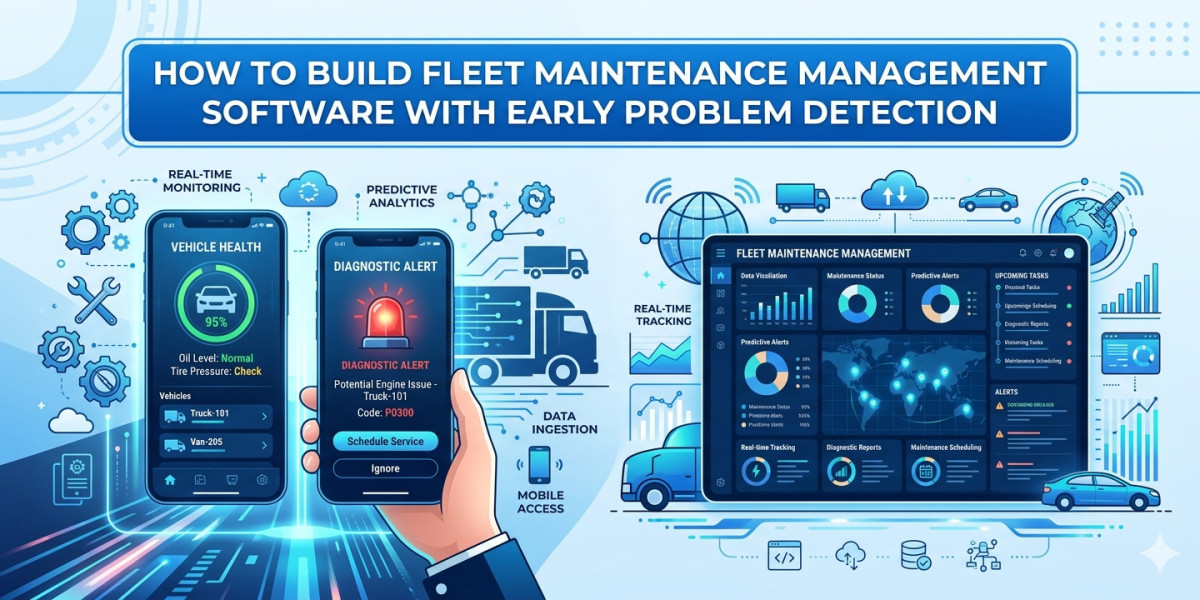

Managing fleets on a routine basis is tough, as chaos occurs when inspections, fuel, and maintenance overlap. That's what drives you to build your own fleet maintenance management software. They track. They log. They alert. Every missing piece in traditional systems comes together using this AI-driven software.
And in a world where downtime directly impacts revenue, that's a problem and a massive opportunity for entrepreneurs ready to build something smarter. This blog tries to explore the steps to build and launch your own fleet maintenance software that automates workflows and lowers operating costs.
The Hidden Cost That Businesses Are Actively Trying to Eliminate
Fleet downtime isn't just an operational issue, it's a silent profit killer. According to insights published in Forbes, even a single vehicle breakdown can trigger cascading effects: delayed operations, emergency repairs, and disrupted schedules.
What's more revealing is the scale:
Average breakdown costs can exceed $5,000 per vehicle annually
Emergency roadside repairs can cost 4x more than planned maintenance
Poor parts visibility leads to delays that keep vehicles off the road longer
This is exactly why businesses are moving away from reactive tools and searching for vehicle maintenance tracking systems that can prevent problems, not just report them.
The Shift: From Tracking Fleets to Predicting Failures
Traditional fleet asset management software works on schedules: service every X kilometers, inspect every Y days.
But real-world usage doesn't follow schedules.
Modern systems are evolving toward predictive maintenance software, powered by AI and IoT. These systems continuously analyze:
Engine performance
Temperature fluctuations
Vibration patterns
Fuel efficiency trends
According to Forbes , AI can now detect subtle anomalies and predict failures weeks in advance, allowing businesses to fix issues before they become breakdowns.
This is the core shift entrepreneurs should build around:
From “What went wrong?” to “What will go wrong next?”
What Your Software Must Do Differently
If you want to stand out while planning fleet management software development, your product should focus on intelligence, not just functionality.
1. Predict and Prevent Downtime
AI-driven systems can monitor vehicles in real time and trigger alerts before failures occur. Businesses using predictive systems report significant cost savings and improved uptime.
2. Turn Data Into Decisions
Raw data is useless without context. Your platform should include smart dashboards, automated maintenance recommendations, and performance benchmarking
This is where fleet analytics and reporting tools become critical.
3. Optimize Spare Parts Management
One overlooked problem is inventory chaos. AI-powered systems can predict which parts will fail and when, eliminating last-minute procurement issues.
4. Reduce Repeat Repairs
Poor diagnoses lead to recurring issues. Intelligent systems learn from past repairs and recommend the most effective fixes, improving long-term reliability.
Why Simpler, Smarter Software Wins
Here's where many existing platforms miss the mark: they're built for complexity, not clarity.
Entrepreneurs who succeed in fleet management app development focus on clean, intuitive dashboards, mobile-first accessibility, and role-based user experiences
Because in real operations, speed matters more than sophistication.
A fleet manager doesn't want 20 charts, they want one clear answer:
“Which vehicle needs attention today?”
The Technology Behind Next-Gen Fleet Systems
To build a future-ready product, your architecture must support real-time intelligence.
A strong stack includes:
Frontend: React or Angular
Backend: Node.js or Python
Cloud: AWS or Azure
Data Layer: IoT sensors + APIs
AI Models: Machine learning for predictive analytics
Cloud-based platforms are especially powerful because they allow remote deployment, scalability, and faster updates, a key advantage highlighted in modern fleet innovations.
The ROI Story Entrepreneurs Should Pay Attention To
Fleet software is not just a tool, it's a financial lever.
Businesses adopting predictive systems can:
Reduce unplanned maintenance costs
Extend vehicle lifespan
Improve fleet utilization
Convert unpredictable expenses into planned operations
In fact, predictive AI can significantly amplify cost savings by shifting maintenance from reactive to proactive strategies.
This makes your product not just valuable, but essential.
The Real Opportunity: Build for the Future, Not the Present
The biggest mistake you can make is building a “feature-matching” product.
Instead, build for where the industry is going: AI-first maintenance systems, fully connected vehicle ecosystems, and automated decision-making platforms.
As highlighted by Forbes, predictive maintenance is already transforming fleet operations by improving safety, reducing costs, and ensuring consistent service delivery.
The next wave of successful platforms won't just manage fleets, they'll run them intelligently.
Why Building with the Right Partner Matters
Execution speed and technical depth can make or break your idea. Partnering with an experienced team like SpotnRides allows you to:
Launch faster with proven frameworks
Build scalable fleet management software solutions
Integrate AI and IoT without starting from scratch
Focus on business growth while development is handled
Instead of navigating complexity alone, you move directly toward market-ready innovation.
Final Thoughts
To build fleet maintenance management software today is to invest in a future defined by intelligence, automation, and predictive insights.
The opportunity is not in copying existing tools, but in redefining what fleet management should be: proactive, not reactive, insight-driven, not data-heavy, and simple, yet powerful. SpotnRides matches the expectations of entrepreneurs through its AI-driven fleet maintenance management software .
Entrepreneurs who embrace this shift won't just enter the market; they'll lead it.
And right now, the gap is wide open.