
INTRODUCTION
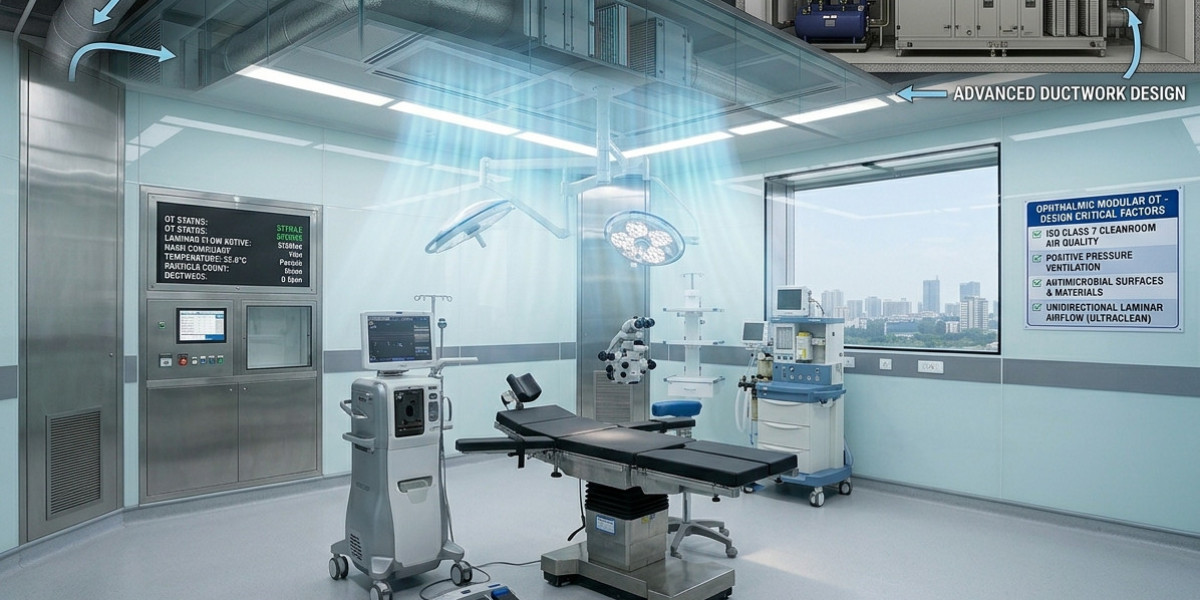
The advancement of surgical technology and patient care standards has made precision, sterility, and efficiency essential in modern healthcare facilities. An Ophthalmic Modular Operation Theatre is specifically engineered to meet these high expectations, offering a controlled and contamination-free environment for delicate eye surgeries.
From layout planning and HVAC systems to material selection and lighting, every element must be carefully designed to ensure optimal performance, compliance, and safety. In this detailed blog, we will explore all the essential design requirements needed to create a high-quality ophthalmic modular OT.
Importance of Proper Design in Ophthalmic OTs
Ophthalmic procedures involve extremely delicate structures such as the cornea, retina, and optic nerve. Even minimal contamination or environmental fluctuation can affect surgical outcomes.
Key Objectives of OT Design:
- Maintain sterile conditions
- Ensure precise environmental control
- Optimize workflow efficiency
- Support advanced surgical equipment
- Comply with healthcare regulations
A well-designed Ophthalmic Modular Operation Theatre significantly enhances patient safety and surgical success rates.
Space Planning and Layout Design
1. Zoning Requirements
Proper zoning is critical for infection control and workflow management.
Typical Zones Include:
- Sterile zone (surgical area)
- Clean zone (preparation and scrub area)
- Dirty zone (waste disposal area)
- Entry and exit zones
Zoning helps prevent cross-contamination and ensures a smooth operational flow.
2. Minimum Space Requirements
Adequate space is essential for movement and equipment placement.
Recommended Size:
- 300–400 sq. ft. for standard ophthalmic OT
Larger spaces may be required for advanced setups.
HVAC and Airflow Design
1. Laminar Airflow System
Laminar airflow is a core requirement in ophthalmic OTs.
Key Features:
- Unidirectional airflow
- Continuous removal of contaminants
- Reduced turbulence
2. Air Change Rate (ACH)
- Recommended: 20–25 Air Changes Per Hour
- Ensures frequent replacement of air
3. HEPA Filtration
- Removes 99.97% of particles ≥0.3 microns
- Maintains ultra-clean air quality
4. Positive Pressure System
- Prevents contaminated air from entering the OT
- Maintains sterile conditions
HVAC systems are the backbone of an Ophthalmic Modular Operation Theatre.
Material Selection Requirements
Materials used must support hygiene, durability, and easy maintenance.
Key Properties:
- Non-porous and seamless
- Anti-bacterial and anti-fungal
- Chemical-resistant
- Easy to clean
Common Materials:
- Wall panels: PUF, HPL, stainless steel
- Flooring: Vinyl or epoxy
- Ceiling: Powder-coated GI or aluminum
Proper material selection ensures long-term performance and infection control.
Flooring Design
Flooring must be safe, seamless, and hygienic.
Features:
- Anti-static
- Slip-resistant
- Joint-free surface
Common Options:
- Homogeneous vinyl flooring
- Epoxy flooring
These materials prevent dust accumulation and microbial growth.
Ceiling Design
The ceiling must integrate critical systems.
Features:
- Supports laminar airflow units
- Houses lighting and filtration systems
- Allows easy maintenance access
Modular false ceilings are commonly used for flexibility and efficiency.
Lighting Design
Lighting is essential for surgical precision.
Requirements:
- Shadow-free illumination
- Adjustable intensity
- High Color Rendering Index (CRI)
Types:
- Surgical lights
- Ambient lighting
- Emergency backup lighting
Proper lighting enhances visibility and reduces surgeon fatigue.
Electrical and Power Supply Design
Reliable power systems are critical.
Requirements:
- Dedicated power circuits
- Uninterruptible Power Supply (UPS)
- Backup generator
- Proper grounding and insulation
These systems ensure uninterrupted surgical procedures.
Equipment Integration
An Ophthalmic Modular Operation Theatre must accommodate advanced equipment.
Includes:
- Operating microscopes
- Phacoemulsification machines
- OT tables
- Patient monitoring systems
Proper placement ensures smooth workflow and efficiency.
Doors and Windows Design
1. Hermetically Sealed Doors
- Airtight sealing
- Maintains pressure and sterility
2. Viewing Panels
- Double-glazed glass
- Provides visibility while maintaining insulation
These features help maintain environmental control.
Infection Control Measures
Infection prevention is a top priority.
Design Elements:
- Seamless surfaces
- Rounded corners (coving)
- Hands-free fixtures
- Proper waste disposal systems
These measures reduce microbial contamination.
Temperature and Humidity Control
Maintaining stable environmental conditions is essential.
Recommended Levels:
- Temperature: 20–24°C
- Humidity: 40–60%
These conditions ensure comfort and optimal equipment performance.
Acoustic Design
Noise control improves focus and communication.
Features:
- Soundproof panels
- Low-noise HVAC systems
A quiet environment enhances surgical efficiency.
Storage and Utility Areas
Efficient storage supports smooth operations.
Includes:
- Sterile storage cabinets
- Instrument trolleys
- Utility rooms
Proper storage reduces clutter and improves workflow.
Automation and Smart Systems
Modern OTs are increasingly automated.
Features:
- Central control panels
- Real-time monitoring systems
- Automated HVAC controls
These technologies improve efficiency and reduce human error.
Safety and Compliance Requirements
An Ophthalmic Modular Operation Theatre must comply with:
- NABH guidelines
- ISO cleanroom standards
- Fire safety regulations
- Electrical safety norms
Compliance ensures safe and legal operation.
Challenges in OT Design
Designing an ophthalmic OT involves:
- Balancing cost and quality
- Meeting strict regulations
- Integrating advanced technologies
- Managing space constraints
Expert planning is essential to overcome these challenges.
Future Trends in Ophthalmic OT Design
The future of Ophthalmic Modular Operation Theatre design includes:
- AI-assisted surgical environments
- Smart monitoring systems
- Energy-efficient HVAC solutions
- Sustainable materials
These innovations will enhance performance and sustainability.
Importance of Expert Design Services
Professional design services ensure:
- Compliance with standards
- Efficient space utilization
- Proper system integration
- High-quality execution
This leads to better outcomes and long-term reliability.
Conclusion
Designing an Ophthalmic Modular Operation Theatre requires a comprehensive approach that combines advanced engineering, strict compliance, and practical functionality. From HVAC systems and material selection to lighting and infection control, every detail contributes to creating a safe and efficient surgical environment.
By focusing on these design requirements and working with experienced professionals, healthcare facilities can achieve superior performance and patient outcomes. With expertise in advanced healthcare infrastructure, Altus Airflow delivers high-quality modular ophthalmic operation theatre solutions tailored to modern medical needs.
Frequently Asked Questions (FAQs)
1. What are the key design requirements for an Ophthalmic Modular Operation Theatre?
An Ophthalmic Modular Operation Theatre requires proper zoning, HVAC systems, sterile materials, and compliance with healthcare standards.
2. Why is HVAC important in OT design?
HVAC systems in an Ophthalmic Modular Operation Theatre maintain air quality, temperature, and contamination control.
3. What flooring is used in ophthalmic OTs?
Vinyl or epoxy flooring is commonly used in an Ophthalmic Modular Operation Theatre due to its seamless and hygienic properties.
4. How is infection controlled in modular OTs?
Infection control in an Ophthalmic Modular Operation Theatre is achieved through cleanroom design, HEPA filtration, and seamless materials.
5. What standards must be followed in OT design?
An Ophthalmic Modular Operation Theatre must comply with NABH, ISO, and other healthcare safety standards.
Read Our Previous Blog------>What are the design requirements for a Modular Ophthalmic Operation Theatre?