
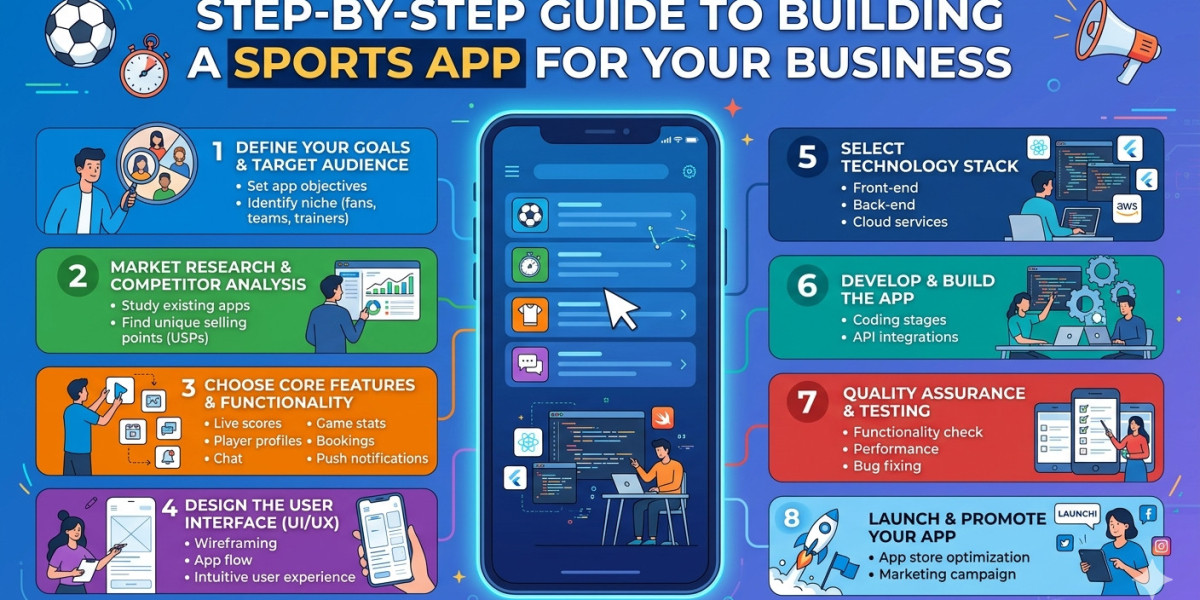

The sports industry has rapidly embraced digital transformation, and mobile applications have become essential tools for engaging fans, managing teams, streaming live events, and generating revenue. Whether you're a startup, sports organization, or enterprise, building a sports app can unlock significant business opportunities.
However, developing a successful sports app requires more than just coding—it involves strategic planning, choosing the right technology stack, designing an engaging user experience, and ensuring scalability and performance.
This comprehensive guide walks you through a step-by-step process to build a sports app for your business, covering everything from ideation to launch and beyond.
Step 1: Define Your App Idea and Business Goals
Identify the Purpose of Your App
Start by clearly defining what your sports app will do. Common categories include:
- Live streaming apps
- Fantasy sports platforms
- Fitness and performance tracking apps
- Fan engagement and social apps
- Sports news and analytics platforms
Set Business Objectives
Determine what you want to achieve:
- Increase user engagement
- Generate revenue
- Build brand awareness
- Expand audience reach
Clear goals will guide your development strategy.
Step 2: Conduct Market Research
Analyze Competitors
Study existing sports apps to understand:
- Features they offer
- User experience
- Monetization strategies
Identify Target Audience
Define your audience based on:
- Age group
- Location
- Interests
- Behavior patterns
Validate Your Idea
Gather feedback through surveys, interviews, or MVP testing to ensure market demand.
Step 3: Define Core Features and Functionality
Essential Features
Depending on your app type, include:
- User registration and profiles
- Real-time score updates
- Live streaming
- Push notifications
- Social sharing
- Payment integration
Advanced Features
- AI-powered recommendations
- AR/VR experiences
- Gamification elements
- Performance analytics
Prioritize features for your MVP (Minimum Viable Product).
Step 4: Choose the Right Technology Stack
Frontend Development
- Native: Swift (iOS), Kotlin (Android)
- Cross-platform: Flutter, React Native
Backend Development
- Node.js, Python, Java, or Go
- RESTful APIs or GraphQL
Database
- SQL (PostgreSQL, MySQL)
- NoSQL (MongoDB, Firebase)
Infrastructure
- Cloud platforms (AWS, Azure, Google Cloud)
- CDN for content delivery
- Load balancing for scalability
Choosing the right stack ensures performance and scalability.
Step 5: Design an Engaging UI/UX
Focus on User Experience
A well-designed interface improves engagement and retention.
Key Design Principles
- Simple and intuitive navigation
- Responsive design
- Fast loading times
- Consistent branding
Prototyping and Wireframing
Create wireframes and prototypes to visualize the app before development.
Step 6: Develop the App
Agile Development Approach
Use agile methodology for:
- Iterative development
- Continuous feedback
- Faster delivery
Development Phases
- Frontend development
- Backend development
- API integration
- Feature implementation
Version Control
Use tools like Git for collaboration and code management.
Step 7: Integrate Third-Party Services
Common Integrations
- Sports data APIs
- Payment gateways
- Social media platforms
- Analytics tools
- Streaming services
Importance
Integrations enhance functionality and reduce development time.
Step 8: Implement Real-Time Features
Real-Time Data Handling
Use technologies like:
- WebSockets
- Firebase Realtime Database
- Event-driven architecture
Applications
- Live score updates
- Notifications
- Chat features
Step 9: Ensure Security and Compliance
Security Measures
- Data encryption
- Secure authentication (OAuth, MFA)
- Protection against cyber threats
Compliance
Adhere to regulations such as:
- Data protection laws
- Payment security standards
Security builds user trust and protects your business.
Step 10: Test the Application
Types of Testing
- Functional testing
- Performance testing
- Security testing
- Usability testing
Importance
Testing ensures:
- Bug-free experience
- High performance
- User satisfaction
Step 11: Launch the App
Pre-Launch Checklist
- Final testing
- App store optimization (ASO)
- Marketing strategy
Deployment
- Publish on App Store and Google Play
- Monitor initial performance
Step 12: Post-Launch Maintenance and Updates
Continuous Improvement
Regular updates keep the app relevant and competitive.
Key Activities
- Bug fixes
- Feature enhancements
- Performance optimization
User Feedback
Collect feedback to improve the app.
Monetization Strategies for Your Sports App
Subscription Models
Offer premium features for a recurring fee.
In-App Purchases
Sell virtual goods, upgrades, or exclusive content.
Advertising
Generate revenue through targeted ads.
Sponsorships
Collaborate with brands for additional income.
Challenges in Building a Sports App
High Development Costs
Advanced features require significant investment.
Scalability Issues
Handling high traffic during live events can be challenging.
Integration Complexity
Combining multiple technologies requires expertise.
User Retention
Maintaining engagement requires continuous innovation.
Best Practices for Success
Start with an MVP
Launch a basic version and iterate based on feedback.
Focus on Performance
Ensure fast load times and smooth interactions.
Leverage Data Analytics
Use insights to improve features and engagement.
Prioritize User Experience
Design with the user in mind.
Future Trends in Sports App Development
AI and Machine Learning
Enhanced personalization and predictive analytics.
AR/VR Integration
Immersive fan experiences.
Wearable Integration
Real-time performance tracking.
Blockchain Technology
Secure transactions and digital assets.
How JPLoft Helps Build High-Performance Sports Apps
Building a sports app requires expertise, experience, and a deep understanding of the industry. JPLoft has established itself as a trusted mobile app development company specializing in sports applications.
They offer end-to-end development services, including:
- Idea validation and strategy
- UI/UX design
- Custom app development
- Real-time data integration
- Cloud-based infrastructure setup
- Post-launch support and maintenance
JPLoft focuses on delivering scalable, secure, and user-friendly applications tailored to business needs. They leverage advanced technologies such as AI, machine learning, blockchain, and big data analytics to create innovative solutions.
Their team works closely with clients to understand their goals and provide customized solutions that align with business objectives. By following agile methodologies and best practices, they ensure timely delivery and high-quality results.
By partnering with JPLoft, businesses can:
- Accelerate development timelines
- Reduce technical risks
- Enhance user engagement
- Build future-ready applications
They play a crucial role in helping businesses transform their ideas into successful sports apps.
Conclusion
Building a sports app for your business is a complex but rewarding process. By following a structured approach—from defining your idea and conducting market research to development, testing, and launch—you can create a high-quality application that meets user expectations and business goals.
Success in the sports app market requires a combination of innovation, technical expertise, and user-centric design. By leveraging modern technologies and best practices, businesses can build apps that stand out in a competitive landscape.
Partnering with experienced developers like JPLoft can further streamline the process, ensuring that your app is scalable, secure, and ready for future growth. With the right strategy and execution, your sports app can become a powerful tool for engagement, revenue generation, and long-term success.