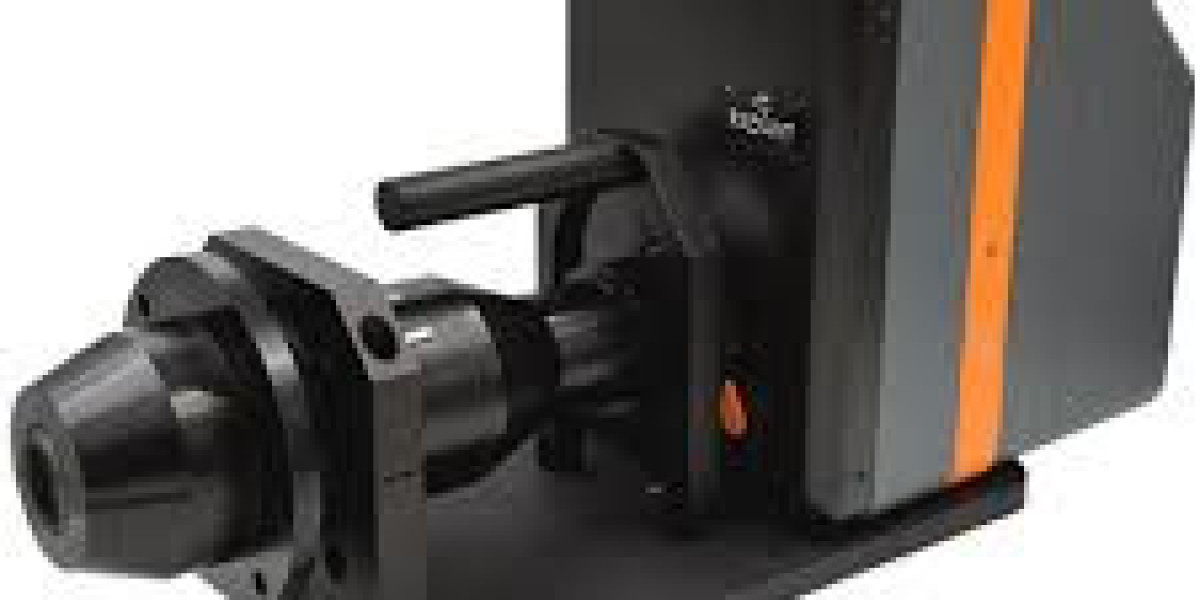

In the rapid production cycles of 2026, the display industry is facing a crisis of consistency. As Micro-OLED, Mini-LED, and foldable screens become the standard for B2B hardware, the demand for perfect viewing angle performance has never been higher. For quality control engineers and systems integrators, the primary bottleneck is often the measurement tool itself. Specifically, the conoscope lens—the heart of the optical testing suite—is frequently the source of "measurement drift," leading to expensive production delays and faulty batches reaching the market.
The problem facing modern B2B stakeholders is that traditional goniometric measurements (rotating the display or the sensor) are too slow for high-volume manufacturing. However, moving to a conoscope-based system often introduces a new set of problems: chromatic aberration and light leakage at high incident angles. To maintain a competitive edge, businesses must move from simply "measuring" to "precision-mapping" their optical output.
The Problem: The "Edge Distortion" Dilemma
The most significant challenge for B2B display manufacturers is the inaccuracy of measurements at extreme viewing angles (typically beyond 60° to 70°). Many standard conoscope lenses suffer from "cosine-law" errors, where the light intensity recorded at the edges of the sensor does not accurately reflect the display’s true luminance.
Furthermore, as 2026 displays move toward higher pixel densities, the "crosstalk" between sub-pixels at oblique angles becomes harder to isolate. If your conoscope lens lacks the numerical aperture (NA) and the optical coatings to handle high-frequency light paths, you are essentially flying blind. You might pass a display that looks perfect on a spec sheet but exhibits severe color shifting in a user’s AR headset or automotive dashboard.
Agitation: The Cost of Inaccurate QA
In the B2B world, a single percentage point of error in color uniformity can result in the rejection of an entire shipment. For OEMs supplying the medical or aviation sectors, an inaccurate viewing angle report is more than a technical glitch; it is a compliance failure. Utilizing an outdated or poorly calibrated conoscope lens results in "False Positives" (passing bad units) and "False Negatives" (scrapping good units), both of which erode ROI and damage your brand's E-E-A-T (Experience, Expertise, Authoritativeness, and Trustworthiness) standing in the supply chain.
The Solution: Fourier-Transform Optics and Real-Time Calibration
The feasible, high-value solution for 2026 involves a shift toward integrated Fourier-transform optical systems and advanced material science. A robust B2B solution for display testing should focus on three specific technical pillars:
1. High-NA Fourier-Transform Engineering To solve the speed problem without sacrificing accuracy, engineers should utilize a conoscope lens designed on Fourier-transform principles. This allows the lens to capture the entire hemisphere of light emitted from a single point on the display and map it onto a 2D sensor in a single frame. This "instantaneous" measurement reduces testing time from minutes to milliseconds, allowing for 100% inspection on the assembly line rather than spot-checking.
2. Telecentric Design for Distortion Control To eliminate the edge distortion mentioned earlier, the lens must be telecentric on the sensor side. This ensures that the chief rays strike the CCD or CMOS sensor at a near-zero angle of incidence, preventing the "vignetting" effect that plagues lower-tier optics. When combined with specialized anti-reflective (AR) coatings tailored for the 400nm–700nm range, the light leakage is virtually eliminated, providing a laboratory-grade result in a factory environment.
3. Software-Integrated Correction Matrices A hardware-only solution is no longer sufficient. The modern conoscope must be paired with a dynamic calibration matrix. This software layer compensates for any residual geometric distortion or non-uniformity in the lens elements. By using a "Golden Sample" calibration protocol, B2B entities can ensure that every lens in their global production network provides identical, traceable results.
Economic Reality: Throughput vs. Initial Investment
While a high-performance conoscope lens requires a higher initial capital expenditure, the payback period is remarkably short. When you factor in the 80% reduction in testing time per unit and the significant decrease in scrap rates due to more accurate "pass/fail" thresholds, the system often pays for itself within the first quarter of deployment. For B2B firms, the ability to guarantee "zero-defect" viewing angle performance is a powerful lever for securing long-term contracts.
Conclusion
The complexity of 2026’s display technology has outpaced the capabilities of legacy testing tools. The conoscope lens is the critical link in the quality control chain that determines whether a product is market-ready or a liability. By addressing the problems of edge distortion and measurement speed through Fourier-transform optics and telecentric design, B2B manufacturers can turn their QA department into a competitive advantage.
In a market where visual perfection is the baseline, those who invest in the most precise measurement tools will be the ones who define the industry standards. Stop guessing your viewing angles—map them with precision and secure your place at the forefront of the optical revolution.